
Effects of Pistachio Consumption in a Behavioral Weight Loss Intervention on Weight Change, Cardiometabolic Factors, and Dietary Intake.
Epidemiological studies have linked regular nut consumption with lower body mass index and reduced likelihood of weight gain in adulthood. Nuts can displace other foods in the diet, and thus, promote a healthier dietary pattern. The purpose of this study was to examine the effect of pistachio nut consumption in overweight/obese adults. This randomized controlled study enrolled non-diabetic overweight/obese adults (n = 100) assigned to a 4-month behavioral weight loss intervention only group (controls) or also prescribed 1.5 oz/day (42 g/day) of pistachios (pistachio group). Outcomes were change in body weight, cardiometabolic factors, and dietary intake. Percent weight change was similar in the two groups (−5.1 [0.5] (mean [SE])% in the control group and −4.9 [0.6]% in the pistachio group, and body mass index (BMI) and waist circumference were reduced in both groups (time effect p ≤ 0.05). The pistachio group (but not the control group) exhibited a significant reduction in both systolic and diastolic blood pressure (time effect p = 0.01). Plasma alpha-carotene, beta-carotene, and lutein concentrations increased significantly in the pistachio group (time effect p < 0.05). Pistachio consumption was associated with increased dietary fiber intake and decreased consumption of sweets. Regular consumption of pistachios was associated with a comparable degree of weight loss, and similar reductions in BMI and waist circumference, in overweight/obese men and women compared to controls, and favorable changes in the diet, in the context of a behavioral weight loss intervention.
https://pubmed.ncbi.nlm.nih.gov/32698457/

Dietary recommendations during the COVID-19 pandemic.
Optimal nutrition can improve well-being and might mitigate the risk and morbidity associated with coronavirus disease 2019 (COVID-19), caused by the severe acute respiratory syndrome coronavirus 2 (SARS-CoV-2). This review summarizes nutritional guidelines to support dietary counseling provided by dietitians and health-related professionals. The majority of documents encouraged the consumption of fruits, vegetables, and whole grain foods. Thirty-one percent of the guidelines highlighted the importance of minerals and vitamins such as zinc and vitamins C, A, and D to maintain a well-functioning immune system. Dietary supplementation has not been linked to COVID-19 prevention. However, supplementation with vitamins C and D, as well as with zinc and selenium, was highlighted as potentially beneficial for individuals with, or at risk of, respiratory viral infections or for those in whom nutrient deficiency is detected. There was no convincing evidence that food or food packaging is associated with the transmission of COVID-19, but good hygiene practices for handling and preparing foods were recommended. No changes to breastfeeding recommendations have been made, even in women diagnosed with COVID-19.
https://doi.org/10.1093/nutrit/nuaa067
Oil quality of pistachios (Pistacia vera L.) grown in East Azarbaijan, Iran.
Pistachio nut as a strategic product has a special place from nutritional and economical points of view. Its quality can be affected by variety, growing origin and climate. In the present study, the chemical composition of pistachio nuts harvested from different parts of East Azarbaijan province in Iran (Jolfa, Marand, Soufian, Azarshahr and Islamic Island) was investigated. The nuts had oil content of 49.9 to 58.5% and moisture content of 35.2 to 47.9. The acidity, peroxide values and the oil stability index (OSI) of the extracted oil were 0.03 to 0.3%, 0.19 to 1.0 meq O2/kg oil and 12.4 to 17 h, respectively. In addition, the chlorophyll content was found to be 15 to 72 mg pheophytin/kg oil and the carotenoid content was 5.4 to 11.5 mg/kg. In the fatty acid composition of the oil samples, oleic acid was the main fatty acid (52.5–63.9%), followed by linoleic acid (27.1–37.2%), palmitic acid (4.6–10.3%), palmitoleic acid (0.6–1.2%), stearic acid (0.1–1.3%) and linolenic acid (0.3–0.4%). Total tocopherol content of the pistachio oil samples was (125–258 mg/kg oil) which γ-tocopherol was the main tocol (112–232 mg/kg oil), followed by δ-tocopherol (5.3–19.3 mg/kg oil) and α- tocopherol (1.2–6.1 mg/kg oil). Total sterol content of the samples found to be (1125–2784 mg/kg oil). The most abundant sterol in the oils was β-sitosterol (966–2419 mg/kg oil) and other detected sterols were Δ5-avenasterol (72.6–170 mg/kg oil), campesterol (47.4–128 mg/kg oil), Stigmasterol (12.3–27.8 mg/kg oil) and cholesterol (8.3–39 mg/kg oil). The obtained results showed that origin had significant effects on oil composition. These data can be used to evaluate the nutritional value and authenticity of the oils and as useful information in establishing standards.
INC Interviews Leadership Team for Insights into COVID-19 and the Nut and Dried Fruit Industry
July 30, 2020. As the world continues to grapple with the implications of the COVID-19, the INC reached out to various members of the leadership, to interview and gain their perspective of how the nut and dried fruit industry has been affected by the pandemic.
One of the most repeated answers among the leadership was that the nut and dried fruit industry most certainly has faced numerous challenges with COVID-19, however, there are many reasons to be optimistic for the future. Behrooz Agah, from the Agah Group in Iran and an INC Ambassador to Iran commented, “promotion and increased awareness as to the benefits of consumption of different products in this section on general health and well-being” is likely to be of increased importance in the aftermath of COVID-19. Likewise, in China, Chen Qi, from QiaQia Food and a member of the INC Board of Trustees noted, “because of consumers growing demand for staying healthy, this industry will accelerate in China.”
Pratap Nair, from Vijayalaxmi Cashew Company in India and member of the INC Executive Committee stated, “I am certain our strong and resilient industry will have the strength to overcome this challenge.”
Similarly, Jan Vincent Rieckmann from August Töpfer in Germany and Roby Danon from Voicevale in the UK, both members of the INC Board of Trustees, expressed their confidence in the industry, especially in the future.
Ashok Krishen, from Olam Singapore and INC Vice Chairman, added “consumer behavior and habits are likely to change and we will need to be agile to meet the changed expectations.”
The full article can be found on the INC website.
Download the press release.
INC Interviews Leadership Team for Insights into COVID-19 and the Nut and Dried Fruit Industry
July 30, 2020. As the world continues to grapple with the implications of the COVID-19, the INC reached out to various members of the leadership, to interview and gain their perspective of how the nut and dried fruit industry has been affected by the pandemic.
One of the most repeated answers among the leadership was that the nut and dried fruit industry most certainly has faced numerous challenges with COVID-19, however, there are many reasons to be optimistic for the future. Behrooz Agah, from the Agah Group in Iran and an INC Ambassador to Iran commented, “promotion and increased awareness as to the benefits of consumption of different products in this section on general health and well-being” is likely to be of increased importance in the aftermath of COVID-19. Likewise, in China, Chen Qi, from QiaQia Food and a member of the INC Board of Trustees noted, “because of consumers growing demand for staying healthy, this industry will accelerate in China.”
Pratap Nair, from Vijayalaxmi Cashew Company in India and member of the INC Executive Committee stated, “I am certain our strong and resilient industry will have the strength to overcome this challenge.”
Similarly, Jan Vincent Rieckmann from August Töpfer in Germany and Roby Danon from Voicevale in the UK, both members of the INC Board of Trustees, expressed their confidence in the industry, especially in the future.
Ashok Krishen, from Olam Singapore and INC Vice Chairman, added “consumer behavior and habits are likely to change and we will need to be agile to meet the changed expectations.”
The full article can be found on the INC website.
Download the press release.
INC Successfully Launches Negotiation in Times of Crisis Webinar
The webinar was presented by Prof. Dr. Kandarp Mehta, from the prestigious IESE Business School Barcelona, ranked 1st in the world for Executive Education by Financial Times for a record 6th year, and author of the INC Academia Unit 11 “Negotiation: Essential Strategies and Skills for Successful Negotiations”.
INC members can find the full webinar on the INC TV Channel and for those who are interested in becoming a member, check out the membership benefits!
Webinar Speaker
 the Entrepreneurship Department and the Negotiation Unit at IESE Business School, Barcelona, ranked 1st in the world for Executive Education by Financial Times for a record 6th year.
Prof. Dr. Mehta is a PhD from IESE Business School and a recipient of the Dispute Resolution Research Center advisory fellowship from Kellogg School of Management. Joining the Entrepreneurship Department at IESE in October 2009, his research has focused on creativity in organizations and in negotiations. He has conducted several Negotiation and Creativity Workshops for corporate executives and management students in India and Spain.
INC Successfully Launches Negotiation in Times of Crisis Webinar
The webinar was presented by Prof. Dr. Kandarp Mehta, from the prestigious IESE Business School Barcelona, ranked 1st in the world for Executive Education by Financial Times for a record 6th year, and author of the INC Academia Unit 11 “Negotiation: Essential Strategies and Skills for Successful Negotiations”.
INC members can find the full webinar on the INC TV Channel and for those who are interested in becoming a member, check out the membership benefits!
Webinar Speaker
the Entrepreneurship Department and the Negotiation Unit at IESE Business School, Barcelona, ranked 1st in the world for Executive Education by Financial Times for a record 6th year.
Prof. Dr. Mehta is a PhD from IESE Business School and a recipient of the Dispute Resolution Research Center advisory fellowship from Kellogg School of Management. Joining the Entrepreneurship Department at IESE in October 2009, his research has focused on creativity in organizations and in negotiations. He has conducted several Negotiation and Creativity Workshops for corporate executives and management students in India and Spain.
Industry Highlight: Australian Macadamias

Production
Macadamia is unique in the sense that is the only member of the Australian flora that has been developed as an international horticultural food crop. The species Macadamia integrifolia and M. tetraphylla produce a high-valued and oil rich edible kernel; initially a component of the diet of the indigenous peoples of Australia, it is today the basis of a growing international industry and consumed as a snack, confectionery, bakery products and ice cream, or as oil.
M. integrifolia, although native from Australia, was introduced in Hawaii (USA) in the late 19th century. The commercial expansion began at the beginning of the 20th century with the establishment of first’s seedling orchards followed by the development of grafting techniques in the mid 1930’s, and the subsequent clonal propagation of elite trees and release of commercial cultivars. Currently, the majority of industry cultivars are derived from the M. integrifolia cultivars or hybrids of M. integrifolia and M. tetraphylla. The cultivars developed in Hawaii as well as the A series from the Australian Hidden Valley Plantations breeding program, of the Bell family, are the base of the contemporary breeding programs. The A series includes the A16, A38 and A203 cultivars that have been widely planted due to their higher kernel recoveries.
From the 1970’s to today, the macadamia industry has experienced a rapid growth, reaching a global crop of 230,000 metric tons (MT) in-shell basis/60,000 MT kernel basis (at 3.5% nut in-shell moisture content (NIS mc)) in 2019. Following this increasing trend, total macadamia crop for 2020 is forecasted at 232,120 MT in-shell basis /60,900 MT kernel basis (@ 3.5 NIS mc) and this annual increment is anticipated to be sustained throughout the present decade as the planted areas keep expanding in some of the major as well as in the emerging producing origins (Figure 1).

Australia is one of the world’s biggest macadamia producing origins, accounting for about 30% of the world production (2009-2019 average) along with South Africa and Kenya. The crop is also produced commercially in many tropical and subtropical regions throughout the world: Asia (China, Vietnam), America (Hawaii, Guatemala, Brazil, Colombia) and other regions of Africa (Malawi) (Figure 1)[1234].
The industry has grown spectacularly in just 45 years. In spite of the seasonal variations, the macadamia crop in Australia clearly followed a growing trend over the last 25 years. Production levels doubled up between 1995 and 2019 and sustainably increased over the last five years, ranging between 43,000 and 49,300 MT in-shell basis (@3.5 NIS mc). Due to extreme high temperatures and drought events during the 2019 spring and early summer, the 2020 crop is forecasted at 36,500 MT, below the recent seasons’ average (Table 1).
In Australia, macadamias are gr own mostly along the East Coast by 800 growers, covering 28,000 ha with 8.7 million macadamia trees (2019). In Queensland, the Bundaberg region adds up to 41% of the country production; Northern Rivers, in New South Wales, accounts for the following 35%. The rest of the growing areas are distributed from Mackay (QLD) to Nambucca (NSW) plus a small share in Margaret River in Western Australia (Figure 2).
New area under plantation is largely being converted from former cane land. Bundaberg has recently experienced the fastest production growth, equally owing to both new growers entering into the industry and established growers expanding their orchards. The Australian Macadamia Society reported that significant new plantings are expected over the current and the next year in Queensland and in New South Wales and to reach up to 35,000 ha by 2025. Besides, considering that one-third of the planted macadamia trees have not yet reached full production, the crop is anticipated to keep growing up to 70,000 MT (3.5% NIS mc) in 5 years’ time (Table 1)[5].
The Australian Macadamia Society has been promoting and coordinating the industry’s research and development, innovation and marketing actions since 1974. With over 700 individual and business members, the organization accounts for more than 85% of Australia’s macadamia production
Apart from the planting expansion, there are many elements significantly contributing to the Australian macadamia industry production leadership:
- Australian macadamia is a relatively young, yet well-coordinated industry through its peak body, the Australian Macadamia Society.
- Huge involvement and commitment of Australia’s macadamia growers and processors to good and sustainable agricultural and post-harvest handling practices. Some examples are the integrated orchard and pest and disease management. These holistic approaches allow to improve productivity and the environment simultaneously while promoting biodiversity.
- Implementation of innovative technologies conducive to higher productivity per unit of land area. For instance, tree shaking technology has been adopted in the region of Bundaberg, improving harvest efficiency and quality. Automation is expected to expand to other producing areas as well. Water use efficiency is also being improved through precision agriculture tools.
- Conservation of genetic diversity: Australia’s rare wild macadamia trees are the world germplasm reservoir and, in the case of macadamias, this is especially relevant as most commercial cultivars come from a very narrow genetic base. Therefore, these wild genes need to be protected and conserved as they hold the potential for future breeding programs and further development of the industry. Therefore, aiming to conserve the remaining wild macadamia trees in their native habitat, the industry established the Macadamia Conservation Trust (MCT), a not-for profit organization. In 2019, the MCT launched a new macadamia variety with a smaller and more open canopy which enables excellent light penetration and is a good producer[6].
Trade
Being one of the top world macadamia producers , Australia is also one of the largest exporting and consuming origins.
Around 80% of the macadamia produced in Australia are processed to be sold as kernels (shelled macadamias), with an average international/domestic sales ratio currently around 70/30.
Australia accounts for about 20% of the world macadamia kernel international shipments. During the last decade, annual exports have amounted to 6,500 MT on average, reaching the last decade record of over 7,800 MT in 2019 (Figure 3).
According to the last 5-year average (2015-2019), about 10,400 MT of macadamia kernels are sold annually, from which, 33% accounts for domestic sales (Figure 4) and the remaining 67% are exported. Around 61% of Australian kernel exports are bound to Eastern Asia, being Japan (27%), China (15%) and South Korea (9%) the main destinations. Europe imports add up to the following 22%, from which, Germany, as the leading importing country, concentrates half of the volume. With 17% of the share, USA is another of the Australian macadamia top importers (Figure 4).


When analyzing the international kernel shipments in terms of average annual growth over the last five years, the biggest increments in imports were observed for Japan, South Korea, China and the USA (Table 2). Europe, as a mature market, presents a more stable volume of imports.
In spite of being a well-established market, imports to Japan have shown a sustained growth trajectory throughout the last decade, ranging from over 1,100 MT in 2010 to the 2,300 MT record of 2019. In this origin, macadamias are traditionally used as an ingredient in chocolate confectionery, although the snacking and bakery category has expanded in recent years. As for the in-shell market, China and Hong Kong are the top importers for Australian macadamia (Figure 5).
In China, in-shell usage predominates over kernels. As per the AMS data, currently, although the kernel segment is expected to be strongly developed in the coming years, 95% of macadamia usage accounts for in-shell, while only 5% is used as kernels.
Free Trade Agreements: Macadamia as well as other goods and services trade has been enhanced by several Free Trade Agreements (FTA) that entered into force during the last decade. FTA can improve market access across all areas of trade –goods, services and investment– and help to maintain and stimulate the competitiveness of Australian firms (Department of Foreign Affairs and Trade, Australian Government).

Consumption
Globally, macadamia kernels are mainly consumed as a snack (60%), followed by its use as an ingredient (30%) in confectionery, bakery, etc.[7] From producing origins, Australia along with the US, China and Brazil are among the top consumers. Germany, Japan and South Korea rank first as non-producing consuming countries.
Australia is the most established market for macadamia and it remains as the top raw macadamia kernel consumer per capita. It shows the highest annual per capita consumption in the world –160 g per capita (2019)– ahead of the US –40 g per capita– and every other market, meaning that Australians eat on average 4 times as many macadamias as the next top consuming country, the US. That is principally because macadamias in Australia are mainly a snack product, while in other mature markets, such as Japan, the bulk of macadamias is still used in confectionery. Another main difference between Australia and the rest of the world are the pack sizes: in Australia, there is a big range of macadamias packages, up to 500 g, whereas throughout Asia and Europe they are much smaller (125 g, 40 g or 8 g). Furthermore, in Japan for example, macadamias are sold as part of nut mixes, whereas in Australia it is possible to buy macadamias separately. Besides, macadamias are sold locally with the fresh produce, side by side with fruits and vegetables in the supermarkets and this has increased the domestic consumption drastically[8].
Australia, Keys to the highest domestic consumption of macadamias in the world:
• High availability in the markets.
• Individual and big packages.
• Sold side by side with fresh produce.
• Mainly consumed as a snack.
References:
[1] Hardner, C., Costa e Silva, J., Williams, E., Meyers, N., & McConchie, C. (2019). Breeding New Cultivars for the Australian Macadamia Industry, HortScience horts, 54(4), 621-628.
[2] Hardner, C. M., Peace, C., Lowe, A. J., Neal, J., Pisanu, P., Powell, M., et al. (2009). “Genetic resources and domestication of macadamia,” in Horticultural Reviews, ed. J. Janick Hoboken (Hoboken, NJ: John Wiley & Sons), 1–125.
[3] Nock, C. J., Hardner, C.M., Montenegro, J. D., Ahmad Termizi, A. A., Hayashi, S., Playford, J., Edwards, D, and Batley, J. (2019) Wild Origins of Macadamia Domestication Identified Through Intraspecific Chloroplast Genome Sequencing. Front. Plant Sci. 10:334.
[4] INC Database
[5] Australian Macadamias Yearbooks (2018 and 2019 issues). Australian Macadamia Society.
[6] Australian Macadamias Yearbook (2019).
[7] Australian Macadamias Yearbook (2019).
[8] In Australian Macadamia Society, personal communication (May 25, 2019, Boca Raton, Miami, USA).
The Australian Macadamia Industry’s Unique Contribution to Conservation
The AMS gathered a coalition of organisations and individuals with an interest in conserving wild macadamias to establish an independent Macadamia Conservation Trust, an environmental organisation dedicated to the support and conservation of Australian wild macadamia trees in their native habitat and in all other ways. Coordinated by the Trust, industry members go above and beyond the production of macadamias to find innovative ways to contribute significant resources to macadamia conservation.
Investing in the Future
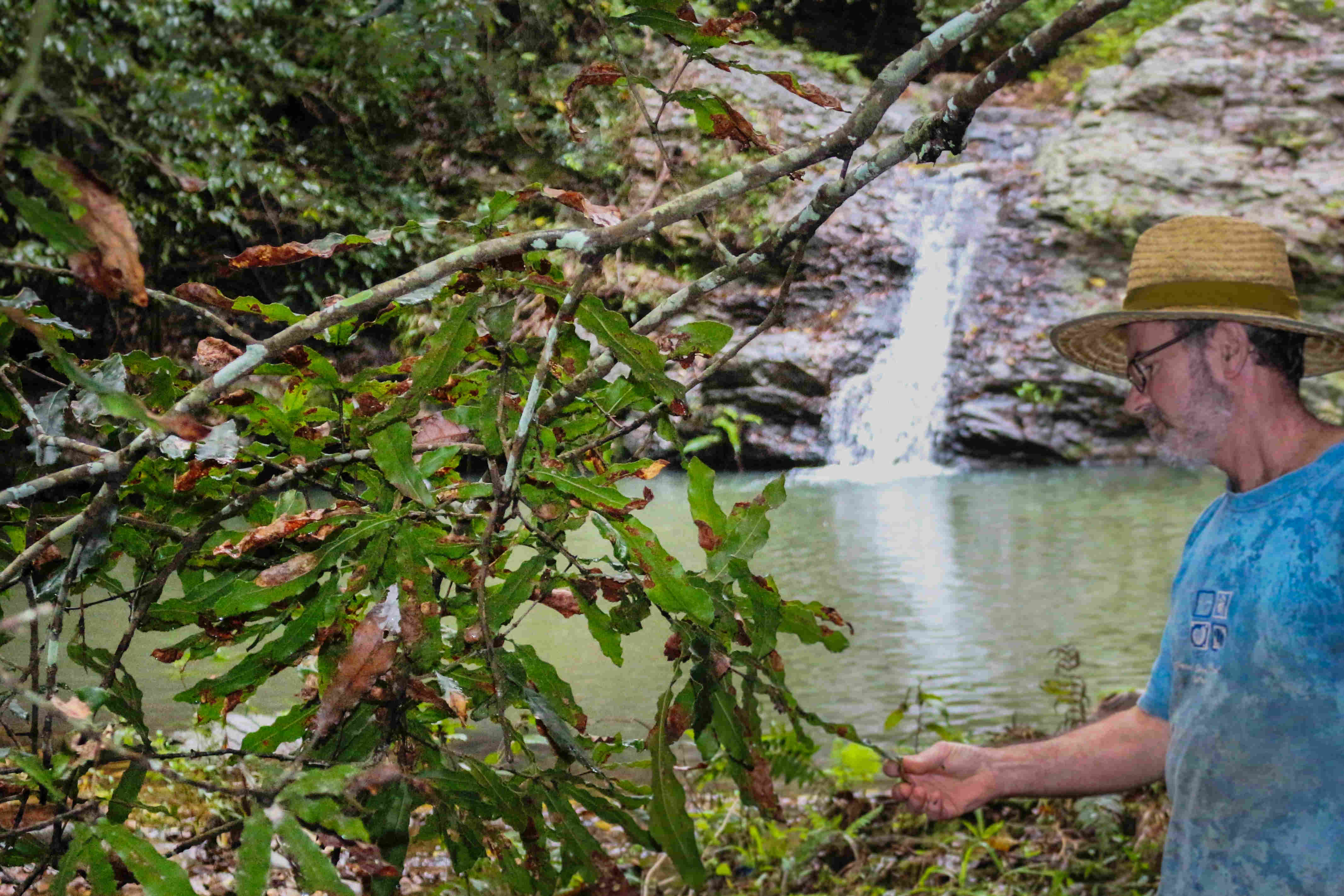 This is wild macadamia habitat –idyllic sub-tropical rainforest along a short (350 km) stretch of Australia’s east coast within 50 km of the Pacific Ocean, seldom far from a fresh-water stream. The area is prime real estate so the majority of accessible land has been cleared for farming and housing over the last 180 years. As a result, 80% of wild macadamia habitat has been lost. Although many Australians still think macadamias come from Hawaii, the Australian macadamia industry is well aware that macadamias are native to Australia and of the importance of preserving the macadamia gene bank. The AMS includes a conservation objective in its constitution: to promote and facilitate the conservation of the wild species of Macadamia.and has led the field in macadamia conservation over the last two decades. Ground-breaking initiatives supported by the AMS include commissioning the first Macadamia Species Recovery Plan and employing conservation project officers to implement the plan. Threatened Species Recovery Plans detail the actions needed for the conservation of threatened native species in Australia. Plans are developed by interested parties and published by the Australian Government in partnership with the relevant State Environment Department. The AMS is the only horticultural industry body to have developed a Threatened Species Recovery Plan.
In 2006, to raise funds for conservation activities, the AMS created a not-for-profit Trust Fund (www.wildmacadamias. org.au) authorised to collect tax-deductible donations and collaborate with other partners on conservation projects.
Addressing the Threats
 immediate and on-going. The rare Macadamia jansenii made international headlines recently after 50 of the 200 existing trees were burnt in the 2019 wildfires. Too many wild trees now survive in small remnant patches, vulnerable to weed invasion and wildfire. Trees retained for a hundred years on farmland as a source of nuts, can disappear overnight to make way for a housing development. Any one of these trees might contain genes that could rescue or revolutionise the industry, and it is this potential that the AMS wants to protect.
Going Above and Beyond
Other industry members provide valuable regular sponsorship and, through a partnership between growers and processors, growers are able to donate income from nut-inshell sales directly to the Trust. A list of supporters can be found on the Trust’s website (www.wildmacadamias.org.au).
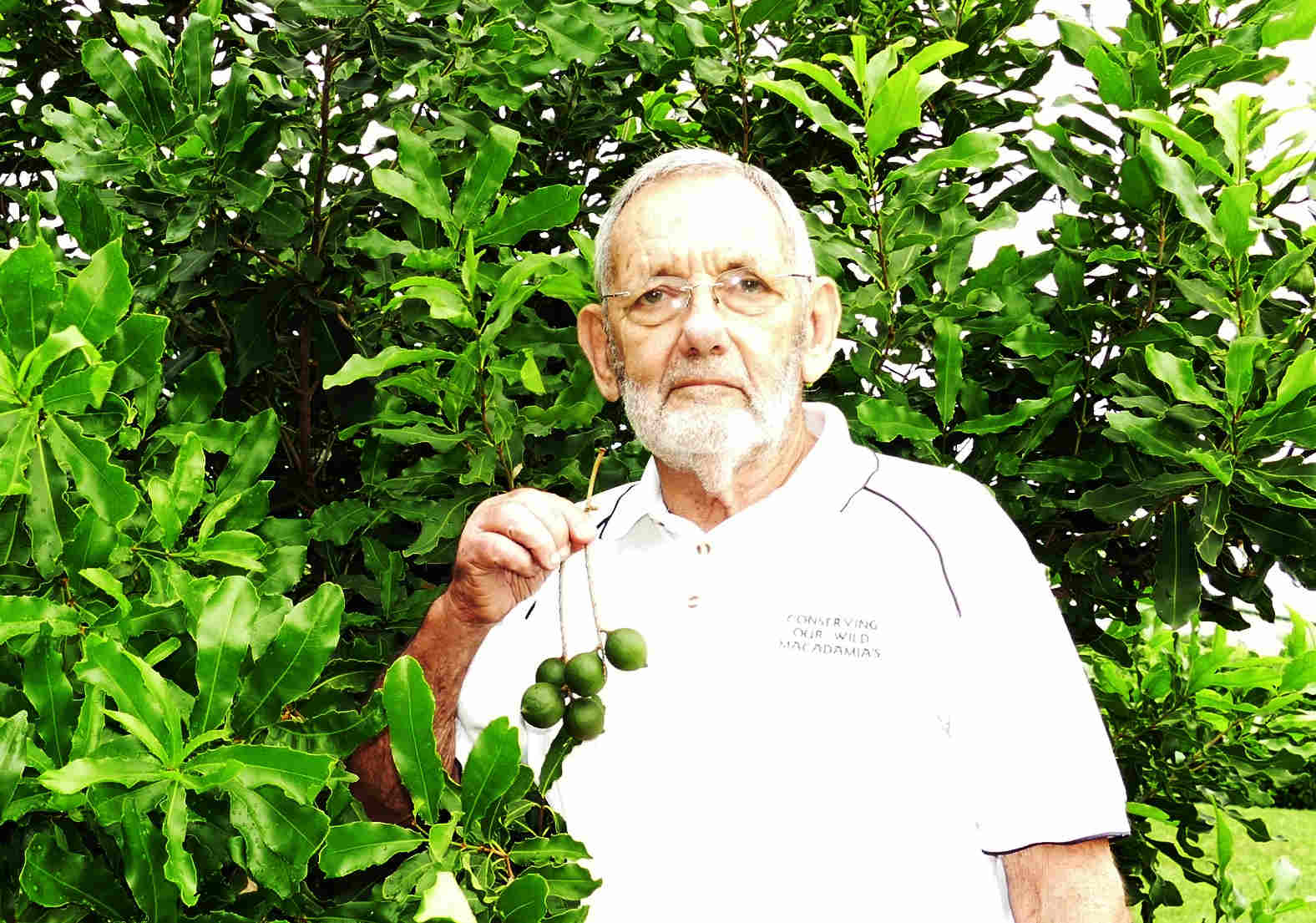 The latest initiative to finance macadamia conservation is from one of the industry’s most passionate champions, Ian McConachie who was awarded a Lifetime Achievement Award at the 2018 International Macadamia Symposium (not to mention a Golden Nut Award from the INC in 1994). Ian has developed one of the most promising commercial varieties of macadamia ever to be released, projected to increase kernel yields by up to 50%. In an action characteristic of their generosity and devotion to the macadamia industry and the species on which it depends, Ian and his wife Jan made a momentous decision to gift Plant Breeder Rights for the new variety to the Macadamia Conservation Trust. Royalties from sales of the new variety, named MCT1 after the Trust, will provide a base of funding to employ conservation specialists, finance recovery actions and leverage additional funds to undertake larger projects such as establishing the wild macadamia arboreta, researching the geographic distribution of genetic diversity and increasing public knowledge and appreciation of macadamias. Anyone interested in contributing to these major initiatives should please contact me directly (Denise.Bond@macadamias.org).
Conservation Is Part of the Sustainability Story
Macadamias and Health
Nutrition Research
Heart Health
In addition, macadamia nut consumption may lower plasma total and LDL cholesterol levels in hypercholesterolemic men [4,5]. In 2015, a systematic review and meta-analysis around tree nuts and heart health showed that eating tree nuts, including macadamias, every day lowers total cholesterol, LDL “bad” cholesterol and triglycerides[6].
Tree nut consumption, including macadamias, was also associated with lower body mass index (BMI), waist circumference, systolic blood pressure, insulin resistance, and HDL “good” cholesterol, compared with no consumption[7].
Macadamias may help lower bad cholesterol which could help your heart health.
Antioxidant Activity
Skin Benefits
World-First Scientific Research Project for the Global Macadamia Industry
Key macadamia-producing countries Australia, South Africa, Kenya, Brazil and Malawi have made a substantial financial investment into the research, and the project has been supported by the International Nut & Dried Fruit Council (INC) and INC World Forum.
The global macadamia health research project will be a large scale, long term randomized cross-over intervention study directed by acclaimed researcher Professor Joan Sabaté from Loma Linda University Medical Centre (USA). The study will compare the effect of a diet enriched in macadamias versus a control diet on insulin resistance and insulin secretion in individuals with insulin resistance. It will assess the effect of macadamia nut consumption on lipid profile (total cholesterol, LDL cholesterol, HDL cholesterol and triglycerides) and other emergent risk factors of cardiovascular disease as well as on central obesity and body composition.
Tomato Toast with Macadamia Spread Recipe
Check out a healthy macadamia recipe! Enjoy this treat to help get you through your day!