
Identification of cross‐reactive allergens in cashew‐and pistachio‐allergic children during oral immunotherapy.
It has been estimated that around 8% of the children in the U.S. suffer from food allergy and of those, 40% are allergic to multiple foods. Among tree nuts, allergies to pistachios are common in those with cashew nut allergy and multiple homologous allergenic components are shared between the two nuts. Three major allergens from cashew (Ana o 1 at 50 kDa, Ana o 2 major band at 33 kDa and minor band at 53 kDa, and Ana o 3 at 10 kDa) and five major allergens from pistachio (Pis v 1 at 7 kDa, Pis v 2 at 32 kDa, Pis v 3 at 50 kDa, Pis v 4 at 23 kDa, and Pis v 5 at 36 kDa) have been identified. Of those, Ana o 1 and Pis v 3, Ana o 2 and Pis v 2, Ana o 2 and Pis v 5, Ana o 3 and Pis v 1 have been recognized as homologues based on their sequence similarity and cross reactivity to IgE from the patients.

Peanut Oral Immunotherapy: a Current Perspective.
Purpose of the review: Peanut oral immunotherapy (OIT) is one of the most studied experimental therapies for food allergy. With the recently FDA-approved peanut product, Palforzia, the goal of this article is to review the most recent data from clinical trials, discuss recent trends, and anticipate future developments. Recent findings: The latest research suggests that peanut OIT could be a promising option for peanut-allergic patients, with the majority of participants in research studies achieving the primary efficacy endpoint of desensitization, as well as sustained unresponsiveness in select populations. Some studies also showed improvements in food allergy-related quality of life. However, peanut OIT is not without risk or side effects, including potentially serious allergic reactions. Future research will need to evaluate the short- and long-term effectiveness of the therapy in the real-world setting, predictors of important treatment outcomes, and the use of adjunctive therapies that may mitigate some of these allergic reactions.
Ara h 2 is the dominant peanut allergen despite similarities with Ara h 6.
Background: Ara h 2 specific-IgE (sIgE) is to date the best serologic marker to diagnose peanut allergy. Ara h 6 shares ∼60% sequence identity and multiple epitopes with Ara h 2. Objective: To assess the diagnostic utility and relative importance of Ara h 2 and Ara h 6 in peanut allergy. Methods: A cohort (n=100) of peanut allergic (PA), peanut sensitized but tolerant (PS) and non-sensitized non-allergic (NA) children were studied. sIgE levels to peanut and individual allergens were quantified using ImmunoCAP. ImmunoCAP inhibition experiments and mast-cell activation tests (MAT) were performed to both Ara h 2 and Ara h 6. Statistical analyses were performed using SPSS v14 and Prism v7. Results: Ara h 2-sIgE and Ara h 6-sIgE showed the greatest diagnostic accuracy for peanut allergy compared with sIgE to peanut and other peanut allergens. Most PA patients were sensitized to both Ara h 2 and Ara h 6. Ara h 2 reduced Ara h 2-sIgE binding more than Ara h 6 (p<0.001) whereas Ara h 6-sIgE binding was inhibited to a similar degree by Ara h 2 and Ara h 6 (p=0.432). On the MAT, Ara h 2 induced significantly greater maximal reactivity (p=0.001) and lower EC50 (p=0.002) than Ara h 6 when testing co-sensitized individuals. Conclusions: Ara h 2-sIgE and Ara h 6-sIgE provide the greatest accuracy for diagnosis peanut allergy. Ara h 2 is the dominant conglutin in peanut allergy in the UK, despite a degree of cross-reactivity with Ara h 6.
Sequence analysis of digestion-resistant peptides may be an efficient strategy for studying the linear epitopes of Jug r 1, the major walnut allergen.
Jug r 1, the major allergen of walnut, triggers severe allergic reactions through epitopes. Hence, research on the efficient strategy for analyzing the linear epitopes of Jug r 1 are necessary. In this work, bioinformatics analysis was used to predict the linear epitopes of Jug r 1. Overlapping peptide synthesis was used to map linear epitopes. In vitro simulated gastrointestinal digestion and HPLC-MS/MS were used to identify digestion-resistant peptides. The results showed that six predicted linear epitopes were AA28-35, AA42-49, AA55-62, AA65-73, AA97-104, and AA109-121. AA16-30 and AA125-139 were identified by the sera of walnut allergic patients. Five digestion-resistant peptides were AA19-33, AA40-45, AA54-74, AA96-106, and AA117-137. The predicted results only included one of the linear epitopes identified by sera, while the digestion-resistant peptides covered all. Therefore, the digestion-resistant property of food allergens may be a promising direction for studying the linear epitopes of Jug r 1.
Almond allergens: update and perspective on identification and characterization.
Almond (Prunus dulcis) is widely used as a human food due to its flavor, nutrients, and health benefits, but it is also one of the most likely tree nuts to trigger allergies. Almond allergens, though, have not been studied as extensively as those of peanuts and other selected tree nuts. This work presents an update of the molecular properties of almond allergens to clarify some confusion about the identities of almond allergens and our perspective on characterizing putative almond allergens. Presently, the following almond allergens have been designated by the WHO/IUIS Allergen Nomenclature Sub-Committee: Pru du 3 (a non-specific lipid transfer protein 1, nsLTP1), Pru du 4 (a profilin), Pru du 5 (60S acidic ribosomal protein 2), Pru du 6 (an 11S legumin known as prunin), and Pru du 8 (an antimicrobial protein with cC3C repeats). Besides, almond vicilin and almond γ-conglutin have been identified as food allergens, although further characterization of these allergens is still of interest. In addition, almond 2S albumin was reported as a food allergen due to the misidentification of Pru du 8. Two more almond proteins have been called allergens based on their sequence homology with known food allergens and their 'membership' in relevant protein families that contain allergens in many species. These include the pathogenesis related-10 protein (referred to as Pru du 1) and the thaumatin-like protein (referred to as Pru du 2). Almonds thus have 5 known food allergens and five more likely ones that need to be investigated further.
Influence of Instant Controlled Pressure Drop (DIC) on Allergenic Potential of Tree Nuts.
Pistachio and cashew contain allergenic proteins, which causes them to be removed from the diet of allergic people. Previous studies have demonstrated that food processing (thermal and non-thermal) can produce structural and/or conformational changes in proteins by altering their allergenic capacity. In this study, the influence of instant controlled pressure drop (DIC) on pistachio and cashew allergenic capacity has been studied. Western blot was carried out using IgG anti-11S and anti-2S and IgE antibodies from sera of patients sensitized to pistachio and cashew. DIC processing causes changes in the electrophoretic pattern, reducing the number and intensity of protein bands, as the pressure and temperature treatment increment, which results in a remarkable decrease in detection of potentially allergenic proteins. The harshest conditions of DIC (7 bar, 120 s) markedly reduce the immunodetection of allergenic proteins, not only by using IgG (anti 11S and anti 2S) but also when IgE sera from sensitized patients were used for Western blots. Such immunodetection is more affected in pistachio than in cashew nuts, but is not completely removed. Therefore, cashew proteins are possibly more resistant than pistachio proteins. According these findings, instant controlled pressure drop (DIC) can be considered a suitable technique in order to obtain hypoallergenic tree nut flour to be used in the food industry.
Reduction Of Bitterness In Green Walnuts By Conventional And Ultrasound-Assisted Maceration.
The efficiency of conventional and ultrasound-assisted maceration was investigated in comparison to reduce the bitterness of green walnuts. Conventional maceration was studied at room temperature for 6, 8 and 10 days while ultrasound-assisted maceration (20 kHz, %100 of amplitude) was performed at 36 °C for 6, 8, 10, 12, and 14 h. Phenolic content and antioxidant activity of green walnuts were decreased by reduction of bitterness. Phenolic content and antioxidant activity of green walnut jams prepared from debittered green walnuts by ultrasound-assisted maceration were higher than those of conventional maceration excluding ellagic acid only. Based on findings of sensory analyses, bitterness level was similar in green walnut jams prepared by ultrasound-assisted maceration for 12 h and conventional maceration for 6 days. On the other hand, green walnut jams processed by ultrasound-assisted maceration for 12 h led to the highest general acceptance. It was concluded that ultrasound-assisted maceration may provide better nutritional and sensory quality in green walnut jam. In addition, the time required for reduction of bitterness may be shortened from days to hours by ultrasound-assisted maceration.
Study of the Quality Parameters and the Antioxidant Capacity for the FTIR-Chemometric Differentiation of Pistacia Vera Oils.
The aim of this work was to characterize the pistachio oil of the Greek variety, "Aegina", evaluate its various quality indices, and investigate the potential use of FTIR as a tool to discriminate different oil qualities. For this purpose, the antioxidant capacity, the tocopherol content and the oxidation and degradation of fatty acids, as described by k, Δk, R-values, and free acidity were evaluated using 45 samples from eight different areas of production and two subsequent years of harvesting. The antioxidant capacity was estimated using 2,2'-azinobis(3-ethylbenzothiazoline-6-sulfonic acid diammonium salt (ABTS) and 2,2-diphenyl-1-(2,4,6-trinitrophenyl)hydrazine (DPPH) assays, and the tocopherol content was quantified through HPLC analysis. FTIR spectra were recorded for all samples and multivariate analysis was applied. The results showed significant differences between the oil samples of different harvesting years, which were successfully discriminated by a representative FTIR spectral region based on R-value, total antioxidant capacity, and scavenging capacity, through ABTS. A similar approach could not be confirmed for the other quality parameters, such as the free acidity and the tocopherol content. This research highlighted the possibility of developing a simple, rapid, economic, and environment friendly method for the discrimination of pistachio oils according to their quality profile, through FTIR spectroscopy and multivariate analysis.
INC Academia: Special 33% Discount and Schedule Changes
Save 33% on the Executive Program on Nuts and Dried Fruits Online Course
 course offers an insight into the nut and dried fruit industry that is unparalleled. The course consists of 11 units (50 hours) and will give students an idea of the main aspects involved in the sector. Topics include soil and climate, varieties, nutrition facts, processing, food safety, and quality standards, industry statistics and essential strategies for successful negotiations, among other subjects.
Stay Up to Date with the New INC Academia Schedule
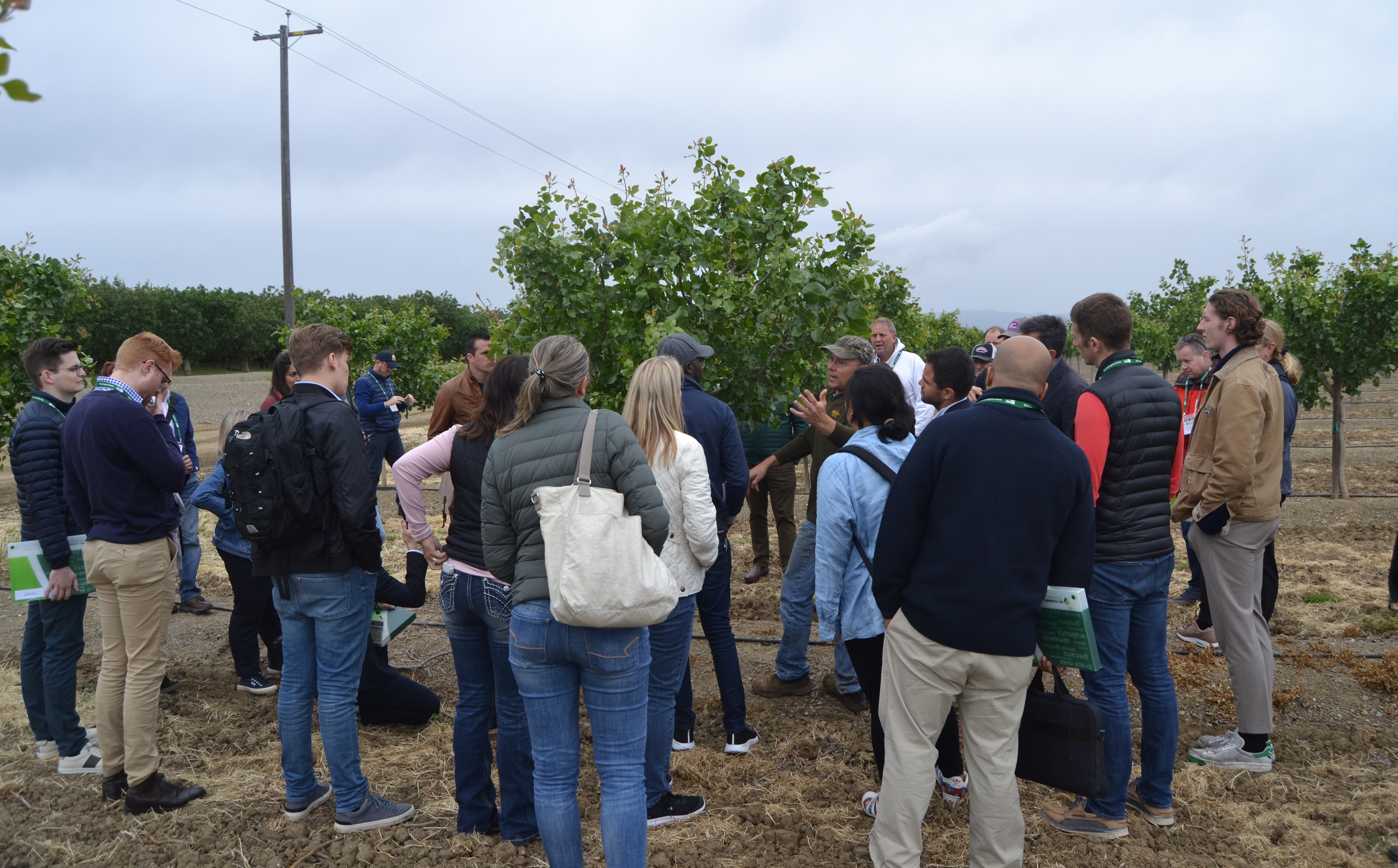 , originally to take place in May 2020, has been moved to May 2021 and will take place in Italy. As more details are confirmed, the information will be made available.
Regarding the online course, the INC has decided to extend the deadline for enrolling in the course. Initially set for April 15, 2020, the deadline to enroll is now October 31, 2020. The date to complete the online course has also been adjusted as students will now have until November 30, 2020, to finish the online material.
The INC would like to remind all, that in order to attend the on-site course, the online course must be completed first. To find more information visit the INC Academia page.
INC Academia: Special 33% Discount and Schedule Changes
Save 33% on the Executive Program on Nuts and Dried Fruits Online Course
course offers an insight into the nut and dried fruit industry that is unparalleled. The course consists of 11 units (50 hours) and will give students an idea of the main aspects involved in the sector. Topics include soil and climate, varieties, nutrition facts, processing, food safety, and quality standards, industry statistics and essential strategies for successful negotiations, among other subjects.Stay Up to Date with the New INC Academia Schedule
, originally to take place in May 2020, has been moved to May 2021 and will take place in Italy. As more details are confirmed, the information will be made available.
Regarding the online course, the INC has decided to extend the deadline for enrolling in the course. Initially set for April 15, 2020, the deadline to enroll is now October 31, 2020. The date to complete the online course has also been adjusted as students will now have until November 30, 2020, to finish the online material.
The INC would like to remind all, that in order to attend the on-site course, the online course must be completed first. To find more information visit the INC Academia page.