
Functional Biology and Molecular Mechanisms of Host-Pathogen Interactions for Aflatoxin Contamination in Groundnut (Arachis hypogaea L.) and Maize (Zea mays L.).
Aflatoxins are secondary metabolites produced by soilborne saprophytic fungus Aspergillus flavus and closely related species that infect several agricultural commodities including groundnut and maize. The consumption of contaminated commodities adversely affects the health of humans and livestock. Aflatoxin contamination also causes significant economic and financial losses to producers. Research efforts and significant progress have been made in the past three decades to understand the genetic behavior, molecular mechanisms, as well as the detailed biology of host-pathogen interactions. A range of omics approaches have facilitated better understanding of the resistance mechanisms and identified pathways involved during host-pathogen interactions. Most of such studies were however undertaken in groundnut and maize. Current efforts are geared toward harnessing knowledge on host-pathogen interactions and crop resistant factors that control aflatoxin contamination. This study provides a summary of the recent progress made in enhancing the understanding of the functional biology and molecular mechanisms associated with host-pathogen interactions during aflatoxin contamination in groundnut and maize.

Maximising recombination across macadamia populations to generate linkage maps for genome anchoring.
The Proteaceae genus Macadamia has a recent history of domestication as a commercial nut crop. We aimed to establish the first sequence-based haploid-correlated reference genetic linkage maps for this primarily outcrossing perennial tree crop, with marker density suitable for genome anchoring. Four first generation populations were used to maximise the segregation patterns available within full-sib, biparental and self-pollinated progeny. This allowed us to combine segregation data from overlapping subsets of >4,000 informative sequence-tagged markers to increase the effective coverage of the karyotype represented by the recombinant crossover events detected. All maps had 14 linkage groups, corresponding to the Macadamia haploid chromosome number, and enabled the anchoring and orientation of sequence scaffolds to construct a pseudo-chromosomal genome assembly for macadamia. Comparison of individual maps indicated a high level of congruence, with minor discrepancies satisfactorily resolved within the integrated maps. The combined set of maps significantly improved marker density and the proportion (70%) of the genome sequence assembly anchored. Overall, increasing our understanding of the genetic landscape and genome for this nut crop represents a substantial advance in macadamia genetics and genomics. The set of maps, large number of sequence-based markers and the reconstructed genome provide a toolkit to underpin future breeding that should help to extend the macadamia industry as well as provide resources for the long term conservation of natural populations in eastern Australia of this unique genus.
Thermosensitive Hydrogel for Encapsulation and Controlled Release of Biocontrol Agents to Prevent Peanut Aflatoxin Contamination.
Starch, alginate, and poly(N-isopropylacrylamide) (PNIPAAm) were combined to prepare a semi-interpenetrating network (IPN) hydrogel with temperature sensitivity. Calcium chloride was used as cross-linking agent, the non-toxigenic Aspergillus flavus spores were successfully encapsulated as biocontrol agents by the method of ionic gelation. Characterization of the hydrogel was performed by Fourier-transform infrared spectroscopy (FTIR), scanning electron micrograph (SEM), and thermogravimetry analysis (TGA). Formulation characteristics, such as entrapment efficiency, beads size, swelling behavior, and rheological properties were evaluated. The optical and rheological measurements indicated that the lower critical solution temperature (LCST) of the samples was about 29-30 °C. TGA results demonstrated that the addition of kaolin could improve the thermal stability of the semi-IPN hydrogel. Morphological analysis showed a porous honeycomb structure on the surface of the beads. According to the release properties of the beads, the semi-IPN hydrogel beads containing kaolin not only have the effect of slow release before peanut flowering, but they also can rapidly release biocontrol agents after flowering begins. The early flowering stage of the peanut is the critical moment to apply biocontrol agents. Temperature-sensitive hydrogel beads containing kaolin could be considered as carriers of biocontrol agents for the control of aflatoxin in peanuts.
A Sensitive, Point-of-Care Detection of Small Molecules Based on a Portable Barometer: Aflatoxins In Agricultural Products.
Sensitive and point-of-care detection of small toxic molecules plays a key role in food safety. Aflatoxin, a typical small toxic molecule, can cause serious healthcare and economic issues, thereby promoting the development of sensitive and point-of-care detection. Although ELISA is one of the official detection methods, it cannot fill the gap between sensitivity and point-of-care application because it requires a large-scale microplate reader. To employ portable readers in food safety, Pt-catalysis has attracted increasing attention due to its portability and reliability. In this study, we developed a sensitive point-of-care aflatoxin detection (POCAD) method via a portable handheld barometer. We synthesized and characterized Au@PtNPs and Au@PtNPs conjugated with a second antibody (Au@PtNPs-IgG). A competitive immunoassay was established based on the homemade monoclonal antibody against aflatoxins. Au@PtNPs-IgG was used to catalyze the production of O2 from H2O2 in a sealed vessel. The pressure of O2 was then recorded by a handheld barometer. The aflatoxin concentration was inversely proportional to the pressure recorded via the barometer reading. After optimization, a limit of detection of 0.03 ng/mL and a linear range from 0.09 to 16.0 ng/mL were achieved. Recovery was recorded as 83.1%-112.0% along with satisfactory results regarding inner- and inter-assay precision (relative standard deviation, RSD < 6.4%). Little cross-reaction was observed. Additionally, the POCAD was validated by high-performance liquid chromatography (HPLC) by using peanut and corn samples. The portable POCAD exhibits strong potential for applications in the on-site detection of small toxic molecules to ensure food safety.
In vitro digestion effect on mineral bioaccessibility and antioxidant bioactive compounds of plant-based beverages.
Consumption of plant-based beverages (PBB) is a growing trend; and have been used as viable substitutes for dairy based products. To date, no study has comparatively analyzed mineral composition and effect of in vitro digestion on the bioaccessibility of different PBB. The aim of this research was to investigate the content of essential minerals (calcium (Ca), magnesium (Mg), iron (Fe), zinc (Zn)) and to estimate the effect of in vitro digestion in plant-based beverages, and their antioxidant bioactive compounds (phenolic compounds and antioxidant capacity). Moreover, the presence of antinutritional factors, such as myo-inositol phosphates fractions, were evaluated. Samples of PBB (rice, cashew nut, almond, peanut, coconut, oat, soy, blended or not with another ingredients, fortified with minerals or naturally present) and milk for comparison were evaluated. TPC ranged from 0.2 mg GAEq/L for coconut to 12.4 mg GAEq/L for rice and, the antioxidant capacity (DPPH) ranged from 3.1 to 306.5 µmol TE/L for samples containing peanut and oat, respectively. Only a few samples presented myo-inositol phosphates fractions in their composition, mostly IP5 and IP6, especially cashew nut beverages. Mineral content showed a wide range for Ca, ranging from 10 to 1697.33 mg/L for rice and coconut, respectively. The Mg content ranged from 6.29 to 251.23-268.43 mg/L for rice and cashew nut beverages, respectively. Fe content ranged from 0.76 mg/L to 12.89 mg/L for the samples of rice. Zinc content ranged from 0.57 mg/L to 8.13 mg/L for samples of oat and soy, respectively. Significant variation was observed for Ca (8.2-306.6 mg/L) and Mg (1.9-107.4 mg/L) dialyzed between the beverages, with lower concentrations of Fe (1.0 mg/L) and Zn (0.5 mg/L) in dialyzed fractions. This study provides at least 975 analytically determined laboratory results, providing important information for characterization and comparison of different plant-based beverages.
Organic Raisin Production in Turkey
Introduction
In the European Union, the common legislative framework was established in 1991 (EEC 2092/91[1]). The first Turkish regulation setting up the production rules for organic plant production and certification system was adopted in 1994 (Regulation No 22145, 18.12.1994). Ten years later, in 2004, legislation 5262 “Organic Agriculture Law” was accepted (03.12.2004). Currently, the implementing regulation is being revised/amended to align with the EU regulation. The scope and the rules for production, processing and labeling are similar to the EU legislation.
In Turkey, the competent authority is the Ministry of Agriculture and Forestry (MoAF) and they authorize certification bodies to carry out third party certification for organic if accredited according to ISO 17065. As grapes are perennial crops, the transition period is three years. Since 2009, organic farmers have received a subsidy after completing the first year of the transition period as long as production is certified according to Turkish legislation. However, the amounts paid are not incentivizing small farmers to convert to organic. The main motive behind conversion is getting guaranteed access to the market through contracted farming. MoAF collects national data on organic agri-food production, imports and exports based on operators certified for Turkish legislation. There is no bilateral agreement yet for equivalency of the Turkish legislation to any organic standard, therefore, as in all other countries, every organic product destined for export must fulfill the rules of the importing market. Thus, organic operators have to be certified according to various official standards such as the EU, the National Organic Program of the USA or the Japanese Agricultural Standards and/or private standards. Inspection and certification are done by bodies that are authorized by the competent authority according to the rules shown in the standard.
Current State
The number of organic dried grape farms, including those in transition, increased from 1791 in 2014 to 2740 in 2018. There was a steep increase in transition to organic seedless dried grapes in 2016, however, some farmers dropped back the following two years.

Figure 1 reflects the changes in production amounts (metric tons) of seedless dried grapes between 2003 and 2018. The major increases are seen during the last few years. There was a steep increase in transition to organic in 2017 but some farmers dropped back.
The number of  organic farms certified as in transition declined in 2018 reducing the total farm number (Figure 2). The total seedless grape production area under certified organic management showed a steady increase (Figure 3). The area in transition showed a slight decrease between 2016 and 2018.
According to the 2018 data, the total cultivated land certified as organic (including in transition and excluding area for wild harvest) in Turkey is 533,793 ha and seedless dried grape area comprise 1.62% of organic certified land and 3.44% of organic farms. Farm sizes are rather small.
 The average size of an organic dried grape farm is 3.16 ha, and the average yield per hectare is 17.84 MT of fresh grapes (equivalent to 4.46 MT of dried grapes per ha). Seedless grape vineyards for sun-drying are located solely in the western part of Turkey. Manisa and İzmir are the main producing provinces. Vineyards producing dried seedless grapes cover 6.5% of the organic certified land in this region creating an important socio-economic output.
Seedless grapes are harvested and dried at the farm and then brought to the processing units that are also certified by authorized certification bodies. All the methods and inputs used (e.g., washing, pest control, cleaning of the facility) have to comply with the reference organic standard. The labeling and the information on the label provide traceability and build consumer trust.
Future Prospects
About the Author
Industry Highlight: Turkish Sultana Raisins
Production
According to the International Organization of Vine and Wine (OIV), the 2018 total world area under vines was about 7.4 million ha, with Spain, China, France, Italy, and Turkey accounting for 50% of the world vineyard. The 2018 estimated world production of grapes was 77.8 million metric tons. About 57% of these grapes were used for wine, 36% were consumed as fresh table grapes and 7% as dried grapes. World dried grape production was estimated at 1.3 million metric tons in 2018, the major producers being Turkey, the United States, China, Iran, South Africa and Uzbekistan[1].
The history of the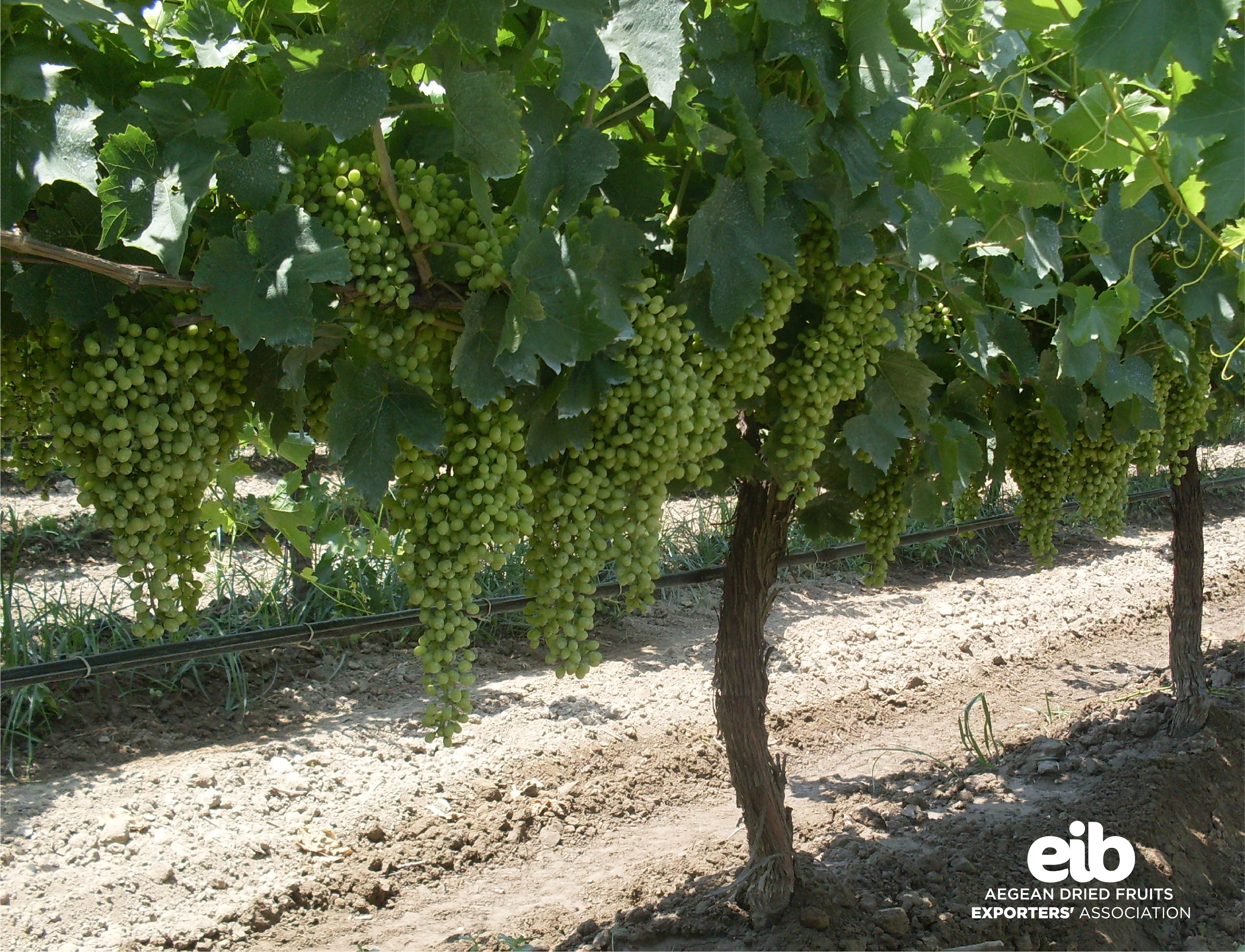 grape vine goes back to prehistoric times. Anatolia is the genetic home of the seedless sultanas as well as Vitis vinifera ssp. silvestris, Vitis vinifera ssp. caucasica, and Vitis silvestris ssp. Sativa[2].
Turkey is:
- One of the genetic centers for grapes in the world.
- Home to numerous native varieties. There are 1,495 Turkish grape varieties. However, only around 50-60 have some commercial importance.
- Climatically suitable for grape production.
- The 5th largest in the world in terms of area.
- The 6th largest in the world in terms of production.
Turkey is one of the world’s largest dried grape producers, along with the United States, China, and India. The country produces over 25% of the world's production of dried grapes and is the leading exporter.
Table grapes made up approximately 53%, dried grapes 32% and vine grapes 15% of the total Turkish grape production in 2018.
Seedless
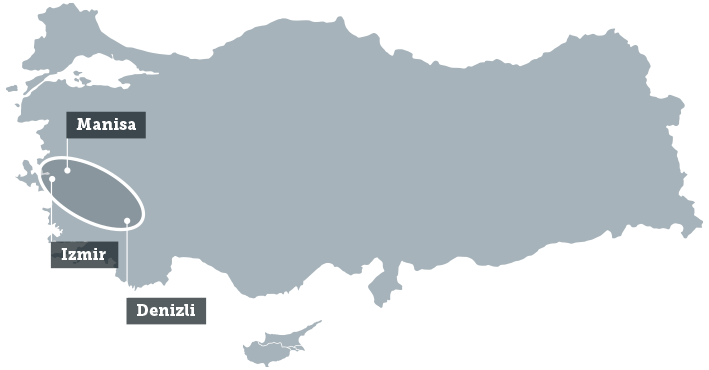 “Yuvarlak Çekirdeksiz” and “Sultani” are the main cultivars used for raisins[4]. The production of commercial Sultana grape is concentrated in the western Aegean region, mainly in Manisa (75%), Denizli (17%) and Izmir (9%). Seedless grape production averages about 1.47 million metric tons, which accounts for approximately 37% of the total grape crop. About 71% of the production is consumed as dried and the remaining 29% as fresh.
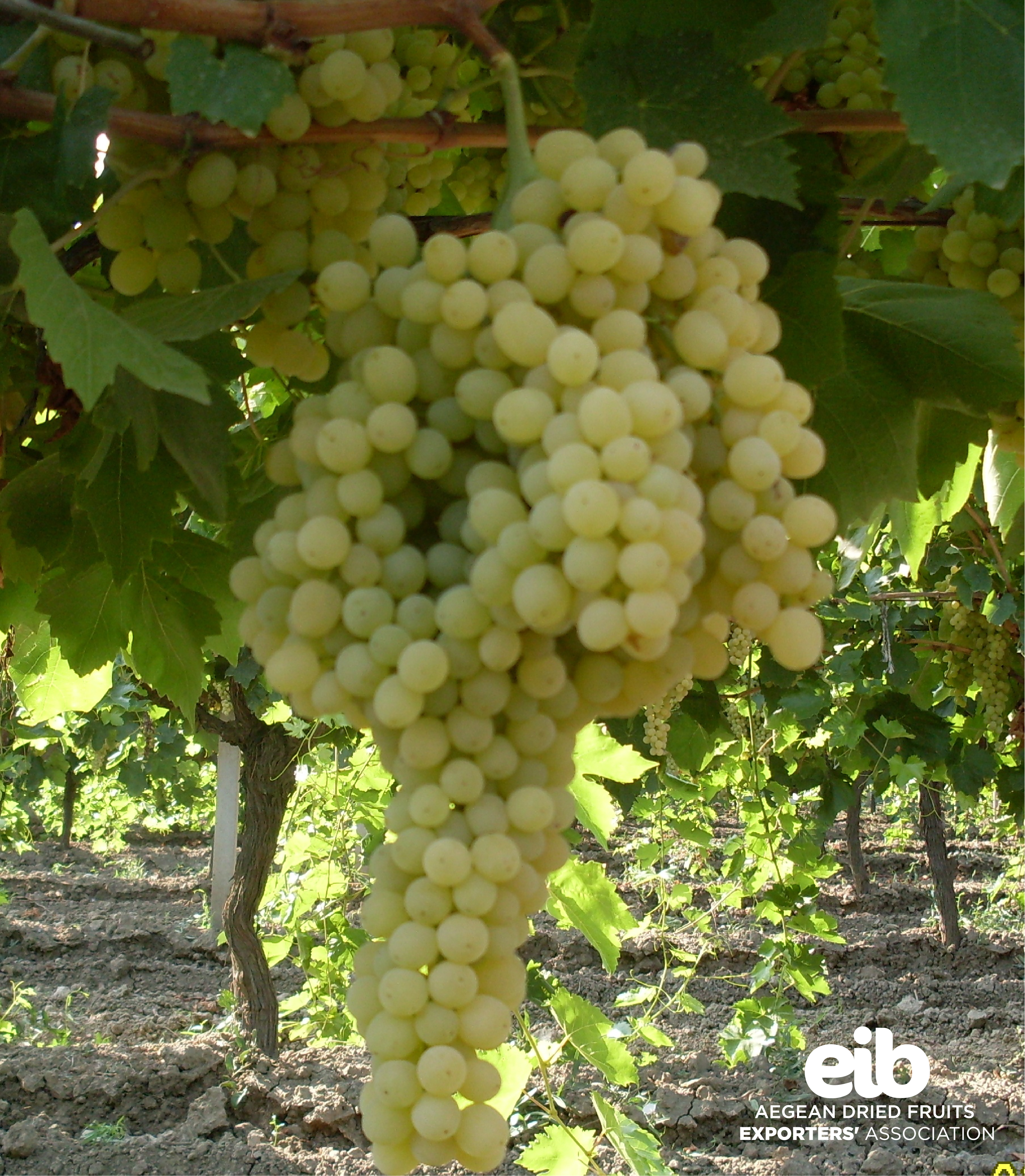 The Seedless Sultana –also known as Sultanina, Sultanieh, Thompson Seedless, Oval and Ak Kişmiş– is characterized by small, white, seedless berries; large clusters; thin skin and firm pulp[5].
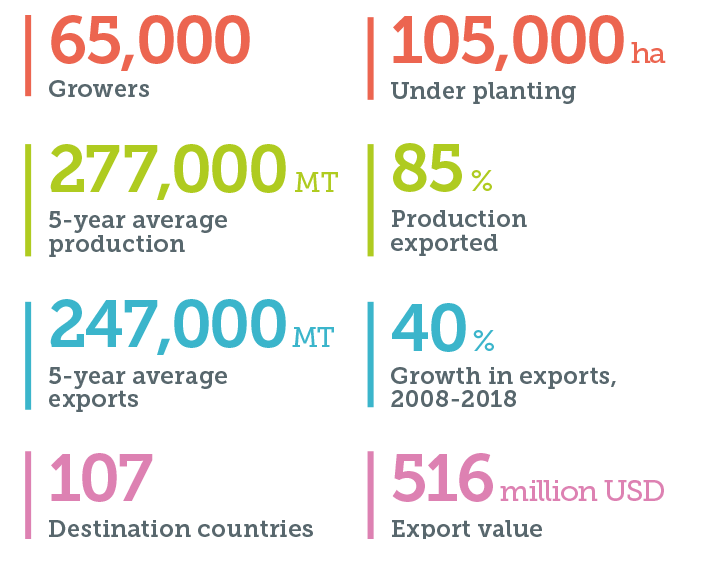
One kilogram of raisins requires about 4 kilograms of fresh grapes. It is estimated that there are nearly 65,000 growers who produce seedless grapes in Turkey[6]. They are generally divided into small farms.
Production expanded significantly in the 1990s due to more intensive cultivation and adoption of better irrigation techniques[7]. Turkey has been capable of responding to market growth by increasing its production volume without sacrificing quality. This has been possible by both enlarging the production area and utilizing modern viticulture techniques to increase productivity[8]. The use of irrigation systems in vineyards has increased in recent years with government support. Over half of the vineyards in Manisa are drip irrigated.
Production area (ha) has steadily increased over the past decade, however, production (MT) fluctuates yearly, depending on the weather conditions (Table 1).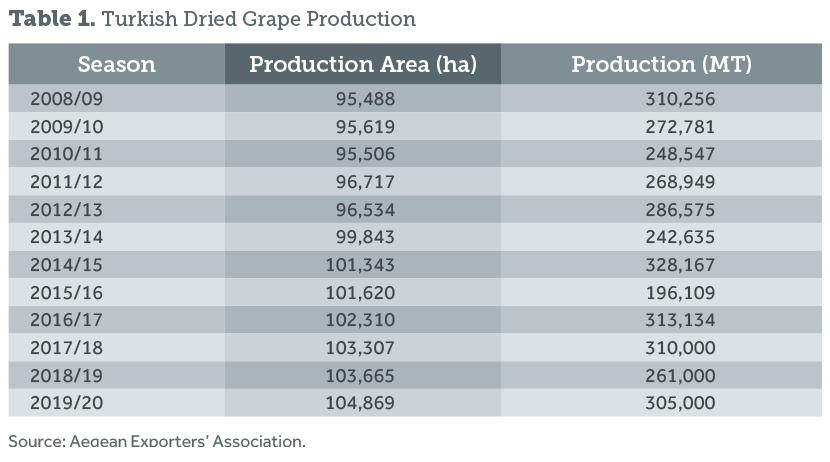
As the motherland of Sultanina, Turkey is the leading supplier of Sultana raisins. It accounts for a quarter of the world production of raisins and is the lead exporter. Other major dried grape producing countries include the United States, China, and India (Table 2).
Raisin production in Turkey has ranged between approx. 200,000 and 330,000 MT over the last ten years (Table 1). In 2019/20, it has been estimated at 305,000 MT, up 17% from the 2018/19 season, which was hit by unfavorable weather conditions –rain and hail– during spring and summer.
The Seedless Sultana grapevines are vigorous and adapt to different types of soil, from loamy sands to loans[9], but the most significant features are good drainage and satisfactory depth[10]. They require a hot, dry climate (i.e. warm days, cold nights) and little moistness in the air to yield high-quality grapes. Adequate temperature and sufficient sunlight are required for fruit maturation.
Harvest time is crucial for the grape since one heavy rainstorm during this process can cause substantial damage[11]. The harvest season usually starts around mid-August and is determined according to the sugar levels of the grapes. The sugar content is measured using refractometers.

The grapes are cut and then transferred to the drying area. Here, the grapes are dipped into a harmless water solution containing potassium carbonate and olive oil that intensifies the drying process. Dipping the grapes prior to drying also reduces their tendency to darken –the raisins turn amber or yellowish. Then, they are placed on drying beds.
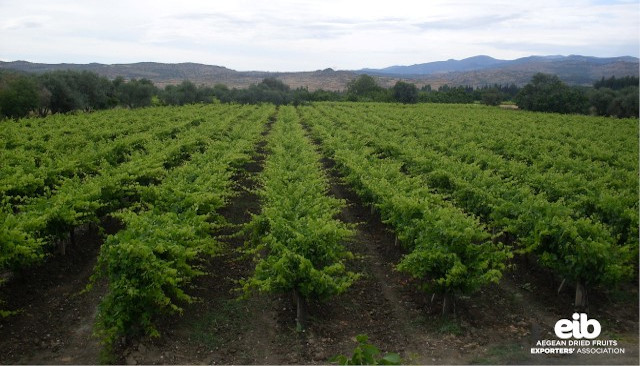
The raisin industry is well developed in Turkey, with large and modern facilities that meet the highest standards. Exporters associations, cooperative unions and commodity exchanges in the producing areas have made great efforts in implementing better farming practices and providing high-quality products. Quality assurance systems such as Good Agricultural Practices, Integrated Product Management and Integrated Pest Management with a “farm to fork” approach is becoming more and more important.
One example is the TARIŞ Sultana Raisins Cooperative Union, which was established in the 1930s to prevent a drop in prices as a result of the global economic crisis. Today, TARIŞ is one of the largest Sultana buyers and exporters, with a total of 13 cooperatives and 15,000 growers/members. TARIŞ experts have been controlling the quality of Sultana raisins since 1948. The vines are grown under controlled conditions and the Sultanas are harvested and dried under supervision of the TARIŞ Research and Development Department. The dried fruits are graded and received by TARIŞ experts and stored in warehouses under controlled conditions.
TS 3411 Standards define the color and size classification, packing and labeling in force for the exportation of Sultana Raisins.
- Bleached
- Unbleached
- Natural without dipping
- Natural with dipping
- No. 7 (dark as black)
- No. 8 (dark)
- No. 9 (brownish)
- No. 10 (light brown)
- No. 11 (light brown to golden)
- Jumbo (<220 berries in 100 g)
- Standard (221 to 300 berries in 100 g)
- Medium (301 to 400 berries in 100 g)
- Small (401 to 550 berries in 100 g)
- Small-small (>551 berries in 100 g)
The industrial class raisins are only put in sacks or bag packages. The weight of these may not be less than 15 kg. For small consumer packages, there is a ±2% weight tolerance.
In the EU, Commission Regulation (EC) No 1666/1999 of 28 July 1999 lays down detailed rules for the application of Council Regulation (EC) No 2201/96 regarding the minimum marketing characteristics for dried grapes (CN code 0806 20) intended for consumption or for export to third countries.
Trade
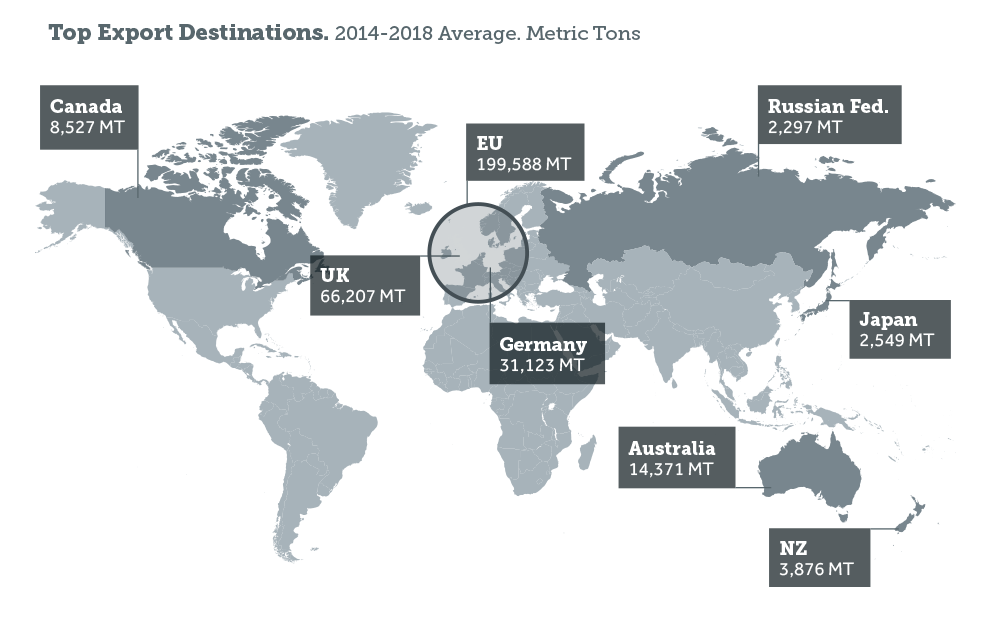
Turkey accounts for more than 30% of the world's dried grape exports. About 85% of the dried seedless grapes that the country produces are exported, thanks to stable demand from Europe, the most popular variety being Sultana. Domestic consumption and stocks constitute the remaining 15% of the production.
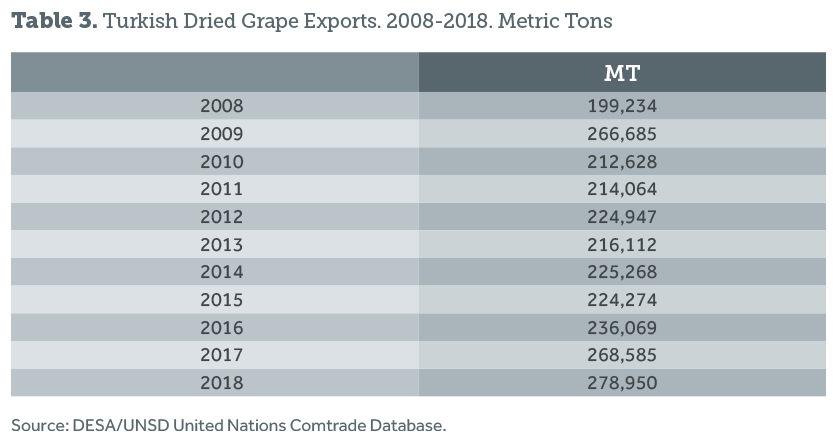
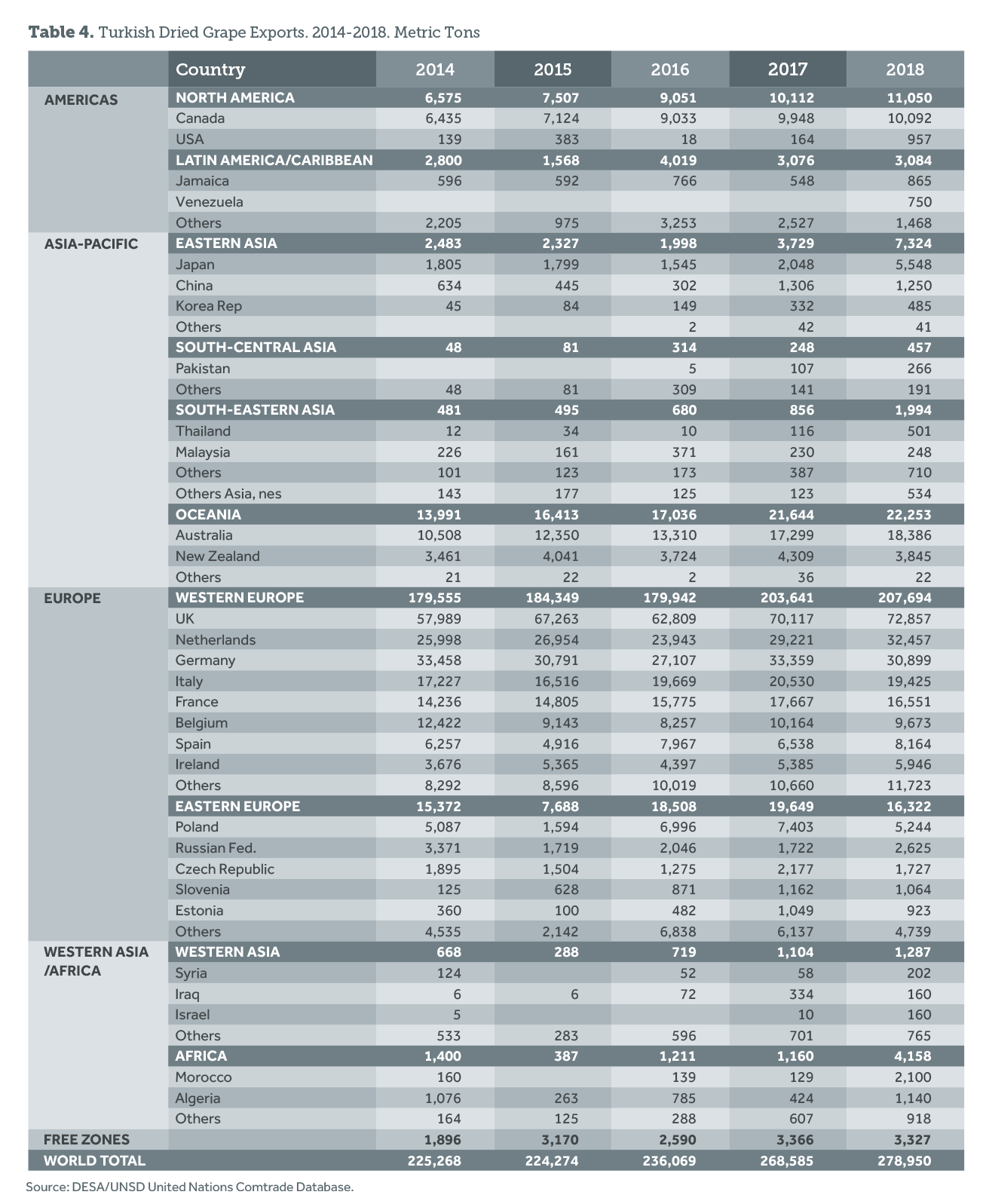
Since 2008, Turkey has exported an average of 233,000 MT of dried grapes per year. In 2018, raisin exports reached a record high of 278,950 MT (Table 3) and this figure is likely to increase in line with the increase in production. The number of destination countries has also increased in recent years from 92 in 2014 to 107 in 2018.
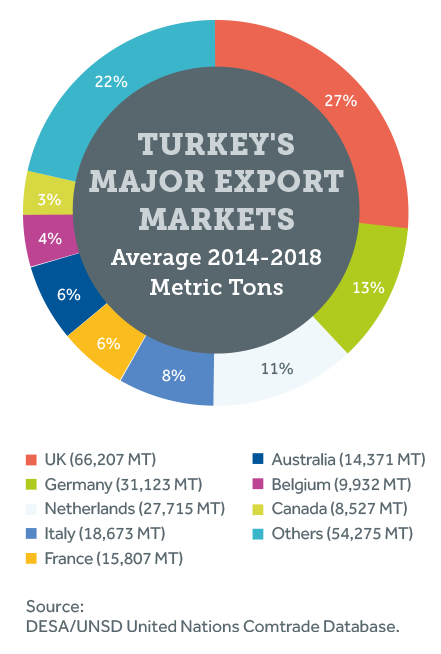
About 84% of Turkey’s dried grape exports are to the European Union, the main destinations being the United Kingdom, the Netherlands, and Germany (Table 4), which together account for 51% of the exports to the EU.
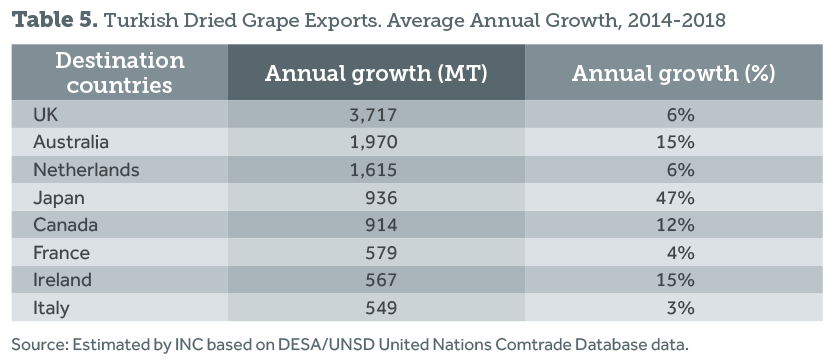
The highest average annual growth in imports over the last five years was recorded by the United Kingdom, Australia, the Netherlands, Japan and Canada (Table 5). Other countries with a significant average annual import growth in quantity were France, Ireland, and Italy.
Turkey also imports a small number of currants, usually about 2,000 MT per year. According to the Aegean Exporters’ Association, Turkey exported 252,450 MT of seedless raisins between September 1, 2018, and August 31, 2019, exceeding 516 million USD. The export value increased by 14% compared with the previous marketing year. The new season started on September 1, 2019, and up to February 15, 2020, exports reached 129,956 MT, from which 105,804 MT were destined to the EU.
Consumption
Despite Turkey’s leading role in the production of raisins, domestic consumption is comparatively low. About 85% of the production is exported. The reason being that consumers prefer fresh grapes during the season. In addition, there are many alternative dried fruits widely available, like apricots and figs[12]. In Turkey, raisins are mainly consumed as a snack and as an ingredient in bakery products, such as cakes and biscuits.
In 2015, in order to increase domestic consumption and awareness of the health benefits of dried grapes, the Ministry of Health and the Ministry of Agriculture and Forestry started a campaign to distribute raisins to school kids. The campaign finished in 2018.
Future Expectations
An increasing demand for healthy foods across the globe should translate into opportunities for Sultana raisins. The growing attention to high sugar content is influencing the food and beverage market. A growing number of traders and processors have turned to buying dried fruit without added sugar, and in many bakery dietary products, dried grapes are increasingly used as a natural substitute for sugar[13],[14].
New Product Launches: Raisins
Raisins are also used for raki production -a traditional Turkish spirit distilled with aniseed.
Among some of the newest products are polyphenol enriched ready-to-eat Sultana raisins, prebiotic fiber added Sultana raisins, glycerin infused Sultana raisins, and preservative-free, soft, ready-to-eat Sultana raisins with natural flavoring.
Companies from all around the world continue investing in the use of raisins as a top-ingredient in their new launches.

Kellogg's® Raisin Bran Crunch® Vanilla Almond: The new cereal has even more deliciousness with the addition of almond slices and a hint of vanilla flavor to the crispy bran flakes, raisins and crunchy clusters fans love. www.kelloggs.com

La Flor Burgalesa relaunched its Florbú Natura line, which includes wholemeal muesli, orange, and raisins cookies. www.laflorburgalesa.es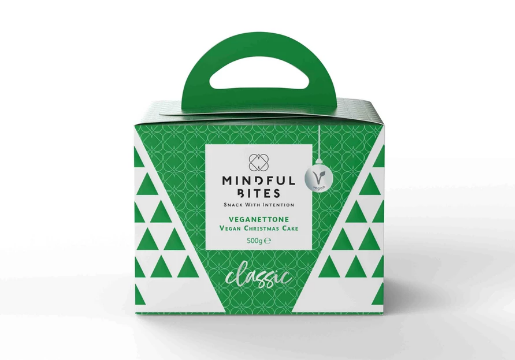
Mindful Bites Veganettone: Just like the traditional Panettone, made with passion and sustainably sourced plant-based ingredients only. www.mindfulbites.co.uk

Plotz! Honey Nutters, Trail Blazer with peanuts, honey, raisins, peanut butter, sunflower seeds, almonds, and pumpkin seeds. www.plotzsnacks.com
Raisins and Health: Challenges and Opportunities
Sugar Content: Dried Fruit vs. Fresh Fruit
Raisins contain naturally occurring sugars, with fructose and glucose being the most common. The levels of sugar may differ according to drying methods, as well as regional and varietal factors. However, the most important observation is that one raisin contains about the same amount of nutrients as a fresh grape, but in a much smaller package.
Tooth Decay
Traditionally, raisins have been thought to promote dental caries due to their “stickiness” and natural sugar content. However, scientific evidence suggests the contrary: Raisins may in fact promote oral health. Bioactive compounds found in raisins appear to have antimicrobial properties that inhibit the growth of bacteria that cause cavities and gum disease[2].
A 2013 study concluded that raisin consumption alone does not drop oral pH below the threshold that contributes to enamel dissolution, do not remain on the teeth longer than other foods, and contain a variety of antioxidants that inhibit Streptococcus Mutans, bacteria that is a primary cause of dental caries. However, further research in this area should be considered[3].
According to UK’s National Health Service, dried fruit should be eaten at mealtimes, not as a between-meal snack, to reduce the risk of tooth decay[4]. This is a case of urban myth according to Jennette Higgs, Registered Public Health Nutritionist & Dietitian, and principal consultant for Food To Fit[5]. A 2016 study concluded that there is a lack of scientific evidence to support restrictive advice for dried fruit intake on the basis of dental health parameters and further research is required[6].
Advice on dried fruit consumption should also take account of their nutritional benefits, being a source of fiber, low in fat and containing useful levels of micronutrients.
Phytochemicals
Raisins are high in potassium, which contributes to the maintenance of normal blood pressure. They are also high in copper and a source of fiber[7],[8],[9].
In addition, raisins provide essential nutrients and bioactive compounds, such as antioxidants which may help to prevent oxidative stress (cell damage).
A 2016 study observed that raisins contain a considerable phytochemical content, phenolic compound levels, and antioxidant capacities[1].
These findings confirmed the antioxidant potential and health-promoting properties. Oxidative damage results from an imbalance in free radicals and antioxidants. When oxidative damage is cumulative, it contributes to oxidative stress, which can further initiate or propagate aging and several diseases. Phenolic compounds, such as phenols, phenolic acids, flavonoids, tannins and anthocyanins, have received considerable attention for their high antioxidant activity.
Glycemic Index & Diabetes
Dried fruits show promising potential for blood glucose (sugar) management. Specifically in reducing glycemia –the presence of glucose in the blood. A 2018 clinical trial conducted in subjects with and without diabetes showed dried fruits (including dates, apricots, raisins, and sultanas) to have a low (≤55) to medium (56-69) glycemic index (GI) and to have beneficial effects on postprandial glucose and insulin levels[10].
Raisins have a low to medium glycemic index value and a low insulin index.
This means that raisins should not cause major spikes in blood sugar or insulin levels after meals. Some studies have shown that raisins may help reduce glycemia and some cardiovascular risk factors, including blood pressure rate[11], although this needs to be confirmed by large, long-term clinical trials in the future.
Raisin Cookie Recipe
[1] Mnari, A. B., Harzallah, A., Amri, Z., Dhaou Aguir, S., & Hammami, M. (2016). Phytochemical content, antioxidant properties, and phenolic profile of Tunisian raisin varieties (Vitis vinifera L.). International journal of food properties, 19(3), 578-590.
The Value of Disseminating the Health Benefits of Nuts
Over the past decade, data from Nuts for Life and Eurostat, via HIS Markit Inc., show that the Australian nut industry growth rate is about double the growth rate of the United Kingdom. One major difference between these two markets is how the health and nutrition benefits of nuts have been disseminated. In Australia, the nut industry has launched aggressive campaigns to circulate the health benefits of nuts and this has proven to be instrumental in the rapidly increasing growth rate of the entire nut industry. Australia has gathered and shared health information with health professionals and regulators and according to Nuts for Life, per annum, the Australian nut industry contributes around A$250,000 towards this cause. The total investment over the past ten years, including government contributions, is between A$3 million and A$4.5 million. This investment has substantially increased the value of the entire industry and suggests that investing in the dissemination of health and nutrition benefits can bring in quite the return. Looking at the data from Nuts for Life, had Australia seen growth rates similar to that of the United Kingdom, it can be estimated that the total value would be A$550 million instead of the actual value, A$750 million.
Figure 1. Australian Tree Nut* Consumption at Trade Prices 2002/2003-2018/2019
As can be seen in Figure 1, both the volume of consumption (metric tons) and the industry size ($A millions) have been increasing, but interesting to note is that the industry value is actually growing at a faster pace than the volume of consumption. This gives evidence that the demand for nuts in Australia is swelling and that customers are prepared to pay more to consume nuts. This willingness can stem from the value they place on the health and nutrition benefits that they gain from consuming nuts.
While the entire nut industry in Australia has benefited from the dissemination of the health benefits, almonds, in particular, have enjoyed considerable success over the last decade. As noted in Figure 2, the consumption of almonds has grown 168% since the inception of Nuts for Life in 2003. This significant growth can also be attributed in part to the diffusion of information on the health benefits.
Figure 2. Australian Almond Consumption at Trade Prices 2002/2003-2018/2019
In conclusion, the results from Mr. Joyce’s research suggest that investing in health campaigns to promote the nutritious benefits of nuts can lead to increased consumption, as well as increasing the value of the nut industry.