
Variation of Morphological, Agronomic and Chemical Composition Traits of Local Hazelnuts Collected in Northern Spain.
Hazelnut is a traditional crop in northern Spain, where it grows wild as well as being cultivated. A field collection of 41 local and 17 non-local accessions, including 15 well-known cultivars, was established at SERIDA in Villaviciosa, Spain. Here, phenotypic variation was documented for phenological and morphological traits and chemical composition. A large degree of variation for most morphological and phenological traits, except nut maturity date, was revealed. Estimates of broad-sense heritability were high (>0.75) for most of the assessed characters, except for the first male bloom date (0.65), male and female flowering periods (0.40, 0.31), kernel weight (0.69), and kernel percentage (0.33). Local accessions produced smaller nuts and kernels than well-known cultivars but with higher kernel percentage. Limited overlapping between the male and female flowering periods (dychogamy) was observed, except for 'Forcinas 1', 'Forcinas 2', and 'Morell'. The local accessions generally exhibited significantly later male and female flowering compared with the reference cultivars. The local materials showed similar nutritional values to those reported previously for hazelnut. Moreover, the local accessions presented average values similar to the non-local accessions for total fat, ash and carbohydrate contents, as well as energy value, but their protein contents were lower. Their oils were rich in functional compounds, such as unsaturated fatty acids (average: 90.1%), tocopherols (514 mg/kg) and squalene (294.3 mg/kg). A hierarchical clustering on principal components analysis grouped the accessions and differentiated eight local accessions from the rest, including the landrace 'Casina'. This finding provides potential new cultivars, as well as sources of desirable traits, for European hazelnut breeding programs. https://doi.org/10.3389/fpls.2021.659510

Transcriptomic and Metabolic Analysis of Fruit Development and Identification of Genes Involved in Raffinose and Hydrolysable Tannin Biosynthesis in Walnuts.
Walnut (Juglans regia L.) is an important fruit tree with high nutrition in its nuts. Here, the development of walnut fruits was monitored, and nine biological samples at five developmental stages were collected and analyzed by transcriptomic and metabolic assays. Many phenolic metabolites accumulated in the peel of mature fruits, while lipids, carbohydrates, and amino acids and their derivatives mainly accumulated in the kernel. Fatty acid biosynthesis occurred at 13 weeks after pollination, and photosynthesis might occur in the exocarp of walnuts. By coexpression analysis of the transcriptome and metabolome, genes responsible for some metabolic pathways were predicted. Three genes encoding shikimate dehydrogenases (SDHs) that convert 3-dehydroshikimic acid to gallic acid (GA) and four genes encoding UDP-glycosyltransferase (UGT) that convert GA to β-glucogallin in the biosynthesis of hydrolysable tannins (HTs) were selected for functional confirmation. These three SDH genes were then expressed in Escherichia coli, and their recombinant proteins showed GA formation activity. Moreover, heterologous expression of the three SDH and four UGT genes in poplar hairy roots also showed a significant increase in GA and β-glucogallin accumulation, respectively. Taken together, we have provided an overview of walnut fruit development and uncovered genes involved in HT biosynthesis. https://doi.org/10.1021/acs.jafc.1c02434
Biodegradable film for raisins packaging application: evaluation of physico-chemical characteristics and antioxidant potential.
The objective of this study was to evaluate the application of a biodegradable film, based on grape seed flour extract, for raisin packaging. Physico-chemical characteristics (moisture, total soluble solids, total acidity, pH), total phenolic content and antioxidant activity were evaluated during 182 days of storage at 20 °C, compared to a poly(ethylene) film packaging. After 182 days, the use of biodegradable film increased raisin moisture and pH, decreased total soluble solids and total acidity of raisin compared to the use of poly(ethylene) film. The total phenolic content and antioxidant activity of raisin packed in the biodegradable film were 60.0 and 51.8% higher, respectively, than in poly(ethylene) film. The results showed that the biodegradable film based on seed flour extract is a potential material for active packaging due its contribution to the maintenance of the antioxidant activity of raisin and can be used for their conservation. https://doi.org/10.1016/j.foodchem.2021.130538
New Product Launches: Prunes
Through more research and development, we can expect there to be new prune products popping up all over the globe, especially as more of the health benefits are recognized. Below are some products that have been launch from various regions of the world.
Oaks Heart’s Dried Pickles – California Prunes (Japan): This tasty treat from Japan consists of California Prunes pickled in a special sugarcane vinegar in order to stimulate one’s appetite. Because of this, it is a great snack that can be consumed as an appetizer. https://sumurie.com/hpgen/HPB/entries/593.html

Sunsweet’s Amaz!n™ Prune Light (USA): This prune juice from Sunsweet gives consumers a new lighter option when shopping for prune juices. It has 100 calories and comes with 40% less sugar. Although it is “light” it still packs 3g of fiber and 5 essential vitamins and minerals. https://www.sunsweet.com/store/amazn-prune-light-64oz

Peasy Life’s Peasy Pods (United Kingdom): Made for babies, this organic purée is frozen into cubes which can easily be heated up, mixed, and enjoyed. Flavors include blueberry, apple, and prune, and banana, oats, coconut, and prune. Peasy Pods markets them as ideal for babies over 6 months. https://peasylife.com/index.html

Prescribed for Life’s Prune 4:1 Powder Extract (USA): Prune 4:1 Powder is a nutritional supplement that is sold by the US company, Prescribed for Life. With the natural health benefits of prunes, they market this supplement as bone and muscle support. https://pforlife.com/prune-dried-plum-4-1-powder-extractdigestion-bone-musclesupport-prunusdomestica.html

Maître Prunille’s Ballotin Dark Chocolate Coated Prunes (France): Maître Prunille’s chocolate-covered prunes are a confectionery item that can be consumed as a snack or given as a gift. The Agen prunes are covered with 70% cocoa dark chocolate, which enhances the fruity flavor of the prunes. https://boutique.maitreprunille.com/pruneaux-enrobes-dechocolat/111pruneauxenrobes-chocolat-noirballotin.html

Tiny Spoons’ Organic Plums and Prunes Purée (India): Made with organic fruits, handpicked with love, from the farms of Europe. Gently cooked and packaged to preserve the nutrients without any additives. Bringing only the goodness of delicious fruits all the way to India, perfect for tiny tummies. https://www.firstcry.com/tiny-spoons/tiny-spoonsorganic-plums-and-prunespuree-pack-of-3-120-gmeach/2090806/productdetail
Health Benefits of Prunes
Nutrition Research
Digestive Health
The study included a total of 120 healthy adults who had a low fiber intake and a stool frequency of 3-6 times per week. Each participant took one of the three following treatments: 80 g/day of prunes (plus 300 ml/day of water); 120 g/day of prunes (plus 300 ml/day of water) or control (300 ml/day water) for 4 weeks. Stool weight was the primary outcome and determined by 7-day stool collection. Secondary outcomes as stool frequency and consistency were also measured, among others.
Bone Health
A 2019[9] study published in the Journal of Medicinal Food explored how prune consumption related to bone health, particularly bone resorption and vascular function. In total, twenty-seven postmenopausal women took party in the study and were instructed to consume either two or six prunes daily for two weeks. After 2 weeks, the groups were crossed over and proceeded to consume the other number of prunes. It was observed that those intaking six prunes each day experienced a decrease in bone resorption –or bone breakdown.
In 2011, researchers published a study[10] in the British Journal of Nutrition to show the effects of prune consumption on bone loss in osteopenic postmenopausal women. The one-hundred and sixty qualified participants were divided into two groups, one consuming 100 grams/day of prunes and the other 100 grams/ day of dried apples. The results of the study showed that the prune group saw significantly improved bone mineral density (BMD) and this was most likely due to the lower rate of bone turnover found in those who consumed prunes.
Additional Health Benefits of Prunes
The study concluded that increasing dried fruit consumption to 3-5 or more servings a week may produce beneficial health effects for some cancers, including pancreatic, prostate, stomach, bladder, and colon. The prospective cohort studies determined significant reductions in relative risk of precancerous colorectal polyps, incidence of prostate cancer, and mortality of pancreatic cancer. The study suggests that increased consumption of dried fruits, including prunes, may be important in the prevention of digestive system cancers.

1. Commission Regulation (EU) No 432/2012 of 16 May 2012.
2. Hong, M. Y., Kern, M., Nakamichi-Lee, M., Abbaspour, N., Ahouraei Far, A., & Hooshmand, S. (2021). Dried Plum Consumption Improves Total Cholesterol and Antioxidant Capacity and Reduces Inflammation in Healthy Postmenopausal Women. Journal of Medicinal Food.
3.Lever, E., Scott, S. M., Louis, P., Emery, P. W., & Whelan, K. (2019). The effect of prunes on stool output, gut transit time and gastrointestinal microbiota: A randomised controlled trial. Clinical Nutrition, 38(1), 165-173.
4. Al-Dashti, Y.A., Holt, R.R., Carson, J.G., Keen, C.L., Hackman, R.M. (2019). Effects of Short-Term Dried Plum (Prune) Intake on Markers of Bone Resorption and Vascular Function in Healthy Postmenopausal Women: A Randomized Crossover Trial. Journal of Medicinal Food, doi: 10.1089/jmf.2018.0209.
5. Hooshmand, S., Chai, S. C., Saadat, R. L., Payton, M. E., Brummel-Smith, K., & Arjmandi, B. H. (2011). Comparative effects of dried plum and dried apple on bone in postmenopausal women. British Journal of Nutrition, 106(6), 923.
6. Franklin, M., Bu, S. Y., Lerner, M. R., Lancaster, E. A., Bellmer, D., Marlow, D., ... & Smith, B. J. (2006). Dried plum prevents bone loss in a male osteoporosis model via IGF-I and the RANK pathway. Bone, 39(6), 1331-1342.
7. Rendina, E., Hembree, K. D., Davis, M. R., Marlow, D., Clarke, S. L., Halloran, B. P., ... & Smith, B. J. (2013). Dried plum’s unique capacity to reverse bone loss and alter bone metabolism in postmenopausal osteoporosis model. PloS one, 8(3), e60569.
8. Strock, N. C., Koltun, K. J., Weaver, C., & De Souza, M. J. (2021). Dried plum consumption improves bone mineral density in osteopenic postmenopausal woman: A case report. Bone Reports, 14, 101094.
9. Al-Dashti, Y.A., Holt, R.R., Carson, J.G., Keen, C.L., Hackman, R.M. (2019). Effects of Short-Term Dried Plum (Prune) Intake on Markers of Bone Resorption and Vascular Function in Healthy Postmenopausal Women: A Randomized Crossover Trial. Journal of Medicinal Food, doi:
10.1089/jmf.2018.0209. 10. Hooshmand, S., Chai, S. C., Saadat, R. L., Payton, M. E., Brummel-Smith, K., & Arjmandi, B. H. (2011). Comparative effects of dried plum and dried apple on bone in postmenopausal women. British Journal of Nutrition, 106(6), 923.
11. Hong, M. Y., Kern, M., Nakamichi-Lee, M., Abbaspour, N., Ahouraei Far, A., & Hooshmand, S. (2021). Dried Plum Consumption Improves Total Cholesterol and Antioxidant Capacity and Reduces Inflammation in Healthy Postmenopausal Women. Journal of Medicinal Food.
12. Mossine, V. V., Mawhinney, T. P., & Giovannucci, E. L. (2019). Dried Fruit Intake and Cancer: A Systematic Review of Observational Studies. Advances in Nutrition.
13. Foster-Powell, K., Holt, S. H., & Brand-Miller, J. C. (2002). International table of glycemic index and glycemic load values: 2002. The American journal of clinical nutrition, 76(1), 5-56.
A Convergence of Market Forces
By Donn Zea, Executive Director for the California Prune Board
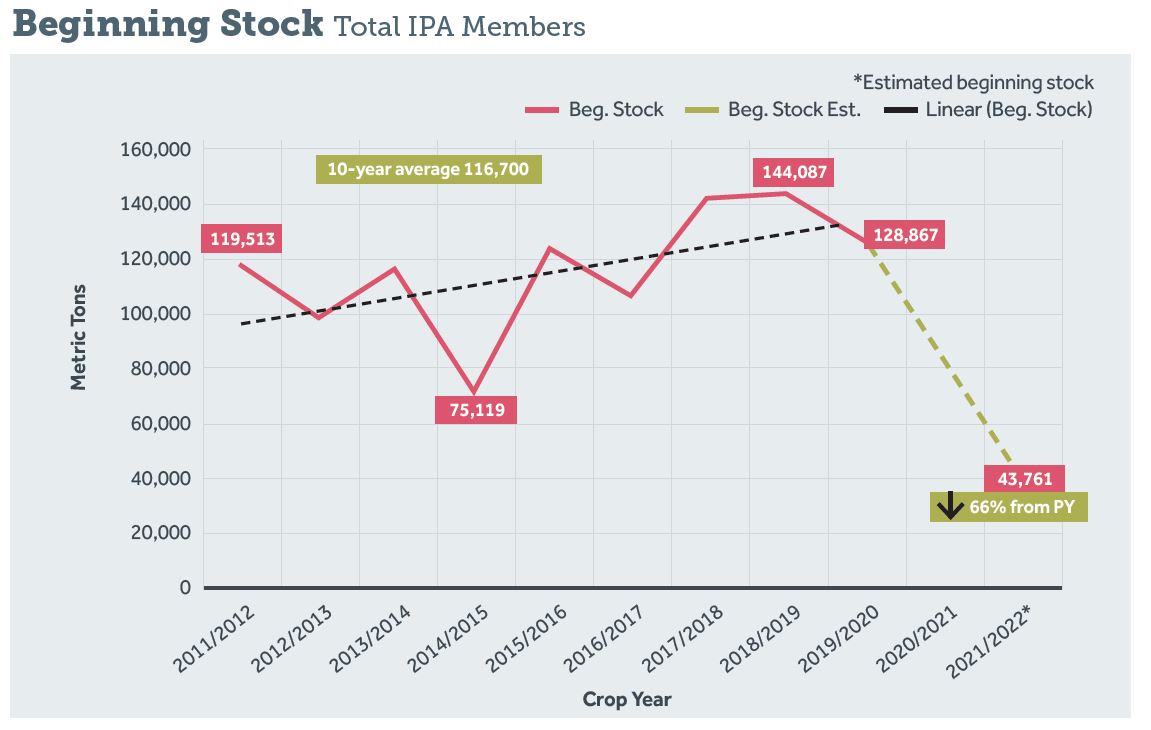
For those who grow and process California Prunes, the increased demand of the past year and a smaller-than-average crop in 2020, helped stabilize inventory, something we manage carefully to accommodate our customers year-round. Premium producers like France and California intentionally carry over inventory as a protection plan and will likely have the capacity to provide the fruit for the gap left by the Southern Hemisphere.

The 2021 California crop is estimating an average-to-slightly-above average in volume and the quality and range of premium sizes are consistent with what our customers have come to expect. While global inventories will be tight, California is in a healthy position.
In May of this year, California hosted colleagues from the global prune industry for the 19th annual International Prune Association (IPA) Congress, held virtually for the first-time in history. Having traditionally attended Congresses in prune regions like South America, Europe, Australia and South Africa, the virtual IPA was a reminder of the value many get from camaraderie among associates, enthusiasm for our business, and local culture which can be aptly shared in-person. Nevertheless, holding the virtual event came at an opportune time and elevated the value of the IPA by bringing clarity to our shared challenges and opportunities.
While the convergence of limited global supply and strong demand commanded much of the attention during the IPA program, there was recognition that weather-related challenges –drought and increasing temperature volatility, in particular– present difficulties for growers in both hemispheres. Practices that offset rising labor costs, limited available water, land, and mounting regulatory costs are more important than ever before. Continued investment in irrigation efficiency, resilient rootstocks, fruit size management and, mechanical innovations in pruning are all integral to our success going forward. These challenges drive California growers and handlers to continue making substantial annual investments in proprietary research, but also partner with leading universities and institutions to provide the industry with tools that help us grow consistently high-quality prunes, profitably and sustainably.
Adding to these challenges, traditional food distribution systems are being tested like never before. Macro issues, including trade policies, tariffs, world politics, exchange rates, and the value of the U.S. dollar continue to be in a state of constant change. These factors –largely beyond our control– do not define our industry.
The diverse makeup and multigenerational families of California Prune growers are the core of the industry bringing craftsmanship to the orchards. Over 100 years of expertise has gone into perfecting the growing and harvesting techniques of California Prunes including our intricate climate-controlled tunnel-drying process to produce that legendary sweetness. Of course, we back all of this up with incomparable industry collaboration to drive market support through promotion and nutrition research.
I could go on, but I think our current Chairman of the California Prune Board, George Sousa, Jr., sums it up best by saying that if you were to list all of the attributes of California Prunes, but didn’t tell people what the product is, everyone would say: “I want to eat that!” We are committed to believing in our product, our industry, and all that we are doing to advance its success for years to come.
As our brand proclaims: California for Prunes. Prunes for Life.
Industry Highlight: Californian Prunes
Production
The Improved French variety is dark red to purplish with tender, dark amber flesh[1]. This fine-textured prune is medium in size and egg-shaped, with a rich, sweet flavor. Improved French dries with a 3:1 drying ratio on average. Trees are long-lived, vigorous and have an upright growth habit.
 Usually, growers must wait four to six years after planting a prune tree before seeing their labor bring fruit—literally! Even yet, it takes eight to twelve years for a tree to reach a full production capacity of 150-300 pounds (68-136 kg) of raw fruit per year[2]. An orchard will produce around three decades' worth of prunes at that stage.
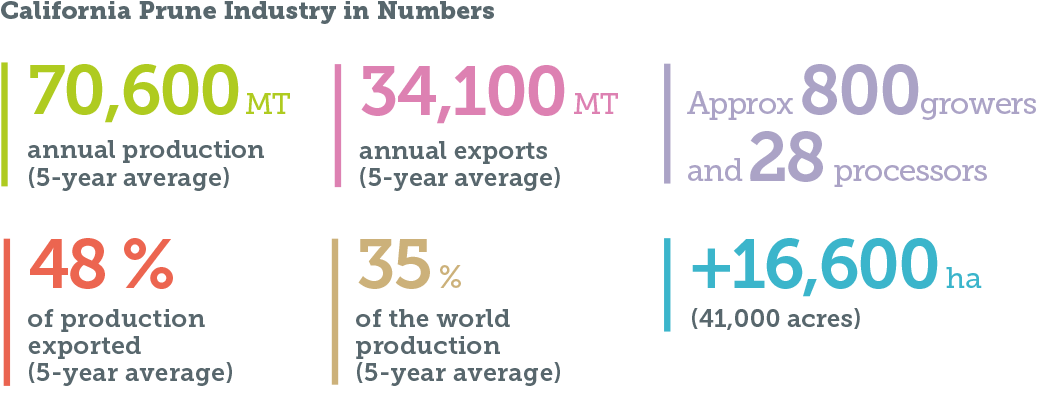
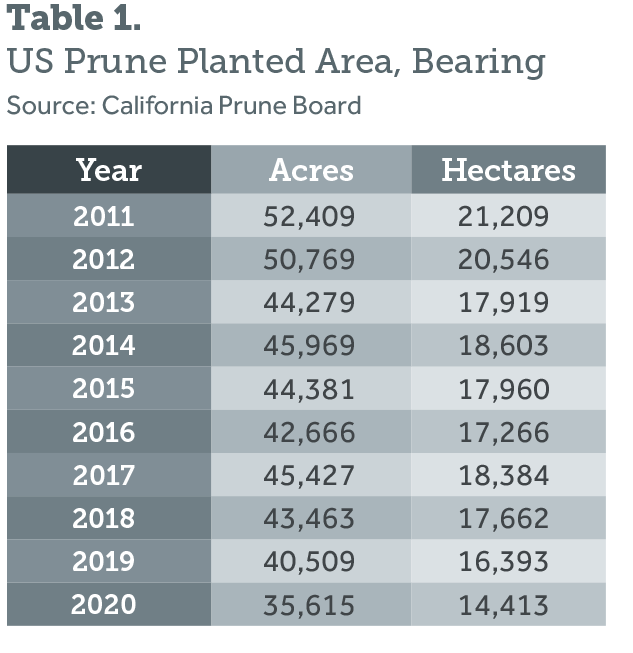
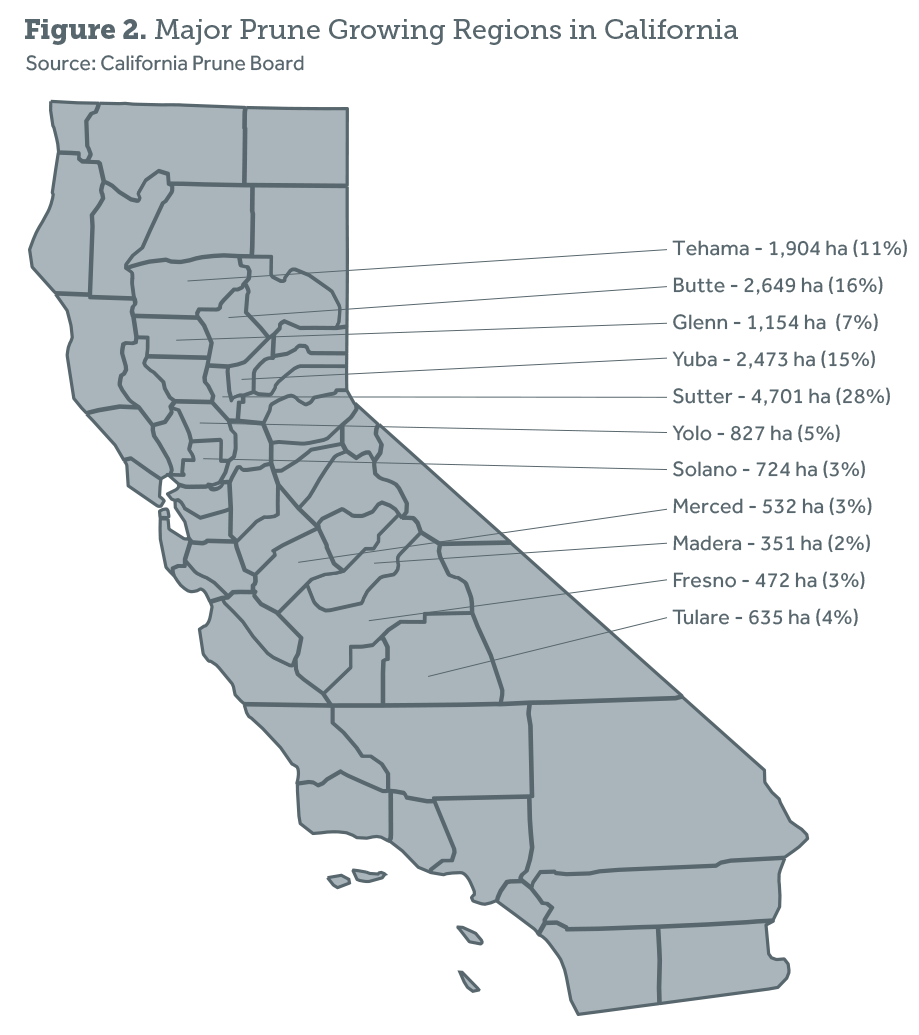
Prune orchards in California today cover around 16,600 hectares (about 41,000 acres) concentrated in the Sacramento and San Joaquin valleys[3]. The Sacramento Valley, in northcentral California, produces about 90% of the crop[4]. Tulare, Fresno and Madera counties in the San Joaquin Valley also produce prunes.
As reported by the California Prune Board, the California Prune industry generates more than $717 million in annual economic impact each year, which flows into the state economy and supports more than 7,000 full-time equivalent jobs.
Trade

Consumption
Based on the results of the analysis, the U.S. is the largest market for digestive health. The concept of digestive health is no longer related to mostly over-the-counter products, as it traditionally was; it is now shifting to a more organic diet focused on microbiomes and probiotics –a more preventive approach. Due to an aging society, health issues arise, which means that consumers opt for more natural products as a preventative solution to staying healthy. Besides, the focus is not only on digestive health but also on the gut-brain axis and its impact not only on physical health but also mental wellbeing.
The shift toward health and wellbeing as a holistic approach focused on whole ingredients is ideal for prunes to thrive and grow.
References:
1. Prunus Cultivar: French Improved Prune. Foundation Plant Services - University of California, Davis. https://fps.ucdavis.edu/treedetails.cfm?v=670&hidepics=yes (accessed June 2021)
2. https://californiaprunes.org/growing-harvesting/ (accessed June 2021)
3. https://www.californiaprunes.net/about-us/the-california-difference/ (accessed June 2021)
4. USDA NASS, 2017 Census. Quickstats. Available online at: https://quickstats.nass.usda.gov/ (accessed June 2021)
5. U.S. Census Bureau, Economic Indicators Division, U.S. Import and Export Merchandise trade statistics.
6. INC Statistical Yearbook, 2020/2021
Summary of COVID-19 Updates
June 30, 2021, COVID-19 Update - Data from the World Health Organization (WHO) show that the number of confirmed COVID-19 cases now exceeds 180.8 million and the number of deaths is close to 4 million.
June 16, 2021, COVID-19 Update - Last Monday, June 14, there were more than 175 million confirmed cases of COVID-19 globally and almost 3.8 million deaths. The number of new cases reported has declined for seven weeks in a row, being “the longest sequence of weekly declines during the pandemic so far”.
May 20, 2021, COVID-19 Update - More than 160 million confirmed cases and around 3.4 million deaths due to COVID-19 have been recorded worldwide. However, new cases and deaths have been slowing down recently, thanks to the progress of the vaccination campaigns and containment measures.
May 5, 2021, COVID-19 Update - Continuing with the upward trend of new infections, global COVID-19 cases surpassed 150 million. Last week, around 80,000 new deaths were recorded worldwide, a stark reminder that the pandemic is far from over. To date, more than 1.1 billion doses of COVID-19 vaccines have been administered, at a ratio of 19 million jabs given each day.
April 21, 2021, COVID-19 Update - The COVID-19 pandemic continues with its rising trend. According to the World Health Organization (WHO), global new cases have been rising for nearly two consecutive months, reaching a total of 141 million reported cases and causing more than 3 million deaths. India, the US and Brazil have experienced high caseloads, accounting for around 40% of last week’s total infections worldwide.
April 7, 2021, COVID-19 Update - It’s been another week marked by rising infection rates and deaths worldwide, due to the ongoing coronavirus pandemic. Europe and the Americas continue to account for the majority of the new infections. So far, more than 127 million cases and nearly 2.8 million deaths have been recorded.
March 24, 2021, COVID-19 Update - With more than 126 million confirmed cases and 2.7 million deaths, the COVID-19 pandemic is still sweeping throughout the world. Several countries, especially in the EU, have strengthened restrictive measures, in an attempt to curb rising infection rates.
March 10, 2021, COVID-19 Update - The coronavirus pandemic continues, having infected more than 115 million people and killed 2.5 million worldwide, while the global vaccine rollout attempts to curb the spread of the virus. Lockdowns and restrictions set to minimize the infection rates around the globe continue to have a substantial impact on international trade and travel.
Febraury 24, 2021, COVID-19 Update - The world is currently withstanding a new wave of COVID-19 infections, as the coronavirus pandemic has infected more than 111 million people and killed more than 2.4 million globally since late January 2020. The efforts taken by many countries to mitigate the pandemic led to entire nations enforcing lockdowns, widespread halts of international travel, interruptions in trade and supply chain disruptions.
February 10, 2021, COVID-19 Update - About a year ago, the WHO declared public health emergency of international concern over the outbreak of the COVID-19. So far, the pandemic has infected more than 105 million people worldwide. As per the latest IMF World Economic Outlook, vaccine approvals have raised hopes of a turnaround in the pandemic. However, the surge of new variants of the virus, as well as new waves of the pandemic, pose concerns for the outlook. Under this uncertain scenario, the global economy is projected to grow 5.5% in 2021.
January 27, 2021, COVID-19 Update - The global number of new COVID-19 cases is rapidly increasing. Despite the negative statistics of both infected people and those who died because of the pandemic, mass vaccination campaigns continue worldwide. Several countries imposed or toughened restrictions in order to curb down new infections, which may be caused by new COVID-19 strains.
Shipping costs have risen alarmingly due to delays and lack of containers, presenting a serious risk to the ability of economic recovery.
January 13, 2021 COIVD-19 Update - Several countries began mass vaccination campaigns against COVID-19 in December. The WHO announced that vaccines give real hope of bringing the pandemic under control by the end of 2021. However, strict lockdowns and other containment measures are still in place, as several regions reported an increase of COVID-19 cases.
December 16, 2020, COVID-19 Update - Despite the recent approval of COVID-19 vaccines in the UK and in the US, the pandemic is far from over: Most countries are reporting spikes of new cases, especially in the Northern Hemisphere. Some European countries have tightened restrictions in order to avoid the spread of the virus. Consequently, the upcoming holidays are expected to include restrictions in several regions.
December 3, 2020, COVID-19 Update - The G20 Leaders’ Summit highlighted the impact of the pandemic as well as possible coordinated solutions to mitigate its negative consequences. Several nations reported a rising number of new infections, which have seen countries around the world impose new restrictions in recent weeks. However, the significant progress on vaccine development, together with other public health measures, raises hopes of ending the pandemic.
November 12, 2020, COVID-19 Update - Global COVID-19 cases surpassed 50 million, and the worldwide death toll is over 1.25 million people. The worst hit regions are the Americas, with over 21.7 million cases, Europe, with over 13.3 million, and South-East Asia, with over 9.5 million confirmed cases.
October 28, 2020, COVID-19 Update - Global COVID-19 cases have recently surpassed 40 million. The worst affected countries are the US, India and Brazil. Several nations in the northern hemisphere, such as the US and most EU countries are reporting further containment measures amid an escalation of new cases. However, Australia, South Korea and Singapore are expected to ease some restrictions.
October 14, 2020, COVID-19 Update - The WTO reduced the size of global trade contraction in 2020, as lockdowns are globally easing and economies reopening. However, several countries such as China, France, India, South Korea, Spain or the United States are reporting an increase of new COVID-19 cases, and some countries announced further measures to contain the spread of the pandemic.
October 1, 2020, COVID-19 Update - Several countries are opting for local restrictions in the most hit areas, as opposed of strict lockdowns nationwide. The IMF has urged countries to enhance global cooperation and multilateral coordination as the most effective tools to beat the pandemic and its economic impact.
September 16, 2020, COVID-19 Update - Several countries are facing spikes of COVID-19 cases, although it looks like the number of new infections has decreased globally. There are still travel restrictions in place and, to ease them, the United Nations has urged G20 countries to agree on a common criteria in their removal and to boost coordination in preventive measures, among other recommendations.
September 3, 2020, COVID-19 Update - Curfews, travel limitations and other restrictions are still in place in many countries in order to contain the spread of COVID-19. The top priorities of governments and international institutions are: finding a cure, mitigating the effects of the disease while ensuring people’s livelihoods, and avoiding harder socioeconomic impacts.
August 4, 2020, COVID-19 Update - The COVID-19 is still dominating headlines every day, and amidst all the uncertainty it seems that the challenge will not be disappearing soon. The World Health Organization states that the outbreak still constitutes a public health emergency of international concern.
July 20, 2020, COVID-19 Update - Despite certain improvements to the public health situation in some regions, there is concern as COVID-19 cases spike in certain countries. The economic and social situation is still uncertain.
July 9, 2020, COVID-19 Update - The COVID-19 seems to be under control in some countries, despite certain spikes in infections in some regions or states, while other countries are reporting rises in the number of coronavirus cases.
June 25, 2020, COVID-19 Update - Lockdown and curfew measures have been globally de-escalating and most international borders are gradually reopening. However, new waves of infections have been detected in some countries. According to OECD, the COVID-19 pandemic has triggered the most severe economic recession in nearly a century.
June 10, 2020, COVID-19 Update - The unprecedented recovery plans announced by several countries are expected to mitigate the consequences of the COVID-19 pandemic. In addition, a few countries have lifted almost all restrictions due to the improvement of the public health situation. However, the WHO has highlighted the importance of food safety amid the outbreak.
May 28, 2020, COVID-19 Update - As the public health situation improves globally, several countries continue to relax lockdown and social distancing rules. Consequently, the economy is slowly recovering from disruptions and losses caused by the COVID-19 outbreak. However, FAO warned that famine could be a serious concern in several regions.
May 14, 2020, COVID-19 Update - The challenges faced worldwide during the COVID-19 pandemic are still visible, as well as the measures in order to adapt or re-adapt in the fast-changing environment of the pandemic. The efforts made by different governments, communities, companies, and people are significant to mitigate the effects of the disease.
April 30, 2020, COVID-19 Update - The impact of the COVID-19 pandemic is still noticeable in the global economy and disrupting agricultural trade due to measures such as border closures and export bans, as well as because of restrictions of movements of people and workers. However, some countries are easing the measures in order to mitigate the effects of the pandemic.
April 17, 2020, COVID-19 Update - As the COVID-19 situation continues to develop, this update highlights governmental actions taken to alleviate the pressure of COVID-19. This update also includes news on subjects ranging from IMF Global Growth projections to the importance of worker safety in the food industry.
April 9, 2020, COVID-19 Update - Although restrictions are becoming stricter in many countries, governments have prioritized the food supply chain as part of emergency measures. Fortunately, the agri-food sector is recognized as an essential sector and efforts are focused on ensuring food security. This update contains measures taken by individual countries as well as the European Commission.
The information above is a review of actions the INC has compiled from government sources and international organizations. This news article is not intended to be exhaustive and it does not reflect the opinions of the INC. While the publishers believe that all information contained in this publication was correct at the time of publishing, they can accept no liability for any inaccuracies that may appear or loss suffered directly or indirectly by any reader as a result of any advertisement, editorial, photographs or other materials published in this news article.
Almond 2021/2022 Crop Forecast
Almonds USA
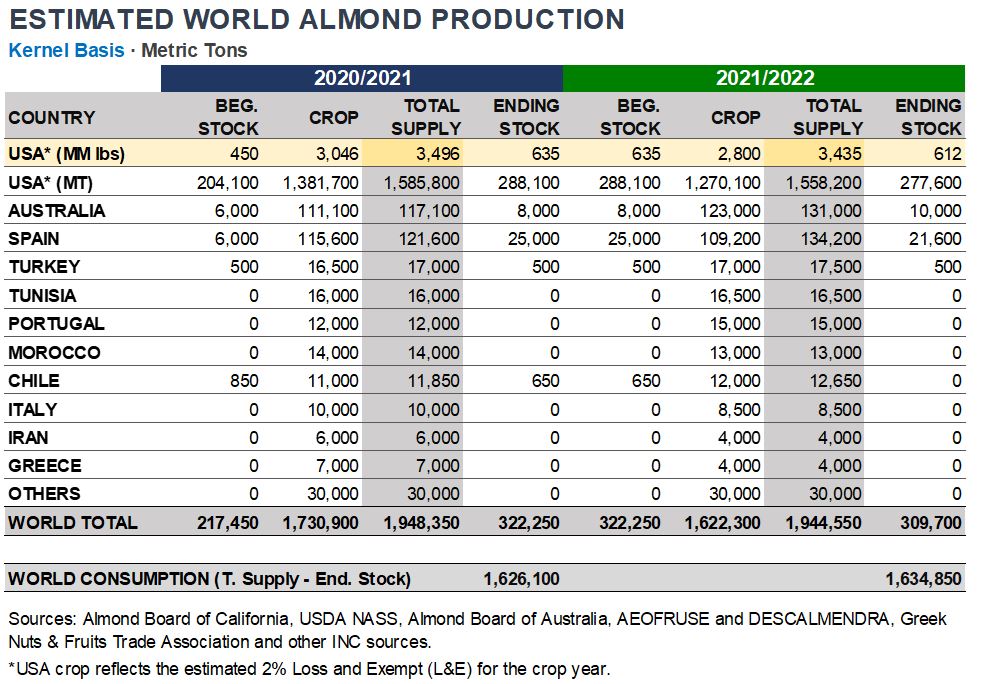
As per the USDA NASS 2021 California Almond Objective Measurement Report (released July 12), the objective crop forecast stands at 2.8 B lbs. (1.3 MM MT), 13% down from May’s subjective forecast and based on 1.3 MM bearing acres (538,200 hectares). Although bloom conditions were excellent, the lack of spring rainfall and record high temperatures in June resulted in lower than initially expected output.
Almonds Australia
Regarding the outlook for the 2022 crop, chill hours are adequate with bloom to commence in July. Water storages continue to fill with good recent rain events. Nursery sales indicate that new plantings have significantly slowed down, to around 1,000 hectares in 2020. This slowing is likely to continue due to lack of water security and reduced grower returns from a stronger Australian dollar and lower world prices.
Despite the large Californian crop and market disruptions related to COVID-19, exports of 76,710 MT were very similar to the previous year (up 0.2% from 2019). In 2019, 73% of the crop was shipped in the first 6 months, from March to August, while in 2020, only 50% of the crop was shipped within the first six months. This resulted in a larger than normal overlap of the southern hemisphere crop being marketed at a similar time to the northern hemisphere crop. Domestic demand was up 7%, led by the pandemic lockdown.
Almonds Spain
Although bearing hectares in 2021/22 (607,600 ha) increased by 4% from last year, the crop is expected to be 6% down, as a very severe frost in mid-March affected the production.
Based on a yearly cultivation of around 15 million trees and 100,000 non-bearing hectares, Spanish almond production is projected to reach 185,000 by 2025. Although around 85% of the planted area in Spain is rainfed, the 15% planted under irrigation is already producing 50% of the total crop.
Pistachio 2021/2022 Crop Forecast
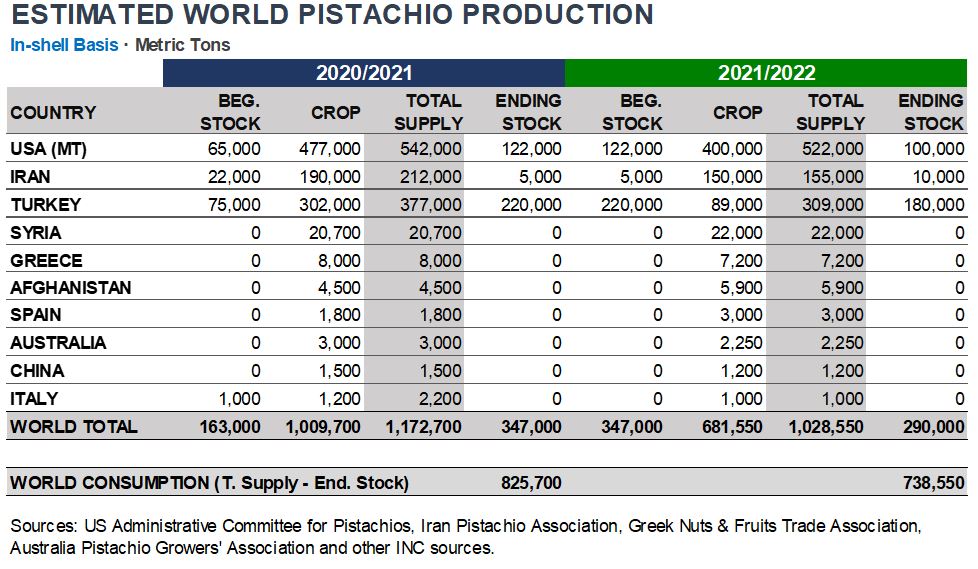
Pistachios USA
Although there are some ongoing water issues in California, water availability is expected to be sufficient for this season. Besides, sustainable farming is on the rise, more and more growers are using agronomical practices to improve water penetration. There is also increased use of cover crops and compost, which leads to reduce water needs. Pistachio quality has also improved in recent years, primarily, due to farmers harvesting early and shaking twice, undergoing winter sanitation and utilizing mating disruption pest control.
There are new plantings going in every year, at an approximate rate of 5-7% increase per year. And some of these new plantings entering into production will reflect in the 2021 crop. It is anticipated that the industry will continue to grow, the demand has been strong, and at least in the near term, it will meet the growing supply. Some of the pandemic-related habits, that led to around a 10% consumption increase in the snacking category, are expected to continue in the long term. Additionally, the kernel market has grown dramatically during this last year. The biggest challenge for the California pistachio industry is the ongoing tariffs into the Chinese market and the trade barriers that have put the US product at disadvantage.
Pistachios Iran
As reported by the Iran Pistachio Association, the current crop is expected to be around 150,000 metric tons (in-shell basis) due to severe frost and heat damages. Preliminary, the 2021/22 crop will be composed of 36% Ahmad Aghaei, 32% Fandoghi, 17% Jumbo and 15% is Akbari. The small percentage of Akbari is due to the frost damage, that impacted more this particular cultivar than the others.
Out of the 31 states in Iran, 27 of them cultivate pistachio, with some new plantings. All together they add up to 340,000 ha of bearing pistachio orchards. Although productivity is very variable, from 100 to 4,000 kg/ha, the geographical diversity is likely to reduce production fluctuations and the Iranian crop is expected to reach around 200,000 MT on average during the next 4-5 years. New plantings consist mostly of long varieties (AA and Akbari), so this kind of cultivar is foreseen to dominate the production.
Pistachios Turkey
For the 2021/22 season, a strong off-year is expected, weather conditions were adequate, with average rainfall, but with lower-than-average chilling hours and really exhausted trees from last year's record crop. Based on 540,000 bearing acres (218,000 hectares), the new crop is forecasted to yield about 500 pounds per acre (560 kg/ha), which is very low, and around 89,000 MT in-shell.
In Turkey, new plantings have been increasing over the previous ten years. Around 380,000 acres (153,000 ha) of the total planted area are yet not bearing. Growing regions are expanding towards the South East of the country, and new plantings are under irrigation and applying modern agronomical practices, which will noticeably improve yield per unit land area compared to the national average.