
Aggressiveness of Spanish isolates of Xylella fastidiosa to almond plants of different cultivars under greenhouse conditions
The aggressiveness of Spanish isolates of X. fastidiosa, representing different sequence types, were studied in almond plants of several cultivars by means of the dynamics of the population levels and symptoms, colonization and spread, and dose-response relationships. Pathogen dynamics in almond plants under greenhouse conditions showed doubling times of 2.1 to 2.5 days during the exponential growth phase, with a maximum population size around 35 dpi. A differential pattern in population dynamics was observed between sap and xylem tissue after the exponential growth, as population levels in the xylem tissue remained stable while viable cells in sap decreased. Population levels were higher in two upwards zones than in downwards zones, with respect to the inoculation area. The first symptoms were observed between 20 and 60 dpi, and disease severity increased over time at doubling times of 30 days, with a maximum observed at 120 dpi. Strains tested showed differences in population levels in the cultivars studied and were able to spread with different intensity from contaminated plant parts to new growing shoots after pruning. Two almond isolates showed a different performance in dose-response relationships when inoculated in Avijor cultivar. While IVIA 5387.2 reached higher population levels but showed high ED50 and MID values, IVIA 5901.2 showed low population levels as well as low ED50 and MID values. This study raises implications for the epidemiology of X. fastidiosa in almond crops, estimating doubling times of the pathogen in planta and of symptoms development, as well as showing differential aggressiveness between strains.

Effect of Temperature during Drying and Storage of Dried Figs on Growth, Gene Expression and Aflatoxin Production
Dried fig is susceptible to infection by Aspergillus flavus, the major producer of the carcinogenic mycotoxins. This fruit may be contaminated by the fungus throughout the entire chain production, especially during natural sun-drying, post-harvest, industrial processing, storage, and fruit retailing. Correct management of such critical stages is necessary to prevent mould growth and mycotoxin accumulation, with temperature being one of the main factors associated with these problems. The effect of different temperatures (5, 16, 25, 30, and 37 °C) related to dried-fig processing on growth, one of the regulatory genes of aflatoxin pathway (aflR) and mycotoxin production by A. flavus, was assessed. Firstly, growth and aflatoxin production of 11 A. flavus strains were checked before selecting two strains (M30 and M144) for in-depth studies. Findings showed that there were enormous differences in aflatoxin amounts and related-gene expression between the two selected strains. Based on the results, mild temperatures, and changes in temperature during drying and storage of dried figs should be avoided. Drying should be conducted at temperatures >30 °C and close to 37 °C, while industry processing, storage, and retailing of dried figs are advisable to perform at refrigeration temperatures (<10 °C) to avoid mycotoxin production.
https://doi.org/10.3390/toxins13020134
Survey of Commercial Food Products for Detection of Walnut ( Juglans regia) by Two ELISA Methods and Real Time PCR
Labeling of food allergens in accordance with legal regulations is important to protect the health of allergic consumers. The requirements for detecting allergens in foods involve adequate specificity and sensitivity to identify very small amounts of the target allergens in complex food matrices and processed foods. In this work, one hundred commercial samples were analyzed for walnut detection using three different methods: a sandwich enzyme-linked immunosorbent assay (ELISA) kit based on polyclonal antibodies, a direct ELISA using a recombinant multimeric scFv, and a real time PCR. The most sensitive method was real time PCR followed by sandwich ELISA kit and multimeric scFv ELISA. There was agreement between the three methods for walnut detection in commercial products, except for some heat-treated samples or those that contained pecan. The walnut ELISA kit was less affected by sample processing than was the multimeric scFv ELISA, but there was cross-reactivity with pecan, producing some false positives that must be confirmed by real time PCR. According to the results obtained, 7.0 to 12.6% of samples (depending on the analytical method) contained walnut but did not declare it, confirming there is a risk for allergic consumers. Moreover, there was one sample (3.7%) labelled as containing walnut but that tested negative for this tree nut. Genetic and immunoenzymatic techniques offer complementary approaches to develop a reliable verification for walnut allergen labeling.
https://doi.org/10.3390/foods10020440
Cloning and functional characterization of seed-specific LEC1A promoter from peanut (Arachis hypogaea L.)
LEAFY COTYLEDON1 (LEC1) is a HAP3 subunit of CCAAT-binding transcription factor, which controls several aspects of embryo and postembryo development, including embryo morphogenesis, storage reserve accumulation and skotomorphogenesis. Herein, using the method of chromosomal walking, a 2707bp upstream sequence from the ATG initiation codon site of AhLEC1A which is a homolog of Arabidopsis LEC1 was isolated in peanut. Its transcriptional start site confirmed by 5' RACE was located at 82 nt from 5' upstream of ATG. The bioinformatics analysis revealed that there existed many tissue-specific elements and light responsive motifs in its promoter. To identify the functional region of the AhLEC1A promoter, seven plant expression vectors expressing the GUS (β-glucuronidase) gene, driven by 5' terminal series deleted fragments of AhLEC1A promoter, were constructed and transformed into Arabidopsis. Results of GUS histochemical staining showed that the regulatory region containing 82bp of 5' UTR and 2228bp promoter could facilitate GUS to express preferentially in the embryos at different development periods of Arabidopsis. Taken together, it was inferred that the expression of AhLEC1A during seed development of peanut might be controlled positively by several seed-specific regulatory elements, as well as negatively by some other regulatory elements inhibiting its expression in other organs. Moreover, the GUS expression pattern of transgenic seedlings in darkness and in light was relevant to the light-responsive elements scattered in AhLEC1A promoter segment, implying that these light-responsive elements harbored in the AhLEC1A promoter regulate skotomorphogenesis of peanut seeds, and AhLEC1A expression was inhibited after the germinated seedlings were transferred from darkness to light.
https://doi.org/10.1371/journal.pone.0242949
Composite core set construction and diversity analysis of Iranian walnut germplasm using molecular markers and phenotypic traits
Iran is a center of origin and diversity for walnuts (Juglans regia L.) with very good potential for breeding purposes. The rich germplasm available, creates an opportunity for study and selection of the diverse walnut genotypes. In this study, the population structure of 104 Persian walnut accessions was assessed using AFLP markers in combination with phenotypic variability of 17 and 18 qualitative and quantitative traits respetively. The primers E-TG/M-CAG, with high values of number of polymorphic bands, polymorphic information content, marker index and Shannon's diversity index, were the most effective in detecting genetic variation within the walnut germplasm. Multivariate analysis of variance indicated 93.98% of the genetic variability was between individuals, while 6.32% of variation was among populations. A relatively new technique, an advanced maximization strategy with a heuristic approach, was deployed to develop the core collection. Initially, three independent core collections (CC1-CC3) were created using phenotypic data and molecular markers. The three core collections (CC1-CC3) were then merged to generate a composite core collection (CC4). The mean difference percentage, variance difference percentage, variable rate of coefficient of variance percentage, coincidence rate of range percentage, Shannon's diversity index, and Nei's gene diversity were employed for comparative analysis. The CC4 with 46 accessions represented the complete range of phenotypic and genetic variability. This study is the first report describing development of a core collection in walnut using molecular marker data in combination with phenotypic values. The construction of core collection could facilitate the work for identification of genetic determinants of trait variability and aid effective utilization of diversity caused by outcrossing, in walnut breeding programs.
https://doi.org/10.1371/journal.pone.0248623
Investigation of the Conditions for Preconcentration of Cadmium Ions by Solid Phase Extraction Method Using Modified Juglans Regia L. Shells
Background: Juglans regia L. shells as agricultural wastes can be considered as alternative sorbents to minimize the problems associated with heavy metal pollution.
Objective: In this study Juglans regia L. shells and Juglans regia L. shells modified with hydrazine hydrate were used as sorbents and compared for the preconcentration of Cd(II) ions from aqueous solution.
Methods: For the characterization of sorbents, the scanning electron microscopy and energy dispersive X-ray (SEM/EDX) analysis and fourier transform infrared spectroscopy (FTIR) were used. For preconcentration, solid phase extraction (SPE) technique was used. Preconcentration studies were performed with column method and pH, eluent type and concentration, sample volume, flow rate and interfering ions effect were studied to determine the optimum column parameters.
Results: The limit of detection (LOD) of the sorbents are 0.31 µg/L and 0.18 µg/L, respectively. According to the Langmuir isotherm model for both sorbents KL=0.030 L/mg, R2=0.994, 0.016 L/mg, R2=0.991 and maximum adsorption capacities of the sorbents were found to be as 29.6 mg/g and 65.7 mg/g, respectively. The mean recoveries and RSD values at 95% confidence level (N = 6) for Cd(II) were 100.9% and 3.42; 100.6% and 3.79 for the JRS and JRS-HH sorbents, respectively.
Conclusions: In this method good results obtained when compared with the literature and the proposed method was successfully applied to the certificated reference material (NIST 1640) analysis. Highlights: Juglans Regia L. shells are an effective and inexpensive sorbent for preconcentration metal ions when modified. Thus, low-cost agricultural wastes are both recovered and have an economic value.
Use of almond flour and stevia in rice-based gluten-free cookie production
The gluten-free cookies were produced by replacing rice flour (RF) and sucrose content with almond flour (AF) and stevia. Supplementation of AF caused to decrease the moisture content of the gluten-free cookies; while ash, total protein, total fat and total dietary fiber content increased. Regarding of total phenolics; extractable, hydrolyzable and bioaccessible fractions of gluten-free cookie samples that were produced with 30% of AF supplementation, were increased by 43.69-73% compared with the control group that was prepared with 100% RF (p ≤ 0.01). Gluten was detected in the cookies with neither RF nor AF. No cross-contamination was detected during the production, too. Quality characteristics of the gluten-free cookies reached the acceptable level while AF and stevia contents were increased. Protein and dietary fiber contents of the cookie with AF and stevia were enriched to 82 and 96%, while the total carbohydrate amount decreased 19% (p ≤ 0.01). The contents of TEACABTS and TEACFRAP of gluten-free cookies with AF and stevia were 5.72 ± 0.07 and 26.08 ± 0.49 µmol Trolox/g and higher than the control (100% RF + sucrose). It has found that physicochemical, nutrition and sensorial properties of gluten-free cookies that were produced with AF + stevia supplementation provided to produce more acceptable products.
Comparative analysis of volatile profiles in two grafted pine nuts by headspace-SPME/GC-MS and electronic nose as responses to different roasting conditions
As an attempt to fulfill the massive demand for pine nuts, two grafted trees were cultivated: grafted Pinus koraiensis on the same scions (PK) and grafted Pinus koraiensis on Pinus sylvestris rootstocks (PKS) trees. Both PK and PKS are acknowledged as important economic trees in the northeastern area of China. This study aimed to compare the volatile compounds and aroma profiles in PK and PKS by Headspace Solid Phase Microextraction (HS-SPME) coupled with Gas Chromatography-Mass Spectrometry (GC-MS) and Electronic nose (E-nose) as responses to different roasting conditions. The results showed that a total of 286 volatile compounds were identified in the PK and PKS samples, which some of them were considered to contribute to the desirable aroma of samples. Abundance of terpenes and aromatic hydrocarbons, such as D-limonene and toluene, were respectively present in both raw PK and PKS. The increasing temperature and duration of roasting significantly decreased terpenes and aromatic hydrocarbons content, while more alkanes/alkenes, acids, and ketones were generated in the medium temperature condition. The late phase of roasting was dominated by aldehydes, furans, furfurals, pyrazines, and pyrroles, for which PKS showed a higher content than PK. The aroma profiles detected by E-nose showed that the influence of roasting time was less at high temperatures than those at low and medium temperatures. This study also highlighted the feasibility of principal component analysis (PCA) combined with HS-SPME/GC-MS and E-nose to discriminate the samples.
The Impact of Environmental Changes on Yields and Nutritional Quality of Fruit, Nuts & Seeds
By Dr. Carmelia Alae-Carew
Dr. Carmelia Alae-Carew is a GP and Associate Nutritionist. She currently works as a research assistant in nutrition and sustainability at the London School of Hygiene and Tropical Medicine.
Fruit, nuts and seeds, like many other crops, are sensitive to changes in environmental factors throughout the year. The number of hot days, changes in minimum and maximum daily temperatures, and reductions in winter chill, for example, can affect cultivation and fruit development.
Researchers from The London School of Hygiene and Tropical Medicine1 set out to further explore the effect of environmental changes on yields and nutritional quality of fruit, vegetables, legumes, nuts and seeds by reviewing and synthesising the currently available scientific evidence published on this topic, in order to provide an overview of what the combination of evidence is showing. A systematic search of published scientific literature found studies that had examined the effect of a change in one or more environmental stressors (namely water availability, carbon dioxide concentration, tropospheric ozone, water salinity, and ambient temperature) on yield or nutritional quality of crops contained within these food groups. Two separate reviews were conducted –one focusing on vegetables and legumes, and the other on fruit, nuts and seeds. Although technically classified as legumes, peanuts were included within the second review because they are commonly eaten as nuts. Where possible, the results of the different studies included in the reviews were synthesised to produce mean changes in yields and nutrient concentrations.
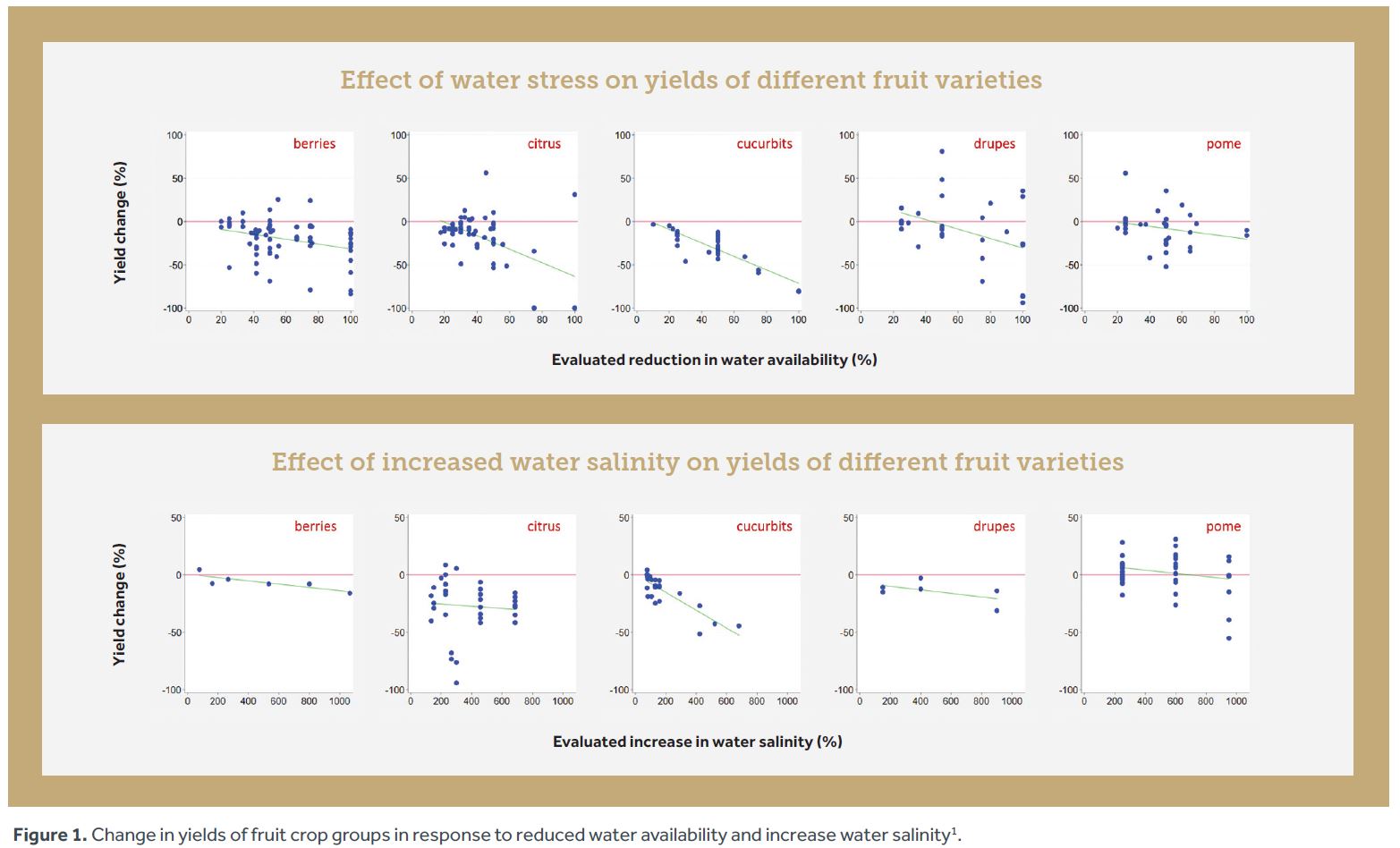
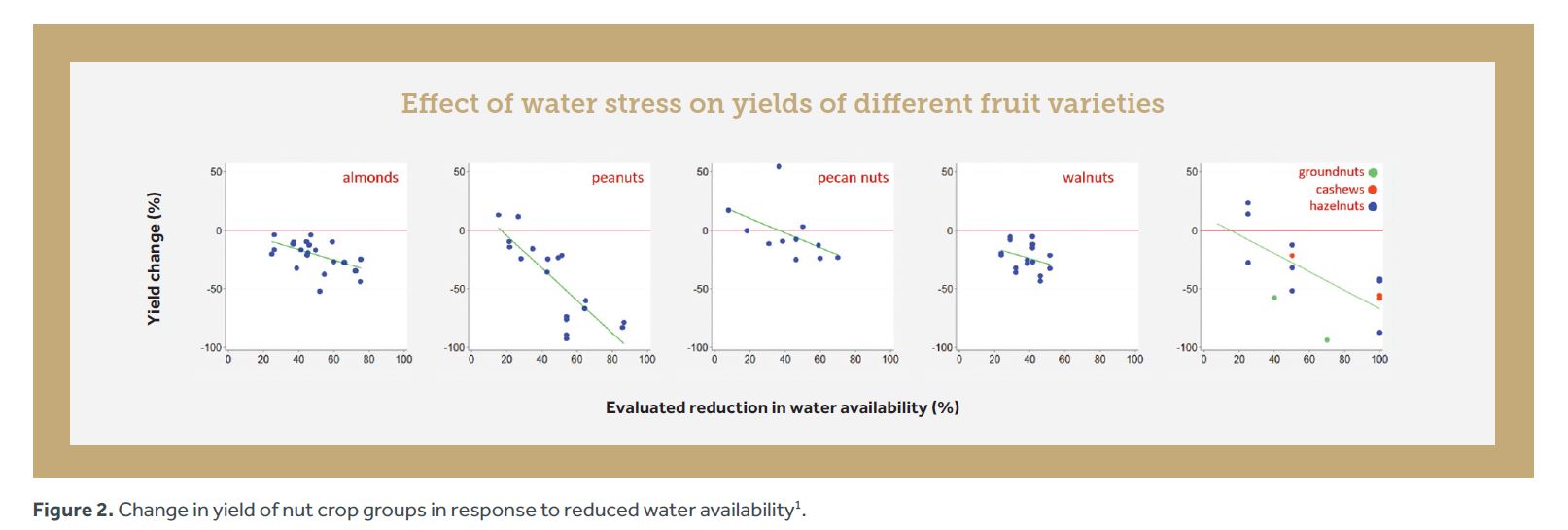
The review on fruit, nuts and seeds found that the yield of the fruit, nut and peanut groups studied decreased in response to reduced water availability and increased water salinity (Figure 1 & 2). An increase in ozone concentration also resulted in decreased fruit, peanut and linseed yields, and a reduction in ambient temperature decreased fruit and peanut yields, but no studies were performed on (other) nuts and seeds. Interestingly, increased carbon dioxide concentrations actually showed a positive effect on berries and peanut yields, but when combined with other environmental stressors such as increased ozone concentration or ambient temperature, this positive effect was lost. Although not many studies looked at the effect on nutritional quality, synthesising the evidence from the small number that looked at the impact of a combination of environmental stressors on fruit crops demonstrated a negative effect.
As all the studies included in the review were experiments, they represent the hypothetical situation of a certain level of environmental change, but with no new agricultural techniques in place that would help adapt to the new environmental circumstances, for example, drought or heat-resistant crop varieties. As there is a lot of ongoing research in the agricultural field, this is obviously not very realistic as it is likely that new techniques and technologies will be employed. However, these findings present a picture of what would happen if we do not succeed in attenuating current trends in environmental change, and reinforce the need for adaptation and mitigation strategies, which will depend on an integrated strategy effort across multiple sectors including agriculture, trade and public health.
In conclusion, this review suggests that in the absence of appropriate adaptation strategies, changes to the environment are likely to have a substantial negative effect on yields of fruit, nuts and seeds. This will have far-reaching implications not only for food security due to decreased availability but also for non-communicable disease risk and suboptimal intake of essential nutrients. With the implementation of successful adaptation strategies, and efforts to attenuate changes to the environment, it is hoped that our food systems will be able to deliver diverse and healthy foods for generations to come.
References
1. Alae-Carew C, Nicoleau S, Bird FA, Hawkins P, Tuomisto HL, Haines A, Dangour AD, Scheelbeek PFD. The impact of environmental changes on the yield and nutritional quality of fruits, nuts and seeds: a systematic review. Environ Res Lett. 2020 Feb;15(2):023002
The Socio-economic Importance of Natural and Planted Walnut (Juglans regia L.) Forests in the Silk Road Countries
Dr. Dietrich Darr is a Professor of Agribusiness at Rhine-Waal University of Applied Sciences, Kleve, Germany. He holds a MSc degree in tropical forestry and received his doctorate from TU Dresden, Germany, with a dissertation on the diffusion of agroforestry innovations in East Africa in 2008. Before his appointment at Rhine-Waal University, he worked for a leading international management consultancy.
Dr. Jyldyz Shigaeva is a Research Fellow in Mountain Societies Research Institute, University of Central Asia, Bishkek, Kyrgyzstan. She holds a Master’s degrees in ecology and defended her PhD in the frame of Swiss National Program (NCCR North-South) in ecology from Soil and Biology Institute of National Academy of Sciences, Kyrgyzstan in 2008. She is highly experienced in inter- and transdisciplinary research projects focused on natural resource management.
Extent of Natural and Planted Walnut Forests
 With a total production area of more than 1.3 million hectares in 54 countries in 2019, the common walnut is probably one of the most widely distributed non-wood forest products globally. The species originated from the highlands of Central Asia, Persia and Anatolia, and is naturally distributed in the Silk Road countries. With an area of approximately 40,000 ha, Kyrgyzstan harbors the world’s largest natural walnut forests. From there, the walnut has been dispersed by human migration and exchange over millennia along major trade routes that connected the ancient economic and cultural centers of the Eastern and the Western hemisphere. The species’ high economic value has incentivized the establishment of walnut plantations in other regions. Global demand for walnuts has increased in line with the growing popularity of more healthy diets and the growth of the urban middle class in countries such as China and India. According to FAOSTAT, the current quantity of production approached 4.5 million metric tons (in shell) in 2019, with the total annual production value ranging from 5.8 to 13.2 billion US$ between 2016 and 2018. China (56% of global production), the US (13%) and Iran (7%) are the major global walnut producing countries. In China, approximately 90% of the plantations are managed by smallholder farmers[1].
Ecological, Socio-economic and Nutritional Importance of Juglans regia
The natural and planted walnut forests also possess significant socioeconomic importance for rural populations in terms of employment and income, and food security. They also contribute to foreign exchange earnings at the national level. For example, more than one million people living in and around these forests in Kyrgyzstan directly or indirectly benefit from the collection of walnuts and other forest products such as timber, firewood, forest fruits and feed, and approximately 16,000 rural smallholders are directly involved in walnut collection, cracking, trading or temporarily employed in local processing enterprises.
Two Opposing Trends
At the same time, ambitious walnut plantation programs have been implemented in some countries, most notably in southwest China. Smallholder farmers received payments for ecosystem services when they established walnut plantations on steep farmland, and the local walnut processing industry was developed to increase domestic demand for walnut kernels, rural employment and the supply of processed walnut products to domestic consumers. These policies also promoted the consumption of walnuts through TV ads and public campaigns such as the ‘China Healthy Nut Day’. Consequently, China displaced the US as the leading global walnut producer in the 1990s.
Challenges Facing the Walnut Sector
 Forest products collected from the natural walnut forests are often characterized by low and fluctuating yields, and inferior product characteristics compared to cultivated products. In many Silk Road countries, post-harvest, storage and market facilities for nuts are dilapidated, local processing technologies outdated and the profitability of processing enterprises low. Hence, these enterprises hardly invest in R&D and product development and many of their products don’t meet the hygienic or quality requirements of high-value international markets.
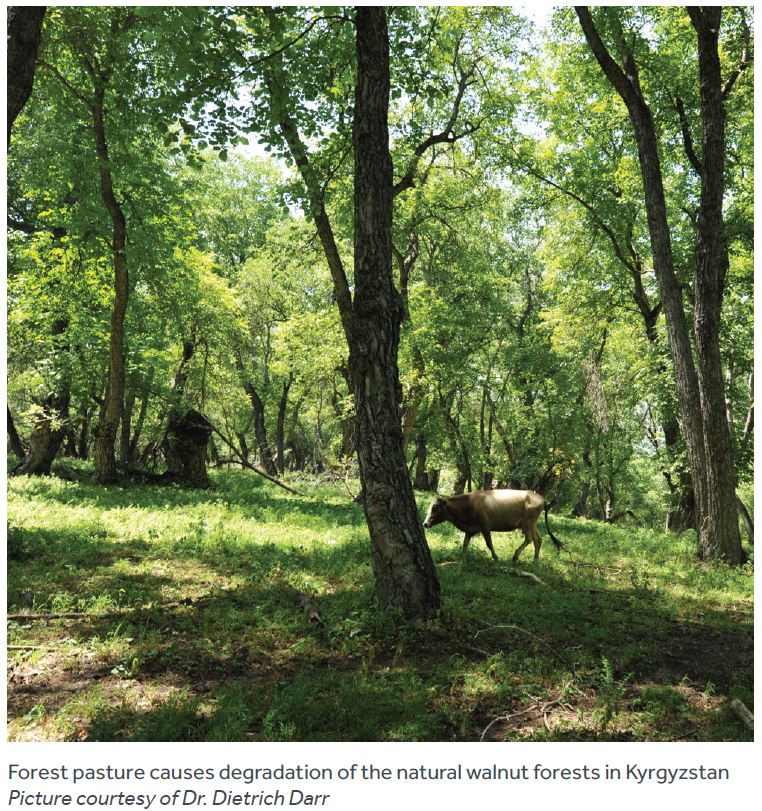
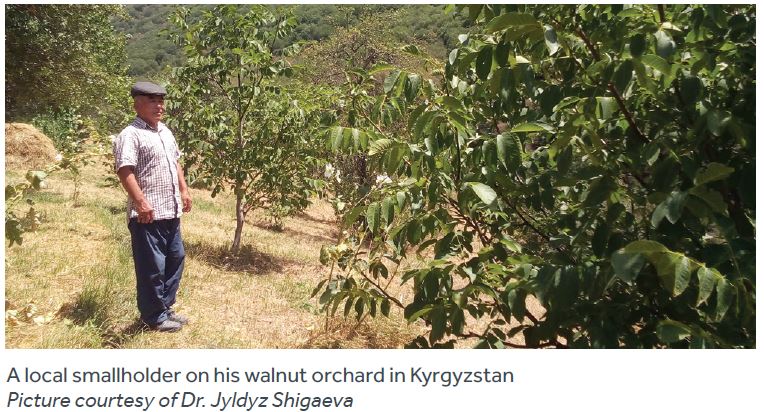
Moreover, the management of the natural walnut forests is currently not sustainable. Common management problems include overgrazing, illegal logging and overharvesting of commercialized forest products, which negatively affect forest regeneration and biodiversity. Walnut plantations in many Silk Road countries demonstrate remarkably lower yields compared to commercial plantations in other areas, pointing at a common lack of technology and management, such as suitable propagation methods, standard root stocks and cultivars, irrigation, fertilizer or pesticides.
Lessons for Research, Policy and Practice of Walnut Forest Management
Total Annual Walnut Production (in shell) in the Silk Road Countries
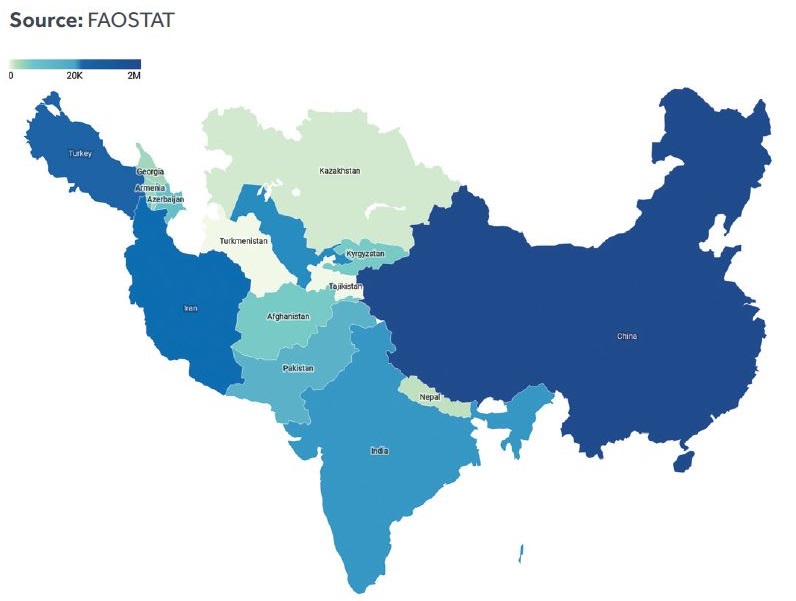
This article is based on Shigaeva J, Darr D (2020): On the socio-economic importance of natural and planted walnut (Juglans regia L.) forests in the Silk Road countries: A systematic review. Forest Policy and Economics 118: 102233. DOI: 10.1016/j.forpol.2020.102233.
References
1. Yan, M., Terheggen, A., Mithofer, D., 2017. Who and what set the price of walnut for small scale farmers in Southwest China? J. Agribus. Dev. Merg. Econ. 7, 135–152.