
Human impacts outpace natural processes in the Amazon.
Amazonian environments are being degraded by modern industrial and agricultural activities at a pace far above anything previously known, imperiling its vast biodiversity reserves and globally important ecosystem services. The most substantial threats come from regional deforestation, because of export market demands, and global climate change. The Amazon is currently perched to transition rapidly from a largely forested to a nonforested landscape. These changes are happening much too rapidly for Amazonian species, peoples, and ecosystems to respond adaptively. Policies to prevent the worst outcomes are known and must be enacted immediately. We now need political will and leadership to act on this information. To fail the Amazon is to fail the biosphere, and we fail to act at our peril. https://doi.org/10.1126/science.abo5003

January 2023 News Brief
INC Strategic Goals to Aid in the Sustainable Growth of the Nut & Dried Fruit Sector, 2022-2026

In late 2022, the INC Executive Committee held its Strategic Planning Meeting to define a series of strategic goals aimed at bringing the industry together as a whole to increase consumption: 1) Increase global consumption to ensure a healthy balance between supply and demand; 2) Prioritize key areas of focus for health and nutrition to obtain regulatory approved health claims to aid the promotion of nuts and dried fruits globally; 3) Collaborate with international organizations regarding increasing market access and overcome the challenges of the trade barriers and supply chain issues; 4) Define the sustainability agenda for the nut and dried fruit industry. [Read more]
Enroll in the INC Academia and Get an Exclusive Discount on Your Congress Registration

If you're planning to attend the INC Congress in London, and have never studied in the INC Academia, why not enroll yourself or one of your employees on the Full Course of the Advanced Program on Nuts & Dried Fruits and save 50% on your Congress registration! The Advanced Program is tailored to the seasoned professional or prospective manager where, students will complete the 11 courses, written by top experts and learn the business side of the nut and dried fruit industry. Plus, this year the on-site part of the program will be taking place in London, just before the Congress, where students will visit processing plants, and distribution centers as well as participate in lectures and case studies from top professors. So, don't miss out on this exclusive offer for members, enroll today and enjoy the best educational program and the greatest event in the nut and dried fruit industry at discounted prices! [Enroll now!]
INC Innovation Awards Are Now Open!

Don't miss this opportunity to show the nut and dried fruit industry your dedication to innovation and share your brand’s new products at the XL World Nut and Dried Fruit Congress, in London! Delegates attending the World Nut and Dried Fruit Congress have the chance not only to share experiences but also to get enriched with new ideas. This contest will select the Top Best new product/service within the sector. [Apply now!]
INC Prepares for the INC Pavilion at Gulfood 2023

Gulfood 2023 is only a month away and from February 20-24, the INC will be hosting its INC Pavilion. With 18 companies joining, it is guaranteed to become the central meeting point for the nut and dried fruit industry. With an excellent high-visibility location at Za'Abeel Hall 5, co-exhibitors will have the chance to connect with potential business clients, network and discuss key topics within the sector. We can't wait to be there so, if you're attending the exhibition, please, come stop by and say hello!
Recent Study Shared by INC Finds Positive Effects of Walnut Consumption on Mental Health
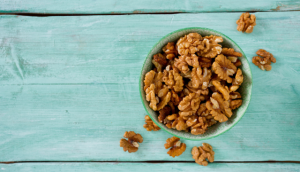
A recent study published in the journal Nutrients examined the effects of academic stress and daily walnut consumption on mental health, biochemical markers of general health and gut microbiota in university students. Researchers conducted a randomized feeding trial in 80 healthy male and female undergraduate students at the University of South Australia between the ages of 18 and 35 years. For the duration of the 16-week study period, members of the treatment group were instructed to consume… [Read more]
INC Highlights New Study on Post-Exercise Benefits of Almond Intake
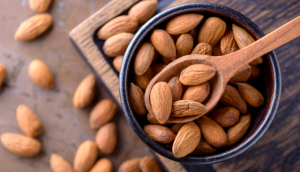
The journal Frontiers in Nutrition has published a new study analyzing how the ingestion of nutrient-rich almonds affects post-exercise inflammation and muscle soreness and damage. Researchers conducted a study with a randomized, parallel group design to determine whether daily consumption of almonds would mitigate post-exercise inflammation and muscle soreness and damage. A total of 64 non-obese adults, who did not regularly engage in resistance training, were instructed to consume either 57 grams of almonds or a calorie-matched snack bar each day for four weeks… [Read more]
INC Shares New Study on Oral Immunotherapy to Treat Peanut Allergy
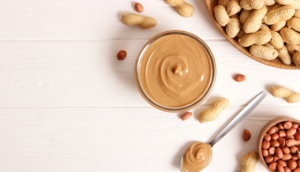
A new study published in Clinical & Experimental Allergy assessed the safety and efficacy of oral immunotherapy using sequential doses of boiled peanuts followed by roasted peanuts to treat peanut allergy in children. Researchers conducted an open-label, phase II, single-arm clinical trial in children between the ages of 6 and 18 years with a history of peanut allergy. A total of 70 participants received oral immunotherapy with 12-hour boiled peanut for 12 weeks, 2-hour boiled peanut for 20 weeks… [Read more]
INC Updates on EU Sulfur Dioxide (SO2) Concerns for Dried Fruits.
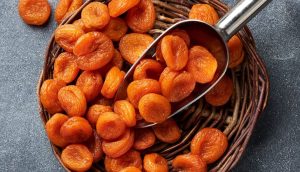
As previously announced, on November 24, 2022, the European Food Safety Agency (EFSA) published its Scientific Opinion on the Follow-up of the re‐evaluation of sulfur dioxide (E 220), sodium sulfite (E 221), sodium bisulfite (E 222), sodium metabisulfite (E 223), potassium metabisulfite (E 224), calcium sulfite (E 226), calcium bisulfite (E 227) and potassium bisulfite (E 228). Sulfur dioxide-sulfites are added as preservatives and antioxidants to a range of food products, including dried fruits (dried apricots, raisins) and vegetables. [Read more]
INC Shares Latest Sustainability News

The INC’s latest sustainability update covers the outcomes of the UN COP15, new guidance from the International Sustainability Standards Board (ISSB) on climate-related disclosures and China’s goal of reducing pesticide use on fruits and vegetables by 10% by 2025. The update also discusses the European Commission’s new proposal for a regulation on packaging and packaging waste and Germany’s new national nutrition strategy. [Read more]
International Trade News Monitored by INC

See the most recent updates on international trade, including information on the World Trade Organization’s ruling against US tariffs imposed on steel and aluminum import and the United Kingdom’s decision to suspend the 8% import tariff on dried prunes from California. [Read more]
INC Compiles Food Safety News

In the latest INC food safety update, you can read about the European Union’s decision to temporarily increase official controls on the entry of certain nuts and dried fruits into the EU, as well as other food safety news from FAO, Brazil, Canada, Kenya, and the USA. [Read more]
Labeling News Shared by INC

In this month’s update on labeling news, you can read about the U.S. Food and Drug Administration’s decision to seek public and industry comments on two guidance documents about food allergen labeling requirements. The new draft guidance includes revised questions and answers to update and clarify information presented in earlier editions of the guidance, such as the labeling of tree nuts and images that show examples of labeling requirements. [Read more]

New Study on Oral Immunotherapy to Treat Peanut Allergy
A new study published in Clinical & Experimental Allergy assessed the safety and efficacy of oral immunotherapy using sequential doses of boiled peanuts followed by roasted peanuts to treat peanut allergy in children.
Researchers conducted an open-label, phase II, single-arm clinical trial in children between the ages of 6 and 18 years with a history of peanut allergy. A total of 70 participants received oral immunotherapy with 12-hour boiled peanut for 12 weeks, 2-hour boiled peanut for 20 weeks and roasted peanut for 20 weeks, followed by a target maintenance dose of 12 roasted peanuts per day for 6 to 8 weeks. The children then underwent a supervised oral food challenge involving the administration of approximately 3,000 mg of peanut protein.
Desensitization was successfully induced in 80% of the participants. Adverse events related to the treatment were uncommon (6.6 per 1,000 doses) and mostly mild. Withdrawal from the study due to adverse events was infrequent, occurring in only 3 participants. Similarly, only 3 participants reported using rescue epinephrine due to treatment-related adverse events. These findings suggest that this form of oral immunotherapy could be an effective method of inducing desensitization with a favorable safety profile.
Grzeskowiak, L. E., Tao, B., Aliakbari, K., Chegeni, N., Morris, S., & Chataway, T. (2023). Oral immunotherapy using boiled peanuts for treating peanut allergy: An open‐label, single‐arm trial. Clinical & Experimental Allergy.

New Study on Post-Exercise Benefits of Almond Intake
The journal Frontiers in Nutrition has published a new study analyzing how the ingestion of almonds affects post-exercise inflammation and muscle soreness and damage.
Researchers conducted a study with a randomized, parallel group design to determine whether daily consumption of almonds would mitigate post-exercise inflammation and muscle soreness and damage. A total of 64 non-obese adults, who did not regularly engage in resistance training, were instructed to consume either 57 grams of almonds or a calorie-matched snack bar each day for four weeks. After completing 90 minutes of eccentric exercise to induce muscle damage, participants were assessed for changes in plasma oxylipins, urinary gut-derived phenolics, plasma cytokines, muscle damage biomarkers, mood states and exercise performance.
Almond consumption was found to be associated with reduced post-exercise fatigue and tension, higher levels of leg/back strength and lower levels of serum creatine kinase. Participants who consumed almonds had significantly higher post-exercise plasma levels of 12,13-DiHOME and lower levels of 9,10-DiHOME, as well as higher urine levels of seven gut-derived phenolics. The findings suggest that almond intake has positive effects on improving mood state, retaining strength and decreasing muscle damage.
The Almond Board of California provided funding for this study.
Nieman, D. C., Omar, A. M., Kay, C. D., Kasote, D. M., Sakaguchi, C. A., Lkhagva, A., Weldemariam, M. M. & Zhang, Q. (2023) Almond intake alters the acute plasma dihydroxy-octadecenoic acid (DiHOME) response to eccentric exercise. Frontiers in Nutrition, 9.

Recent Study Finds Positive Effects of Walnut Consumption on Mental Health
A recent study published in the journal Nutrients examined the effects of academic stress and daily walnut consumption on mental health, biochemical markers of general health and gut microbiota in university students.
Researchers conducted a randomized feeding trial in 80 healthy male and female undergraduate students at the University of South Australia between the ages of 18 and 35 years. For the duration of the 16-week study period, members of the treatment group were instructed to consume one portion (approximately 56 grams) of fresh pre-portioned walnuts per day, whereas members of the control group were asked to refrain from consuming any type of nut or fatty fish. At follow-up clinical visits, participants provided blood, saliva and fecal samples and completed questionnaires to assess their mental health, mood, general well-being and sleep habits.
The findings showed that daily consumption of walnuts improved mental health indicators and protected against some of the negative effects of academic stress on metabolic and stress biomarkers. In particular, academic stress was associated with lower gut microbial diversity in female participants, which was improved by walnut consumption.
This study was co-funded by the University of South Australia and the California Walnut Board & Commission.
Herselman MF, Bailey S, Deo P, Zhou XF, Gunn KM, Bobrovskaya L. The Effects of Walnuts and Academic Stress on Mental Health, General Well-Being and the Gut Microbiota in a Sample of University Students: A Randomised Clinical Trial. Nutrients. 2022 Nov 11;14(22):4776
Allergenicity of peanut allergens and its dependence on the structure.
Food allergies are a global food safety problem. Peanut allergies are common due, in part, to their popular utilization in the food industry. Peanut allergy is typically an immunoglobulin E-mediated reaction, and peanuts contain 17 allergens belonging to different families in peanut. In this review, we first introduce the mechanisms and management of peanut allergy, followed by the basic structures of associated allergens. Subsequently, we summarize methods of epitope localization for peanut allergens. These methods can be instrumental in speeding up the discovery of allergenicity-dependent structures. Many attempts have been made to decrease the allergenicity of peanuts. The structures of hypoallergens, which are manufactured during processing, were analyzed to strengthen the desensitization process and allergen immunotherapy. The identification of conformational epitopes is the bottleneck in both peanut and food allergies. Further, the identification and modification of such epitopes will lead to improved strategies for managing and preventing peanut allergy. Combining traditional wet chemistry research with structure simulation studies will help in the epitopes' localization. https://doi.org/10.1111/1541-4337.13101
Expression, purification, characterization, and patient IgE reactivity of new macadamia nut iso-allergen.
Structural and functional information about food allergens is essential for understanding the allergenicity of food proteins. All allergens belong to a small number of protein families. Various allergens from different families have been successfully produced recombinantly in E. coli for their characterization and applications in allergy diagnosis and treatment. However, recombinant hexameric 11S seed storage protein has not been reported, although numerous 11S legumins are known to be food allergens, including the recently identified macadamia nut allergen Mac i 2. Here we report the production of a macadamia nut legumin by expressing it in E. coli with a substrate site of HRV 3C protease and cleaving the purified protein with HRV 3C protease. The protease divided the protein into two chains and left a native terminus for the C-terminal chain, resulting in a recombinant hexameric 11S allergen for the first time after the residues upstream to the cleavage site flipped out of the way of the trimer-trimer interaction. The 11S allergens are known to have multiple isoforms in many species. The present study removed an obstacle in obtaining homogeneous allergens needed for studying allergens and mitigating allergenicity. Immunoreactivity of the protein with serum IgE confirmed it to be a new isoform of Mac i 2. https://doi.org/10.1016/j.pep.2022.106211
Oral immunotherapy using boiled peanuts for treating peanut allergy: An open‐label, single‐arm trial.
Background: Peanut allergy affects 1%–3% of children in Western countries. Boiling peanuts has been demonstrated to result in a hypoallergenic product that may provide a safer way of inducing desensitization in peanut-allergic patients by first inducing tolerance to boiled peanut. We aimed to assess the efficacy and safety of oral immunotherapy (OIT) using sequential doses of boiled peanuts followed by roasted peanuts for treating peanut allergy in children. Methods: In this open-label, phase 2, single-arm clinical trial, children aged 6–18 years with a positive history of peanut allergy and positive peanut skin prick test ≥ 8 mm and/or peanut-specific IgE ≥ 15 kU/L at screening underwent OIT involving sequential up-dosing with 12-hour boiled peanut for 12 weeks, 2-hour boiled peanut for 20 weeks and roasted peanut for 20 weeks, to a target maintenance dose of 12 roasted peanuts daily. Primary outcome: proportion of children passing open-label oral food challenge involving cumulative administration of 12 roasted peanuts (12 g peanuts; approximately 3000 mg peanut protein) 6–8 weeks after reaching the target maintenance dose. Secondary outcomes included treatment-related adverse events and use of medications for treating allergy symptoms. Results: Between 1 July 2017 and 22 June 2018, 70 participants were enrolled and commenced OIT. Desensitization was successfully induced in 56 of 70 (80%) participants. Withdrawal due to treatment-related adverse events was infrequent (n = 3). Treatment-related adverse events were reported in 43 (61%) participants, corresponding to a rate of 6.58 per 1000 OIT doses. Medication use associated with treatment-related adverse events was infrequent, with rescue epinephrine use reported by three (4%) participants (0.05 per 1000 doses). Conclusion: Oral immunotherapy using boiled followed by roasted peanuts represents a pragmatic approach that appears effective in inducing desensitization and is associated with a favourable safety profile. https://doi.org/10.1111/cea.14254
Pharmacotherapeutic potential of walnut (Juglans spp.) in age-related neurological disorders.
Global and regional trends of population aging spotlight major public health concerns. As one of the most common adverse prognostic factors, advanced age is associated with a remarkable incidence risk of many non-communicable diseases, affecting major organ systems of the human body. Age-dependent factors and molecular processes can change the nervous system’s normal function and lead to neurodegenerative disorders. Oxidative stress results from of a shift toward reactive oxygen species (ROS) production in the equilibrium between ROS generation and the antioxidant defense system. Oxidative stress and neuroinflammation caused by Amyloid-ß protein deposition in the human brain are the most likely pathogenesis of Alzheimer’s disease (AD). Walnut extracts could reduce Amyloid-ß fibrillation and aggregation, indicating their beneficial effects on memory and cognition. Walnut can also improve movement disabilities in Parkinson’s disease due to their antioxidant and neuroprotective effect by reducing ROS and nitric oxide (NO) generation and suppressing oxidative stress. It is noteworthy that Walnut compounds have potential antiproliferative effects on Glioblastoma (the most aggressive primary cerebral neoplasm). This effective therapeutic agent can stimulate apoptosis of glioma cells in response to oxidative stress, concurrent with preventing angiogenesis and migration of tumor cells, improving the quality of life and life expectancy of patients with glioblastoma. Antioxidant Phenolic compounds of the Walnut kernel could explain the significant anti-convulsion ability of Walnut to provide good prevention and treatment for epileptic seizures. Moreover, the anti-inflammatory effect of Walnut oil could be beneficial in treating multiple sclerosis. In this study, we review the pharmaceutical properties of Walnut in age-related neurological disorders. https://doi.org/10.1016/j.ibneur.2022.10.015
Almond intake alters the acute plasma dihydroxy-octadecenoic acid (DiHOME) response to eccentric exercise.
Introduction: This investigation determined if 4-weeks ingestion of nutrient-dense almonds mitigated post-exercise inflammation and muscle soreness and damage. Methods: An acute 90-min of eccentric exercise (90-EE) was used to induce muscle damage in 64 non-obese adults not engaging in regular resistance training (ages 30–65 years, BMI < 30 kg/m2). Using a parallel group design, participants were randomized to almond (AL) (57 g/d) or cereal bar (CB) (calorie matched) treatment groups for a 4-week period prior to the 90-EE (17 exercises). Blood and 24-h urine samples were collected before and after supplementation, with additional blood samples collected immediately post-90-EE, and then daily during 4 additional days of recovery. Changes in plasma oxylipins, urinary gut-derived phenolics, plasma cytokines, muscle damage biomarkers, mood states, and exercise performance were assessed. Results: The 90-EE protocol induced significant muscle damage, delayed onset of muscle soreness (DOMS), inflammation, reduced strength and power performance, and mood disturbance. Interaction effects (2 group × 7 time points) supported that AL vs. CB was associated with reduced post-exercise fatigue and tension (p = 0.051, 0.033, respectively) and higher levels of leg-back strength (p = 0.029). No group differences were found for post-90-EE increases in DOMS and six cytokines. AL was associated with lower levels of serum creatine kinase immediately- and 1-day post-exercise (p = 0.034 and 0.013, respectively). The 90-EE bout increased plasma levels immediately post-exercise for 13 oxylipins. Interaction effects revealed significantly higher levels for AL vs. CB for 12,13-DiHOME (p < 0.001) and lower levels for 9,10-DiHOME (p < 0.001). Urine levels increased in AL vs. CB for seven gut-derived phenolics including 5-(3′,4′-dihydroxyphenyl)-γ-valerolactone that was inversely related to changes in plasma 9,10-DiHOME (r = −0.029, p = 0.021). Discussion: These data support some positive effects of almond intake in improving mood state, retaining strength, decreasing muscle damage, increasing the generation of gut-derived phenolic metabolites, and altering the plasma oxylipin DiHOME response to unaccustomed eccentric exercise in untrained adults. The elevated post-exercise plasma levels of 12,13-DiHOME with almond intake support positive metabolic outcomes for adults engaging in unaccustomed eccentric exercise bouts. https://doi.org/10.3389/fnut.2022.1042719