
Comparative metabolomics analysis reveals secondary cell wall thickening as a barrier to resist Aspergillus flavus infection in groundnut
Aflatoxin contamination caused by Aspergillus flavus significantly threatens food safety and human health. Resistance to aflatoxin is a highly complex and quantitative trait, but the underlying molecular and biochemical mechanisms are poorly understood. The present study aims to identify the resistance-related metabolites in groundnut that influence the defense mechanism against aflatoxin. Here, metabolite profiling of resistant (55–437) and susceptible (TMV-2) groundnut genotypes, which exhibited contrasting levels of resistance to A. flavus growth and aflatoxin accumulation under pathogen- or mock-inoculated treatments, was undertaken using liquid chromatography and high-resolution mass spectrometry (LC-HRMS). Non-targeted metabolomic analysis revealed key resistance-related metabolites belonging to phenylpropanoids, flavonoids, fatty acids, alkaloids, and terpenoid biosynthetic pathways. The phenylpropanoids - hydroxycinnamic acid amides (HCAAs) and lignins were among the most abundantly accumulated metabolites in the resistant genotype compared to the susceptible genotype. HCAAs and lignins are deposited as polymers and conjugated metabolites to strengthen the secondary cell wall, which acts as a barrier to pathogen entry. Further, histochemical staining confirmed the secondary cell wall thickening due to HCAAs and lignin depositions. Quantitative real-time PCR studies revealed higher expressions of phenylalanine ammonia-lyase (PAL), 4-coumarate: CoA ligase (4CL), cinnamoyl CoA reductase (CCR2), cinnamoyl alcohol dehydrogenase (CAD1), agmatine hydroxycinnamoyl transferase (ACT), chalcone synthase (CHS), dihydroflavonol 4-reductase (DFR) and flavonol synthase (FLS) in the pathogen-inoculated resistant genotype than in the susceptible genotype. This study reveals that the resistance to aflatoxin contamination in groundnut genotypes is associated with secondary cell wall thickening due to the deposition of HCAAs and lignins.https://doi.org/10.1056/NEJMoa2312382

Omalizumab for the Treatment of Multiple Food Allergies
BACKGROUND: Food allergies are common and are associated with substantial morbidity; the only approved treatment is oral immunotherapy for peanut allergy. METHODS: In this trial, we assessed whether omalizumab, a monoclonal anti-IgE antibody, would be effective and safe as monotherapy in patients with multiple food allergies. Persons 1 to 55 years of age who were allergic to peanuts and at least two other trial-specified foods (cashew, milk, egg, walnut, wheat, and hazelnut) were screened. Inclusion required a reaction to a food challenge of 100 mg or less of peanut protein and 300 mg or less of the two other foods. Participants were randomly assigned, in a 2:1 ratio, to receive omalizumab or placebo administered subcutaneously (with the dose based on weight and IgE levels) every 2 to 4 weeks for 16 to 20 weeks, after which the challenges were repeated. The primary end point was ingestion of peanut protein in a single dose of 600 mg or more without dose-limiting symptoms. The three key secondary end points were the consumption of cashew, of milk, and of egg in single doses of at least 1000 mg each without dose-limiting symptoms. The first 60 participants (59 of whom were children or adolescents) who completed this first stage were enrolled in a 24-week open-label extension. RESULTS: Of the 462 persons who were screened, 180 underwent randomization. The analysis population consisted of the 177 children and adolescents (1 to 17 years of age). A total of 79 of the 118 participants (67%) receiving omalizumab met the primary end-point criteria, as compared with 4 of the 59 participants (7%) receiving placebo (P<0.001). Results for the key secondary end points were consistent with those of the primary end point (cashew, 41% vs. 3%; milk, 66% vs. 10%; egg, 67% vs. 0%; P<0.001 for all comparisons). Safety end points did not differ between the groups, aside from more injection-site reactions in the omalizumab group. CONCLUSIONS: In persons as young as 1 year of age with multiple food allergies, omalizumab treatment for 16 weeks was superior to placebo in increasing the reaction threshold for peanut and other common food allergens. (Funded by the National Institute of Allergy and Infectious Diseases and others; ClinicalTrials.gov number, NCT03881696. opens in new tab.) https://doi.org/10.1056/NEJMoa2312382
INC Pavilion Brings Together Nut and Dried Fruit Industry at Gulfood
26 co-exhibitors joined the INC in Dubai for one of the world’s largest food and beverage trade fairs
From February 19-23, the INC brought the nut and dried fruit world together at Gulfood, Dubai, for one of the world’s largest food and beverage trade fairs.
The INC Pavilion was the largest to date at Gulfood, hosting 26 co-exhibitors in Za'abeel Hall 5. Spanning an impressive 228 m2, the INC Pavilion provided a dynamic platform for key industry players, highlighting the diversity of the nut and dried fruit industry.
Co-exhibitors took full advantage of the opportunity to showcase their wares, forge new contacts and develop business relationships at what is said to be the busiest Gulfood yet. To ferment further connections, the INC Pavilion also hosted a Happy Hour sponsored by Al Jameel International. This eagerly anticipated social event, held on the evening of February 19, provided a relaxed yet professional atmosphere for INC members to network and discuss the latest affairs taking place in the nut and dried fruit sector.
At Gulfood itself, sustainability and the creation of innovative products for the future of the food and beverage eco-systems were key topics. The INC looks forward to continuing to offer its members the opportunity to exhibit at this fantastic show in 2025.
Gulfood continues to cement its position as a leading food and hospitality expo. Now in its 29th edition, this event welcomed over 5,500 exhibitors from over 190 countries and welcomed more than 130,000 visitors in total.
Explore the INC Annual Report, 2023
Discover the projects that helped shape the nut and dried fruit industry
As our business strategies begin to pan out for a prosperous 2024, we would like to take a moment to reflect on the year that was 2023 and with this, present the INC Annual Report of Activities for that period.
This report provides a look at the key highlights of our activity throughout 2023, and stands as a testament to the INC’s enduring commitment to fostering sustainable growth within the nut and dried fruit industry.
Divided into four sections, the "Who We Are" chapter offers a comprehensive overview of the INC's structure, mission, objectives, and our unwavering promise to sustainability. In "What We Do," we delve into the core activities that define the INC, including our flagship event, the annual INC World Nut and Dried Fruit Congress, as well as initiatives such as our educational program, the INC Academia, and our esteemed Nutfruit magazine.
Moving on to "Funded Projects," we discuss how the INC provides financial support to the industry, backing projects that champion the benefits of nuts and dried fruits. This includes groundbreaking nutrition research, alongside grants for promotion and dissemination. In the "Marketing & Communication" section, we shed light on our engagement with consumers and industry stakeholders through our dynamic social media channels, websites, and creative content. Additionally, we offer insights into our expansive multi-country dissemination campaigns, notably in China and India, which focus on increasing nut and dried fruit consumption in these key markets for growth. Finally, the "Scientific & Technical Projects" section provides a glimpse into our diverse undertakings in areas highlighting the launch of our new statistical database featuring over 700,000 statistical records, scientific research, government affairs, and more.
We would like to thank our members for their continued support and invite you all to read about the projects that shaped 2023. View the 2023 Annual Report.
Meta-Analysis Estimates Prevalence of Tree Nut Allergy in Europe
The study looked at 32 studies over a 22-year period
In a new study published in the journal Allergy, researchers conducted a systematic review of studies on the prevalence of food allergy and food sensitization in Europe, in which they summarized the prevalence of tree nut allergy/sensitization to individual tree nuts.
The researchers searched for relevant papers published between 2000 and 2021 and identified a total of 32 studies. Although the review investigated all types of tree nuts —almond, Brazil nut, cashew, hazelnut, pistachio, pecan, pine nut, macadamia and walnut— meta-analysis was not possible in all cases.
The findings showed that self-reported lifetime prevalence was 0.8% for hazelnut and 0.4% for walnut. Self-reported point prevalence —that is, prevalence at the time of study— was 4.0% for hazelnut, 3.4% for Brazil nut, 2.0% for almond and 1.8% for walnut. Point prevalence of food-challenge-confirmed tree nut allergy was 0.04% for hazelnut and 0.02% for walnut.
This study provides the most comprehensive and up-to-date survey of the prevalence of specific tree nut allergies in Europe.
Spolidoro, G. C. I., Lisik, D., Nyassi, S., Ioannidou, A., Ali, M. M., Amera, Y. T., Rovner, G., Khaleva, E., Venter, C., van Ree, R., Worm, M., Vlieg-Boerstra, B., Sheikh, A., Muraro, A., Roberts, G., & Nwaru, B. I. (2024). Prevalence of tree nut allergy in Europe: A systematic review and meta-analysis. Allergy, 79(2), 302–323.
Eating Cashews and Brazil Nuts May Boost Pathways Linked to Body Fat Reduction
Consumption of the nuts may also be linked to the augmentation of beneficial bacteria
In a recent study published in the Journal of Nutrition, researchers evaluated the effect of consuming cashews and Brazil nuts on potentially beneficial bacteria and pathways associated with body fat reduction.
A total of 40 overweight or obese women were enrolled in this eight-week randomized controlled trial. Participants were assigned to one of two energy-restricted groups (−500 kcal/d). The intervention group ate 30 grams of cashews and 15 grams of Brazil nuts per day, while the control group did not consume nuts.
Both groups lost weight without statistical differences. Lactulose excretion increased only in the control group. The nut group had higher levels of fecal propionic acid and potentially beneficial bacteria as compared to the control group. Changes in intestinal permeability were correlated to a greater reduction in body fat and increases in Ruminococcus abundance.
The researchers concluded that consuming cashews and Brazil nuts may have a positive impact within an energy-restricted context and may be linked to the augmentation of potentially beneficial bacteria and pathways associated with body fat reduction.
Kelly Souza Silveira, B., Mayumi Usuda Prado Rocha, D., Stampini Duarte Martino, H., Grancieri, M., Juste Contin Gomes, M., Cuquetto Mantovani, H., Bressan, J., & Hermana Miranda Hermsdorff, H. (2024). Daily Cashew and Brazil Nut Consumption Modifies Intestinal Health in Overweight Women on Energy-Restricted Intervention: A Randomized Controlled Trial (Brazilian Nuts Study). The Journal of Nutrition, S0022-3166(23)72811-3. Advance online publication.
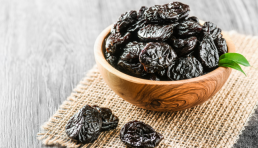
Prune Consumption May Help Preserve Bone Mineral Density in Postmenopausal Women
Eating prunes every day may help women mitigate bone loss in older age
A newly published study in Osteoporosis International set out to assess the effect of regular prune consumption on volumetric bone mineral density, bone geometry and estimated bone strength.
The study formed part of The Prune Study, a large, single-center, parallel-arm, 12-month randomized controlled trial completed with 183 postmenopausal women ranging in age from 55 to 75. Participants were randomly assigned to one of three groups: a group that ate 50 grams of prunes daily, a group that ate 100 grams of prunes daily, or a control group that did not eat any prunes. Beyond the daily prune consumption requirements, participants did not follow any specific diet, but all (including the control group) consumed a daily requirement of 1,200 mg of calcium and 800 IU vitamin D through diet plus supplements. To assess bone health and bone changes, a peripheral quantitative computed tomography (pQCT) scan was given to participants every six months.
The findings showed that estimated bone strength was significantly maintained in the shin bone (tibia) in participants who ate at least 50 grams of prunes daily, compared with those in the no-prune group. The study adds to a growing body of research showing that eating prunes daily can help mitigate bone loss in older age.
The California Prune Board provided funding for this study.
Koltun, K.J., Strock, N.C.A., Weaver, C., Hang, L., Williams, N.I., Rogers, C.J., Damani, J., Ferruzzi, M.G., Nakatsu, C.H., & De Souza, M.J. (2024). Prunes preserve cortical density and estimated strength of the tibia in a 12-month randomized controlled trial in postmenopausal women: The Prune Study. Osteoporosis International.
Prevalence of tree nut allergy in Europe: A systematic review and meta-analysis
In 2014, the European Academy of Allergy and Clinical Immunology (EAACI) published the first systematic review that summarized the prevalence of food allergy (FA) and food sensitization in Europe for studies published 2000-2012. However, only summary estimates for tree nut allergy (TNA) were feasible in that work. In the current update of that systematic review, we summarized the prevalence of tree nut allergy/sensitization to individual tree nuts. Six databases were searched for relevant papers published 2012-2021 and 17 eligible studies were added to the 15 studies already identified between 2000 and 2012, giving a total of 32 studies. Of the investigated tree nuts, meta-analysis was possible for hazelnut, walnut, almond, and in few cases, for cashew, and Brazil nut. The lifetime self-reported prevalence was 0.8% (95% CI 0.5-1.1) for hazelnut and 0.4% (0.2-0.9) for walnut. The point self-reported prevalence was 4.0% (2.9-5.2) for hazelnut, 3.4% (2.0-4.9) for Brazil nut, 2.0% (1.1-2.9) for almond, and 1.8% (1.1-2.5) for walnut. Point prevalence of food challenge-confirmed TNA was 0.04% (0.0-0.1) for hazelnut and 0.02% (0.01-0.1) for walnut. Due to paucity of data, we could not identify any meaningful and consistent differences across age groups and European regions.
https://doi.org/10.1111/all.15905
Systematic review and meta-analyses on the accuracy of diagnostic tests for IgE-mediated food allergy
The European Academy of Allergy and Clinical Immunology (EAACI) is updating the Guidelines on Food Allergy Diagnosis. We aimed to undertake a systematic review of the literature with meta-analyses to assess the accuracy of diagnostic tests for IgE-mediated food allergy. We searched three databases (Cochrane CENTRAL (Trials), MEDLINE (OVID) and Embase (OVID)) for diagnostic test accuracy studies published between 1 October 2012 and 30 June 2021 according to a previously published protocol (CRD42021259186). We independently screened abstracts, extracted data from full texts and assessed risk of bias with QUADRAS 2 tool in duplicate. Meta-analyses were undertaken for food-test combinations for which three or more studies were available. A total of 149 studies comprising 24,489 patients met the inclusion criteria and they were generally heterogeneous. 60.4% of studies were in children ≤12 years of age, 54.3% were undertaken in Europe, ≥95% were conducted in a specialized paediatric or allergy clinical setting and all included oral food challenge in at least a percentage of enrolled patients, in 21.5% double-blind placebo-controlled food challenges. Skin prick test (SPT) with fresh cow's milk and raw egg had high sensitivity (90% and 94%) for milk and cooked egg allergies. Specific IgE (sIgE) to individual components had high specificity: Ara h 2-sIgE had 92%, Cor a 14-sIgE 95%, Ana o 3-sIgE 94%, casein-sIgE 93%, ovomucoid-sIgE 92/91% for the diagnosis of peanut, hazelnut, cashew, cow's milk and raw/cooked egg allergies, respectively. The basophil activation test (BAT) was highly specific for the diagnosis of peanut (90%) and sesame (93%) allergies. In conclusion, SPT and specific IgE to extracts had high sensitivity whereas specific IgE to components and BAT had high specificity to support the diagnosis of individual food allergies.
https://doi.org/10.1111/all.15939