
The Differential Effects of Physical Activity Calorie Equivalent Labeling on Consumer Preferences for Healthy and Unhealthy Food Products: Evidence from a Choice Experiment
Background: Since numerical calorie labels have limited effects on less-calorie food ordering, an alternative called physical activity calorie equivalent (PACE) labels, which exhibit calories using visible symbols and the minutes of exercise to burn off the calories, may be more effective in reducing calories ordered.
Methods: By using a choice experiment (CE) approach, the aims of this study were to estimate the effects of PACE labels on consumer preferences for healthy and unhealth food. Red date walnuts and potato chips were used as the representatives of healthy and unhealthy foods respectively in this study. Moreover, future time perspective (FTP) is an individual trait variable of consumers, which has been recognized as a significant driver of healthy behaviors. We also included FTP into the interaction with PACE labels.
Results: Firstly, the results were opposite between the healthy and unhealthy food groups. Respondents showed significantly more positive attitudes toward red date walnuts (i.e., healthy food) with PACE labels, while they showed significantly more negative preferences for chips (i.e., unhealthy food) with PACE labels. Secondly, people with higher FTP are preferred red date walnuts with PACE labels, while PACE labels on chips could undermine the preferences of respondents with higher FTP. Thirdly, we found that women (vs. men) were less inclined to choose healthy food with standard calorie labels and labels showing the minutes of running to burn off the calories, as well as that the elderly (vs. younger) people in the healthy food group preferred the labels showing the minutes of running to burn off the calories. People with a higher body mass index (BMI) were reluctant to purchase walnuts with the information about the minutes of walking. Conclusions: Results from this study showed that PACE labels have significant effects on consumers' preferences for food products.
https://doi.org/10.3390/ijerph18041860

Immunomodulatory Role of Urolithin A on Metabolic Diseases
Urolithin A (UroA) is a gut metabolite produced from ellagic acid-containing foods such as pomegranates, berries, and walnuts. UroA is of growing interest due to its therapeutic potential for various metabolic diseases based on immunomodulatory properties. Recent advances in UroA research suggest that UroA administration attenuates inflammation in various tissues, including the brain, adipose, heart, and liver tissues, leading to the potential delay or prevention of the onset of Alzheimer's disease, type 2 diabetes mellitus, and non-alcoholic fatty liver disease. In this review, we focus on recent updates of the anti-inflammatory function of UroA and summarize the potential mechanisms by which UroA may help attenuate the onset of diseases in a tissue-specific manner. Therefore, this review aims to shed new insights into UroA as a potent anti-inflammatory molecule to prevent immunometabolic diseases, either by dietary intervention with ellagic acid-rich food or by UroA administration as a new pharmaceutical drug.
https://doi.org/10.3390/biomedicines9020192
Spatial analysis of dietary exposure of aflatoxins in peanuts and peanut oil in different areas of China
Peanuts in China are heavily contaminated with aflatoxin, which pose a threaten to human health. To compare the dietary exposure risk of aflatoxins (AFT) in peanuts and peanut oil in different areas of China, the spatial distribution of AFT contamination levels in peanuts and peanut oil from different areas was analyzed. The dietary exposure was calculated by simple distributed risk assessment method before characterizing the health risk using both the margin of exposure (MOE) approach proposed by the European Food Safety Authority (EFSA) and the quantitative liver cancer risk approach proposed by the Joint Food and Agricultural Organization/World Health Organization (FAO/WHO) Expert Committee on Food Additives (JECFA). The results showed that the AFT content in peanuts and peanut oil was high with agglomeration in several provinces of East and South China under a subtropical temperate monsoon climate, and the AFT contamination in peanut oil was more substantial than peanuts. On average, the estimated dietary exposure to AFT from the total of peanuts and peanut oil for Chinese general population ranged from 1.776 to 1.940 ng/kg bw/day (LB-UB), from which the MOE values of 88-96 (UB-LB) and liver cancer risk of 0.055-0.060 cases/100,000 persons/year (LB-UB) were calculated. As for different areas in China, the mean AFT exposure ranged between 0.000 and 17.270 ng/kg bw/day. Moreover, the corresponding health risk was estimated at 10-868759 MOE values and 0.000-0.851 liver cancer cases/100,000 persons/year. Guangdong, Fujian and Jiangxi provinces were at a higher risk rank. The liver cancer risk of AFT exposure from peanuts and peanut oil was far below all-cause liver cancer incidence (18.0 cases/100,000 persons/year) in China, but several areas with relatively high risk should be of concern. Compared with other age groups, children aged 2-6 years should be paid more attention because they have the highest AFT exposure level.
The effect of black seed raisin on some cardiovascular risk factors, serum malondialdehyde, and total antioxidant capacity in hyperlipidemic patients: a randomized controlled trials
Background: The lipid-lowering properties and antioxidants of the raisins may reduce the risk factors of cardiovascular diseases. This study aimed to investigate the effect of black seeded raisin consumption on blood pressure (BP), lipid profile, high-sensitivity C-reactive protein (hs-CRP), malondialdehyde (MDA), and serum total antioxidant capacity (TAC) in hyperlipidemic patients.
Methods: Thirty-eight hyperlipidemic patients aged 41.05 ± 10.4 years were recruited to this two-armed, randomized, controlled intervention trial. Participants were instructed to consume 90 g per day black seed raisin in the intervention group, and control group received no intervention. BP, lipid profile, and plasma levels of TAC, MDA, hs-CRP, and FBS were determined at baseline and week 5.
Results: After 5 weeks, the diastolic BP reduced significantly in raisin group compared with baseline (81.80 ± 10.22 vs 77.05 ± 11.03, P = 0.001) and TAC was significantly increased in raisin group compared with the control group (394 ± 116.93 vs 479 ± 122.31, P = 0.001). The serum level of MDA in the raisin group was significantly lower compared with the control group (1.35 ± 0.88 vs 1.39 ± 0.67, P = 0.039). No significant changes were found in lipid profile, SBP, hs-CRP, and FBS.
Conclusion: These results suggest that consumption of black raisin which is rich in polyphenolic compounds has beneficial effects on some cardiovascular risk factors especially blood pressure and serum antioxidant capacity in patients with hyperlipidemia.
Total Nut, Tree Nut, and Peanut Consumption and Metabolic Status in Southern Italian Adults
Background: Nut consumption has been associated with cardio-metabolic health benefits. However, studies conducted in the Southern Italian population, where adherence to the Mediterranean diet has been reported being relatively high, are rather scarce. The aim of this study was to test the association between consumption of total and specific types of nuts and metabolic status among adults living in Sicily, Southern Italy.
Methods: Demographic and dietary characteristics of 2044 adults living in Southern Italy were analyzed. Multivariate logistic regression analyses were performed to calculate odds ratios (ORs) and 95% confidence intervals (CIs) of the association between nut consumption and metabolic status adjusting for potential confounding factors.
Results: The energy-adjusted model revealed that higher nut intake was inversely associated with occurrence of hypertension, type-2 diabetes, and dyslipidemia. However, the association did not remain significant for the latter after adjusting for the main background characteristics, while an inverse association was stably confirmed for hypertension (OR = 0.61, 95% CI: 0.46-0.80 and OR = 0.44, 95% CI: 0.26-0.74, respectively) even after adjusting for adherence to the Mediterranean diet. Among individual nut types, most of the associations were null except for higher almond intake, which was inversely associated with occurrence of hypertension (OR = 0.70, 95% CI: 0.49-0.99).
Conclusions: Higher nut consumption is associated with overall better metabolic status in individuals living in the Mediterranean area.
https://doi.org/10.3390/ijerph18041847
Prospective Randomized Controlled Trial on the Effects of Almonds on Facial Wrinkles and Pigmentation
Background: Almonds have long been studied as a rich source of fatty acids, phytochemical polyphenols and antioxidants such as vitamin E. A recent study compared almond supplementations to a calorie-matched intervention for 16 weeks, yielding statistically significant improvement in wrinkle severity in postmenopausal women with Fitzpatrick skin types I and II that received almonds. This study furthers that assessment with a larger population and duration of 24 weeks to assess the influence of almond consumption on wrinkle severity, skin pigmentation and other skin biophysical profiles.
Objective: To investigate the effects of almond consumption on photoaging such as wrinkles and pigment intensity as well as facial biophysical parameters such as sebum production, skin hydration and water loss.
Design and interventions: A prospective, randomized controlled study assessed postmenopausal women with Fitzpatrick skin types I or II who consumed 20% of their daily energy consumption in either almonds or a calorie-matched snack for 24 weeks. A facial photograph and image analysis system was used to obtain standardized high-resolution photographs and information on wrinkle width and severity at 0, 8, 16 and 24 weeks. Measurements of transepidermal water loss (TEWL), skin pigmentation, skin hydration and sebum production were also completed at each visit.
Results: The average wrinkle severity was significantly decreased in the almond intervention group at week 16 and week 24 compared to baseline by 15% and 16%, respectively. Facial pigment intensity was decreased 20% in the almond group at week 16 and this was maintained by week 24. There were no significant differences in skin hydration or TEWL in the almond group compared to the control, although sebum excretion was increased in the control group.
Conclusion: The daily consumption of almonds may improve several aspects of photoaging such as facial wrinkles and pigment intensity in postmenopausal women. In conclusion, the daily consumption of almonds may contribute to the improvement of facial wrinkles and reduction of skin pigmentation among postmenopausal women with Fitzpatrick skin types I and II.
https://doi.org/10.3390/nu13030785
COVID-19 Update: March 10, 2021
Travel restrictions are also having a direct impact on the lives and livelihoods of transport workers, most notably in the maritime sector. According to the International Maritime Organization (IMO), around 400,000 seafarers have incessantly been working on board commercial vessels, long past the expiry of their contracts but unable to be repatriated due to many countries’ restrictions.
WHO
As the global rollout of COVAX vaccines accelerates, the first COVID-19 vaccination campaigns in Africa started on March 1. The African states of Ghana and Côte d’Ivoire received deliveries of the AstraZeneca/Oxford vaccine, with Ghana taking delivery of 600,000 doses on February 24 and Côte d’Ivoire 504,000 doses two days later. The vaccine, branded COVISHIELD, was granted Emergency Use Listing (EUL) by the World Health Organization on February 15.
UN
The report notes that 14 countries worldwide have remained largely closed from March 2020 to February 2021. Two-thirds of those countries are in Latin America and the Caribbean, affecting nearly 98 million schoolchildren.
“As we approach the one-year mark of the COVID-19 pandemic, we are again reminded of the catastrophic education emergency worldwide lockdowns have created. With every day that goes by, children unable to access in-person schooling fall further and further behind, with the most marginalized paying the heaviest price,” said UNICEF Executive Director Henrietta Fore.
Australia
AstraZeneca is the second COVID-19 vaccine to be approved for use in Australia, after the Therapeutic Goods Administration (TGA) gave the green light to the Pfizer/BioNTech vaccine in January 2021.
Brazil
On the same day, Health Minister Eduardo Pazuello said he was close to an agreement with Pfizer to buy 100 million doses of the COVID-19 vaccine, as well as doses from Janssen, the pharmaceutical subsidiary of Johnson & Johnson.
China
According to Reuters, China’s conservative growth target reflects a public effort to demonstrate a return to economic stability after last year’s COVID-19 upheaval, while also trying to contain the government’s budget deficit.
EU
On March 3, the European Commission has adopted a communication providing Member States with broad guidance on the conduct of fiscal policy adopted in response to the coronavirus pandemic. The Communication provides guidelines for the setting of fiscal measures, including the implications of the Recovery and Resilience Facility (RRF) for fiscal policy.
The RRF will make €312.5 billion available in grants and up to €360 billion available in loans to Member States to support the implementation of reforms and investments. According to the Commission, the RRF will provide an important fiscal stimulus aimed to promote investments, especially in the most affected EU countries.
Austria
The Alpine region of Tyrol, with a total population of about 80,000, has one of Europe's highest incidences of the South African COVID-19 strain, which is deemed to be more contagious. Every adult resident of the province will be offered the vaccination, with the process due to start this week.
Czech Republic
France
Also, according to the same news agency, the government endorsed a recommendation from France’s High Authority for Health (HAS) for people who have previously contracted COVID-19 to receive a single dose of the vaccine, aimed to boost the immune system’s response against potential coronavirus reinfections.
Germany
Under the proposed plan, up to five people from two households will be allowed to meet from March 8. Later stages will see the opening of restaurants and entertainment venues for people who can present a recent negative test result. Finally, open-air events with up to 50 people will be allowed, as well as contact sports indoors.
Moreover, the government accepted a recommendation from the European Medicines Agency (EMA) to extend the interval between the injection of first and second doses of Pfizer and BioNTech’s vaccines three weeks apart, and AstraZeneca’s up to 12 weeks apart.
According to a recent news press, Germany’s Robert Koch Institute for disease control has now classified France’s Moselle region as an area “at particularly high risk of infection due to widespread occurrence of SARS-CoV-2 virus variants”.
Since March 2, travelers coming from Moselle will need to show a negative coronavirus test that is less than 48 hours old. Similar border controls have already been introduced at the country’s land borders with the Czech Republic and Austria’s Tyrol region.
Italy
The northern regions of Friuli Venezia Giulia, Veneto and Emilia Romagna have been placed in the second highest degree of alert with increased restrictions on movements, thus joining most of Italy’s 20 regions, while the region of Campania is now classified as “red zone”, where full lockdown rules apply.
The Netherlands
Since March 3, the government has begun relaxing its lockdown restrictions, such as reopening of non-essential shops and allowing outdoor sports activities. The general lockdown rules like curfews and travel bans will remain in place for the time being.
Spain
Moreover, a recent report from Spain’s Health Ministry showed that more than 1.3 million people have been fully vaccinated so far. According to the Spanish newspaper El País, the data in the ministry report leads to the conclusion that more than 85% of Spain’s care home residents have now been fully vaccinated.
India
Since the pandemic began, India has confirmed more than 11 million cases and over 157,000 deaths. India has seen a steady decrease in daily infections to less than 20,000 from a peak of over 90,000 back to September 2020, although some states have recently reported a new increase in the number of cases.
Iran
Earlier in February, the Iranian Government reduced the validity of negative COVID-19 PCR test results from 96 hours to 72 hours for all passengers transiting the country’s airports. Due to the travel restrictions, foreign travelers to Iran will need to quarantine upon arrival in government-designated areas, while Iranian citizens will need to self-isolate for 14 days.
Japan
Despite a steady decline in cases since last January, the decision came after the governors of the prefectures of Tokyo, Kanagawa, Chiba and Saitama voiced their concerns that new cases are not declining fast enough to safely lift the country’s state of emergency.
Turkey
According to the WHO, Turkey has so far administered more than 9 million doses of COVID-19 vaccines, with nearly 1 in 10 people vaccinated.
United Kingdom
In a press release from the UK government, authorized COVID-19 vaccines that are modified in response to new variants will receive a “fast-track” approval. The decision follows the publication of a new guidance from the ACCESS Consortium –a coalition of regulatory authorities from the UK, Australia, Canada, Singapore and Switzerland. The guidance, developed by the UK Medicines & Healthcare products Regulatory Agency (MHRA) and its ACCESS partners, lays out what information regulators would need to approve any modifications to authorized COVID-19 vaccines, should virus mutations make them less effective at preventing the disease.
United States
COVID-19 cases in the US have been steadily decreasing in the past six weeks, while more than 82 million vaccine doses have been administered. However, the active cases are still much higher than what was seen during the first peak in the pandemic back in March 2020.
On March 6, the U.S. Senate passed a $1.9 trillion COVID-19 relief bill recently proposed by the US President. The legislation includes funding for vaccines and medical supplies, extends jobless assistance and provides a new round of emergency financial aid to households, small businesses and state and local governments.
The information above is a review of actions the INC has compiled from government sources, international organizations and press media. This news article is not intended to be exhaustive and it does not reflect the opinions of the INC. While the publishers believe that all information contained in this publication was correct at the time of publishing, they can accept no liability for any inaccuracies that may appear or loss suffered directly or indirectly by any reader as a result of any advertisement, editorial, photographs or other materials published in this news article.
Macadamias Crop Forecast Report

Australia Macadamia Crop Forecast Report
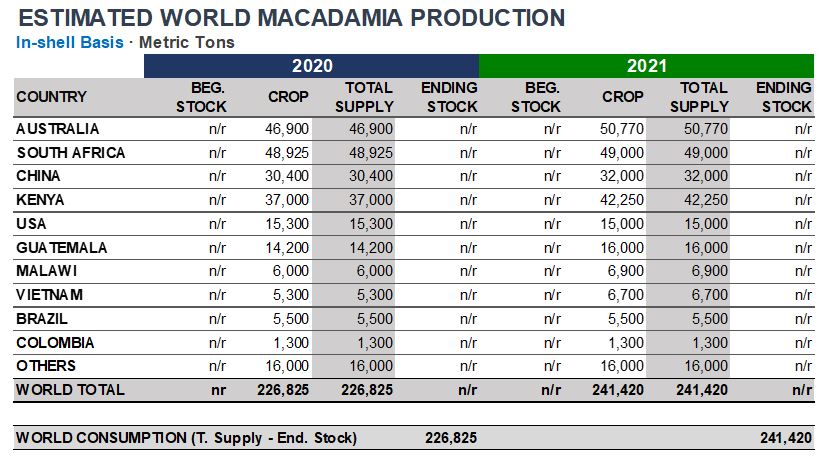
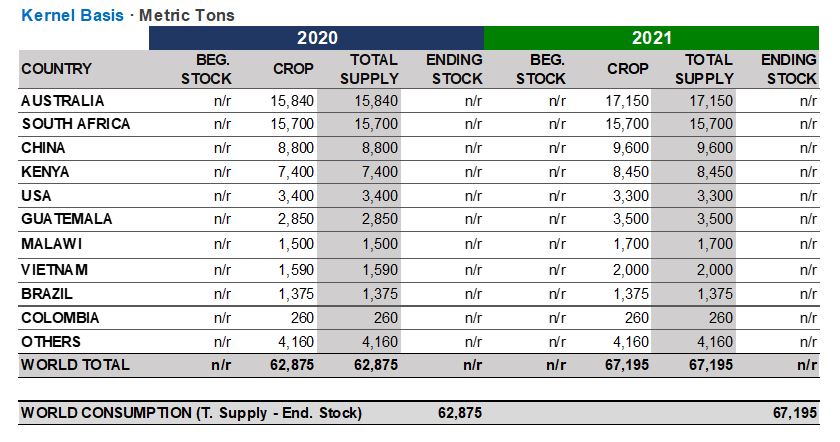
The final crop forecast for the 2020 season is 46,900 MT in-shell. Orchards weathered the drought conditions well in 2020, proving how naturally resilient these native trees are. Sustained investment by growers in orchard floor management continues, which is integral to managing soil moisture.
South Africa Macadamia Crop Forecast Report
Kenya Macadamia Crop Forecast Report
Kernel sales have been slower than the previous year owing to COVID-19 market disruptions. The closing inventories for 2019 have cleared and the industry is looking forward to a market resurgence in early 2021 to take any carryover stocks.
Brazil Nuts Crop Progress Report
Brazil Nuts Crop Progress Report
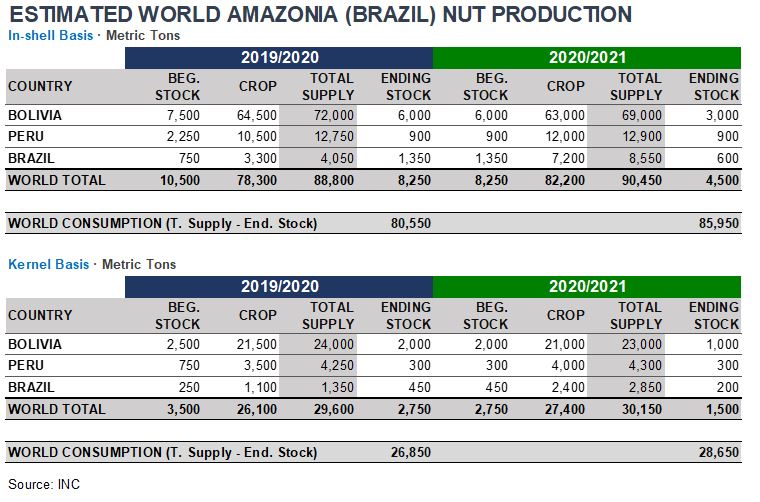
While volumes exported started low and had months well below average, bumper months in September, October & November pushed exports level back to normal. Total exports from South America in 2020 added up to around 31,000 metric tons (Bolivia, 77%, Peru, 13% and Brazil, 10%); up by 10% from 2019. The total value though was fairly below the last years’ average.
By the beginning of 2021, carryover was short as yields were lower than what factories had anticipated. Raw material started to be negotiated at levels above the ending export price of 2020. Initially, exporters pushed back but intervention with the assistance of the government eventually set pricing at that higher level. Thus, exporters who had made a few speculative sales of 2021 withdrew from the market to cover that material as raw material no longer supported that price.
Going forward, shippers are likely to stay withdrawn until more raw material flows from the forest to the factories. Some markets for Brazil nuts are well covered already, but the smaller users, who buy every few months, are not. Smaller shippers, who buy material and then sell against the raw material replacement price, may start to push up the export prices with buyers who are in need of stock and, in turn, will start paying higher prices for raw material.
Brazil Nuts Crop Progress Report
Brazil Nuts Crop Progress Report
While volumes exported started low and had months well below average, bumper months in September, October & November pushed exports level back to normal. Total exports from South America in 2020 added up to around 31,000 metric tons (Bolivia, 77%, Peru, 13% and Brazil, 10%); up by 10% from 2019. The total value though was fairly below the last years’ average.
By the beginning of 2021, carryover was short as yields were lower than what factories had anticipated. Raw material started to be negotiated at levels above the ending export price of 2020. Initially, exporters pushed back but intervention with the assistance of the government eventually set pricing at that higher level. Thus, exporters who had made a few speculative sales of 2021 withdrew from the market to cover that material as raw material no longer supported that price.
Going forward, shippers are likely to stay withdrawn until more raw material flows from the forest to the factories. Some markets for Brazil nuts are well covered already, but the smaller users, who buy every few months, are not. Smaller shippers, who buy material and then sell against the raw material replacement price, may start to push up the export prices with buyers who are in need of stock and, in turn, will start paying higher prices for raw material.