
From fallow ground to common ground: Perspectives on future land uses in the San Joaquin valley under sustainable groundwater management.
Agriculture dominates California's San Joaquin Valley with over five million acres of farmland produces 400 different commodities ranging from nuts, tree fruits, vines, and row crops. During dry years agricultural production in the San Joaquin Valley uses about 53% of total applied water in the state. Implementation of California's Sustainable Groundwater Management Act (SGMA) will restrict groundwater pumping, likely reducing irrigated agricultural land use resulting in conversion to alternative land uses. To promote collaborative and inclusive efforts to repurpose agricultural land, California's legislature established a funding program administered by the Department of Conservation, the Multibenefit Land Repurposing Program (MLRP), in 2021. To ensure that land repurposing plans under the MLRP and SGMA represent San Joaquin Valley community needs this paper examines public perceptions of future land uses under SGMA through a phone survey. Respondents (n = 197) were recruited through a stratified random sample of mobile numbers registered within communities in the San Joaquin Valley classified as disadvantaged communities (DACs) (n = 32). Our results show that most respondents were somewhat (33%) or not at all (54%) familiar with SGMA, highlighting the need for outreach efforts to overcome barriers to representation, translation, and education about future water and land use decisions. Survey respondents identified secure water supplies (e.g., groundwater recharge) (35%) and less-water intensive agriculture (27%) as their top land use priorities to address groundwater overdraft under SGMA, indicating that the status quo for land use is preferred to alternative land uses. Preference for maintaining agriculture as primary land use (27%), we correlated with agricultural identity and lack of interest in community or global benefits such as schools and climate change mitigation. The findings from this study underscore the local variability in land use values and the importance to engaging local communities in land use decision-making, especially as they relate to changing current practices toward a more climate-resilient but agriculturally productive future with less land and less water. https://doi.org/10.1016/j.jenvman.2023.117226

Carbon dioxide (CO2) emissions and adherence to Mediterranean diet in an adult population: the Mediterranean diet index as a pollution level index.
Background: Research related to sustainable diets is is highly relevant to provide better understanding of the impact of dietary intake on the health and the environment. Aim: To assess the association between the adherence to an energy-restricted Mediterranean diet and the amount of CO2 emitted in an older adult population. Design and population: Using a cross-sectional design, the association between the adherence to an energy-reduced Mediterranean Diet (erMedDiet) score and dietary CO2 emissions in 6646 participants was assessed. Methods: Food intake and adherence to the erMedDiet was assessed using validated food frequency questionnaire and 17-item Mediterranean questionnaire. Sociodemographic characteristics were documented. Environmental impact was calculated through greenhouse gas emissions estimations, specifically CO2 emissions of each participant diet per day, using a European database. Participants were distributed in quartiles according to their estimated CO2 emissions expressed in kg/day: Q1 (≤2.01 kg CO2), Q2 (2.02-2.34 kg CO2), Q3 (2.35-2.79 kg CO2) and Q4 (≥2.80 kg CO2). Results: More men than women induced higher dietary levels of CO2 emissions. Participants reporting higher consumption of vegetables, fruits, legumes, nuts, whole cereals, preferring white meat, and having less consumption of red meat were mostly emitting less kg of CO2 through diet. Participants with higher adherence to the Mediterranean Diet showed lower odds for dietary CO2 emissions: Q2 (OR 0.87; 95%CI: 0.76-1.00), Q3 (OR 0.69; 95%CI: 0.69-0.79) and Q4 (OR 0.48; 95%CI: 0.42-0.55) vs Q1 (reference). Conclusions: The Mediterranean diet can be environmentally protective since the higher the adherence to the Mediterranean diet, the lower total dietary CO2 emissions. Mediterranean Diet index may be used as a pollution level index. https://doi.org/10.1186/s12940-022-00956-7
Cooling cities through urban green infrastructure: a health impact assessment of European cities.
Background: High ambient temperatures are associated with many health effects, including premature mortality. The combination of global warming due to climate change and the expansion of the global built environment mean that the intensification of urban heat islands (UHIs) is expected, accompanied by adverse effects on population health. Urban green infrastructure can reduce local temperatures. We aimed to estimate the mortality burden that could be attributed to UHIs and the mortality burden that would be prevented by increasing urban tree coverage in 93 European cities. Methods: We did a quantitative health impact assessment for summer (June 1–Aug 31), 2015, of the effect of UHIs on all-cause mortality for adults aged 20 years or older in 93 European cities. We also estimated the temperature reductions that would result from increasing tree coverage to 30% for each city and estimated the number of deaths that could be potentially prevented as a result. We did all analyses at a high-resolution grid-cell level (250 × 250 m). We propagated uncertainties in input analyses by using Monte Carlo simulations to obtain point estimates and 95% CIs. We also did sensitivity analyses to test the robustness of our estimates. Findings: The population-weighted mean city temperature increase due to UHI effects was 1·5°C (SD 0·5; range 0·5–3·0). Overall, 6700 (95% CI 5254–8162) premature deaths could be attributable to the effects of UHIs (corresponding to around 4·33% [95% CI 3·37–5·28] of all summer deaths). We estimated that increasing tree coverage to 30% would cool cities by a mean of 0·4°C (SD 0·2; range 0·0–1·3). We also estimated that 2644 (95% CI 2444–2824) premature deaths could be prevented by increasing city tree coverage to 30%, corresponding to 1·84% (1·69–1·97) of all summer deaths. Interpretation: Our results showed the deleterious effects of UHIs on mortality and highlighted the health benefits of increasing tree coverage to cool urban environments, which would also result in more sustainable and climate-resilient cities. https://doi.org/10.1016/s0140-6736(22)02585-5
February 2023 News Brief
INC Launches the Excellence in Sustainability Award
The winner will be announced at the INC Congress in London!
The INC believes that all actors throughout the supply chain can take action to tangibly improve and communicate how the industry has an impact on sustainability and contributes to the UN Sustainable Development Goals. Therefore, this 2023 the INC is proud to launch the Award for Excellence in Sustainability! This award aims to recognize projects and companies / organizations who show outstanding achievements and inspiration in the field of sustainability. To apply, the project must be relevant to at least one of the INC-identified focus Sustainable Development Goals (SDGs) 2, 6, 12, 13, or 15. [Apply now]
INC Pavilion Serves as Industry Hub at Gulfood 2023

18 companies joined the INC in Dubai for the “best Gulfood ever”
This year’s Gulfood was, yet again, a big success —the best ever, according to some of the 18 co-exhibitors that occupied the exclusive INC Pavilion from February 20 to 24. The 168 m² space in Za’abeel Hall 5 buzzed with activity, serving as the epicenter of the nut and dried fruit industry and representing an unprecedented range of countries. Throughout the week, spirits were high at the strategically located pavilion… [Read more]
INC Comments on FDA's 'Healthy' Claim Proposed Rule
Nuts (unsalted) are currently ineligible but would qualify under the proposed definition

On September 29, 2022, the U.S. Food and Drug Administration (FDA) issued a proposed rule to update the definition for the implied nutrient content claim “healthy”, which was set in 1994. This rule, if approved, will revise the requirements for when the term “healthy” can be used as an implied claim in food labeling. Nuts, seeds, avocados, and salmon are some examples of foods currently ineligible to bear the “healthy” claim based on the existing regulatory definition, but that would qualify under the proposed definition... [Read more]
Nuts as Part of the Mediterranean Diet, Mentioned in Nature Medicine
Nature Medicine, one of the most prestigious medical journals worldwide, has published its “Year in Review” article featuring “11 clinical trials that will shape medicine in 2023”, and the PREDIMED-Plus study on the Mediterranean diet, which among other foods includes nuts. Prof. Jordi Salas-Salvadó, Chairman of the INC World Forum for Nutrition Research and Dissemination, was interviewed among other leading scientists who were asked to name their top clinical trials for 2023. The answers spanned a wide range of fields, from cancer screening to new drugs for Parkinson’s and Alzheimer’s disease. [Read more]
Nutrients to Publish NUTS 2022 Proceedings in Special Issue
The journal Nutrients is poised to publish a special issue featuring the proceedings of NUTS 2022, a historic gathering of leading international nutrition researchers. Held at the INC headquarters in October of last year, NUTS 2022 brought together 25 top scholars to discuss the future of health research on nuts and dried fruits. Representing universities in Australia, Brazil, Canada, France, Iran, Italy, Norway, Spain, Türkiye, the United Kingdom and the United States, the researchers summarized… [Read more]
INC Shares New Study on Effects of Mixed Tree Nuts on Tryptophan Metabolism and Cardiovascular Risk Factors
A new study published in Nutrients assessed whether snacks of mixed tree nuts as part of a hypocaloric diet modified the gut microbiome, leading to an increase in levels of cardio-protective microbial metabolites of tryptophan (Trp), an essential amino acid found in tree nuts. As part of a randomized, controlled, parallel, two-arm study, 95 overweight/obese individuals were instructed to consume either mixed tree nuts or pretzels daily as part of a hypocaloric weight loss diet for 12 weeks followed by an isocaloric weight maintenance program… [Read more]
New Study Finds Walnuts May Improve Diet Quality
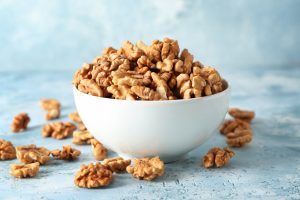
A recent study published in Nutrients explored how adding 1 ounce (28 g) of walnuts to people’s usual diets affected diet quality and intake of nutrients of concern, including magnesium, fiber and potassium. Using 24 h dietary recall data obtained from the dietary interview component of the National Health and Nutrition Examination Survey, researchers in the United States modeled the addition of 1 ounce of walnuts to the daily diet of people who usually do not consume nuts. The study included a total of 7,757 individuals aged ≥4 years... [Read more]
INC Monitors Latest Sustainability News

In the latest INC sustainability update, you can read about the ruling by the Court of Justice of the European Union that EU countries should no longer be allowed temporary exemptions for banned, bee-toxic neonicotinoid pesticides (imidacloprid, clothianidin and thiamethoxam) used in agriculture for seed treatment, among other sustainability-related news. [Read more]
International Trade News Compiled by INC

The INC’s latest trade update includes the decision by the United States to grant new access for Australian roasted macadamia nuts and the signing of the U.S.-EU Tariff Rate Quota Agreement, which will enable the United States to preserve its existing access to the EU market for various agricultural commodities following the United Kingdom’s exit from the EU. [Read more]
INC Shares Food Safety News
Among other food safety news, the INC’s latest update covers the new maximum residue levels published by the European Commission for certain pesticides, including abamectin, bifenazate, cyromazine, topramezone, cyfluthrin, metobromuron and cycloxydim. [Read more]
INC Pavilion Serves as Industry Hub at Gulfood 2023
18 companies joined the INC in Dubai for the “best Gulfood ever”
This year’s Gulfood was, yet again, a big success —the best ever, according to some of the 18 co-exhibitors that occupied the exclusive INC Pavilion from February 20 to 24. The 168 m² space in Za’abeel Hall 5 buzzed with activity, serving as the epicenter of the nut and dried fruit industry and representing an unprecedented range of countries.
Throughout the week, spirits were high at the strategically located pavilion, which served as the heart and soul of the nut and dried fruit world, providing high visibility for the companies exhibiting with the INC. Throughout the event, our co-exhibitors took full advantage of this opportunity to showcase their wares, make new contacts and grow their business.
Gulfood is one of the world’s largest annual food and hospitality events. Now in its 28th edition, Gulfood 2023 was fully 30% larger than in previous years, with approximately 1,500 of the more than 5,000 exhibitors taking part in the fair for the first time. With nearly 100,000 visitors from over 125 countries, this year’s event was a veritable hotbed of industry activity.
Novel Lines of Research on the Environmental and Human Health Impacts of Nut Consumption.
Nuts have formed part of human diets throughout the ages. In recent decades, research has shown they are key foods in dietary patterns associated with lower chronic disease risk. The current state of climate change, however, has introduced an imperative to review the impact of dietary patterns on the environment with a shift to plant-based diets. Nuts emerge as a significant source of protein in plant-based diets and are a minimally processed and sustainable food. Research in this area is evolving to drive better production methods in varying climate conditions. Nevertheless, nut consumption remains an important contributor to human health. The mechanisms of action can be explained in terms of the nutrients they deliver. Studies of nut consumption have linked components such as monounsaturated fatty acids, plant omega-3 fatty acids, antioxidants, and plant sterols to improved lipoprotein profiles, lower blood pressure, and reduced cardiovascular disease risk. Preliminary research also indicates possible beneficial effects of nut consumption on reproductive health. In any case, the ultimate effects of foods on health are the results of multiple interactive factors, so where nuts fit within dietary patterns is a significant consideration for research translation. This has implications for research methodologies, including categorization within food groups and inclusion in Healthy Dietary Indices. The aim of this narrative review is to outline new focal points for investigation that examine the environmental and some novel human health impacts of nut consumption and discuss future directions for research. https://doi.org/10.3390/nu15040955
Impact of Nut Consumption on Cognition across the Lifespan
Cognitive health is a life-long concern affected by modifiable risk factors, including lifestyle choices, such as dietary intake, with serious implications for quality of life, morbidity, and mortality worldwide. In addition, nuts are a nutrient-dense food that contain a number of potentially neuroprotective components, including monounsaturated and polyunsaturated fatty acids, fiber, B-vitamins, non-sodium minerals, and highly bioactive polyphenols. However, increased nut consumption relates to a lower cardiovascular risk and a lower burden of cardiovascular risk factors that are shared with neurodegenerative disorders, which is why nuts have been hypothesized to be beneficial for brain health. The present narrative review discusses up-to-date epidemiological, clinical trial, and mechanistic evidence of the effect of exposure to nuts on cognitive performance. While limited and inconclusive, available evidence suggests a possible role for nuts in the maintenance of cognitive health and prevention of cognitive decline in individuals across the lifespan, particularly in older adults and those at higher risk. Walnuts, as a rich source of the plant-based polyunsaturated omega-3 fatty acid alpha-linolenic acid, are the nut type most promising for cognitive health. Given the limited definitive evidence available to date, especially regarding cognitive health biomarkers and hard outcomes, future studies are needed to better elucidate the impact of nuts on the maintenance of cognitive health, as well as the prevention and management of cognitive decline and dementia, including Alzheimer disease. https://doi.org/10.3390/nu15041000
Walnuts May Improve Diet Quality
A recent study published in Nutrients explored how adding 1 ounce (28 g) of walnuts to people’s usual diets affected diet quality and intake of nutrients of concern, including magnesium, fiber and potassium.
Using 24 h dietary recall data obtained from the dietary interview component of the National Health and Nutrition Examination Survey, researchers in the United States modeled the addition of 1 ounce of walnuts to the daily diet of people who usually do not consume nuts. The study included a total of 7,757 individuals aged ≥4 years. The researchers examined the percentages of the population with intakes below the estimated average requirement values for calcium, magnesium, folate and vitamin E and above the adequate intake values for potassium and fiber. Diet quality was assessed using the 2015 Healthy Eating Index. Significant differences between usual and modeled intakes of nutrients of concern were determined.
The researchers found that adding 1 ounce of walnuts to the usual diet significantly reduced the percentages of adults with intakes below the estimated average requirement for magnesium and folate, and increased the percentage of adults above the adequate intake value for potassium; similar trends were seen in children. Diet quality scores improved significantly both in children and in adults. The findings suggest that adding 1 ounce of walnuts daily may improve diet quality and adequacy of certain under-consumed nutrients.
This study was funded by the California Walnut Commission.
Spence, L. A., Henschel, B., Li, R., Tekwe, C. D., & Thiagarajah, K. (2023). Adding Walnuts to the Usual Diet Can Improve Diet Quality in the United States: Diet Modeling Study Based on NHANES 2015–2018. Nutrients, 15(2), 258.
Effects of Mixed Tree Nuts on Tryptophan Metabolism and Cardiovascular Risk Factors
A new study published in Nutrients assessed whether snacks of mixed tree nuts as part of a hypocaloric diet modified the gut microbiome, leading to an increase in levels of cardio-protective microbial metabolites of tryptophan (Trp), an essential amino acid found in tree nuts.
As part of a randomized, controlled, parallel, two-arm study, 95 overweight/obese individuals were instructed to consume either mixed tree nuts or pretzels daily as part of a hypocaloric weight loss diet for 12 weeks followed by an isocaloric weight maintenance program for an additional 12 weeks. Plasma and fecal samples were collected and evaluated for Trp metabolites by liquid chromatography–mass spectrometry and for gut microbiota by sequencing of the 16S rRNA gene.
The findings suggest that consumption of mixed tree nuts affected host and microbial metabolism of Trp. The study discovered some new associations between Trp metabolites and blood pressure, heart rate and satiety in overweight/obese subjects, suggesting a broader impact of Trp metabolism on host health, including cardiovascular health.
This study was co-funded by the International Tree Nut Council Nutrition Research & Education Foundation (INC NREF).
Yang, J., Lee, R., Schulz, Z., Hsu, A., Pai, J., Yang, S., Henning, S. M., et al. (2023). Mixed Nuts as Healthy Snacks: Effect on Tryptophan Metabolism and Cardiovascular Risk Factors. Nutrients, 15(3), 569. MDPI AG.
Nutrients to Publish NUTS 2022 Proceedings in Special Issue
The journal Nutrients is poised to publish a special issue featuring the proceedings of NUTS 2022, a historic gathering of leading international nutrition researchers.
Held at the INC headquarters in October of last year, NUTS 2022 brought together 25 top scholars to discuss the future of health research on nuts and dried fruits. Representing universities in Australia, Brazil, Canada, France, Iran, Italy, Norway, Spain, Türkiye, the United Kingdom, and the United States, the researchers summarized the latest evidence on the health benefits of nuts and dried fruits, and then discussed and defined gaps, new topics, needs and opportunities for future research.
The proceedings of this meeting are now set to appear in a special issue of Nutrients, titled “Nuts: Where We Are and Where We Are Going in Research. Proceedings from the NUTS 2022 International Conference.” This special issue is being guest-edited by Prof. Jordi Salas-Salvadó, Dr. Emilio Ros, Dr. Joan Sabaté and Dr. Stephanie K. Nishi. Papers are being published as they are accepted and will be listed together on the special issue website. To date, five papers have appeared in the journal:
- Nishi, S. K., Sala-Vila, A., Julvez, J., Sabaté, J., & Ros, E. (2023). Impact of Nut Consumption on Cognition across the Lifespan. Nutrients. 2023; 15(4):1000.
- Glenn, A. J., Aune, D., Freisling, H., Mohammadifard, N., Kendall, C. W. C., Salas-Salvadó, J., Jenkins, D. J. A., et al. (2023). Nuts and Cardiovascular Disease Outcomes: A Review of the Evidence and Future Directions. Nutrients, 15(4), 911.
- Nishi, S. K., Viguiliouk, E., Kendall, C. W. C., Jenkins, D. J. A., Hu, F. B., Sievenpiper, J. L., Atzeni, A., et al. (2023). Nuts in the Prevention and Management of Type 2 Diabetes. Nutrients, 15(4), 878.
- Tapsell, L., Sabaté, J., Martínez, R., Llavanera, M., Neale, E., Salas-Huetos, A. (2023). Novel Lines of Research on the Environmental and Human Health Impacts of Nut Consumption. Nutrients, 15(4), 955.
- Guasch-Ferré, M., Tessier, A.-J., Petersen, K. S., Sapp, P. A., Tapsell, L. C., Salas-Salvadó, J., Ros, E., et al. (2023). Effects of Nut Consumption on Blood Lipids and Lipoproteins: A Comprehensive Literature Update. Nutrients, 15(3), 596.
For further information about the special issue, visit: